Article by Marcus Siu
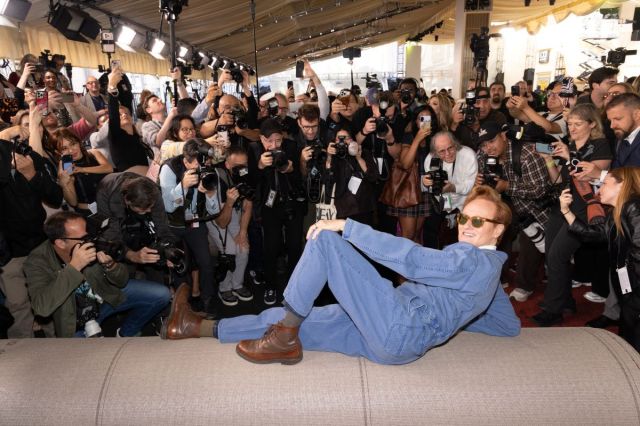
“Fantastic detail…Look at the form factor. Look at the lightness…I think it’s cinema anywhere. Wow, I’m seeing things I never noticed before. I could edit a whole movie just using the table... I’m inspired by what you’ve created. I like to see my work in these glasses.” – James Cameron
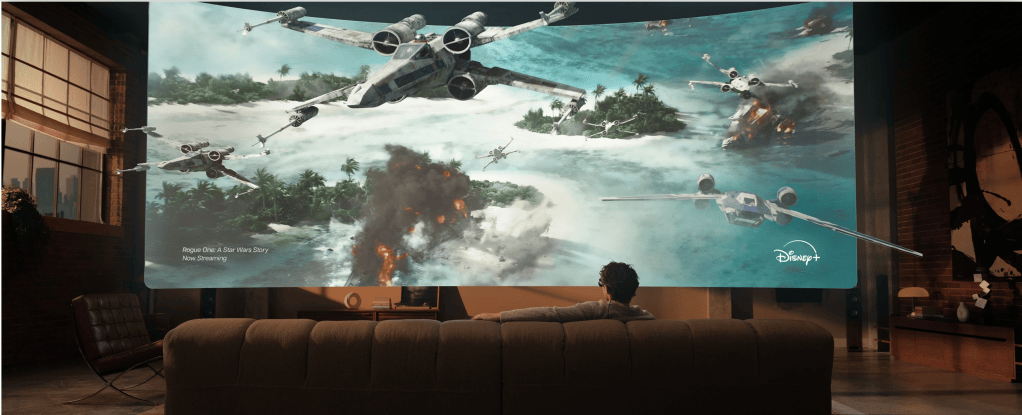
Imagine sitting comfortably on your living room couch completely immersed in your favorite IMAX enhanced certified movie. You are surrounded by spatial audio and stunning 3D visuals that supports Dolby Vision and Atmos, playing right in front of you and your 70 inch micro OLED screen and yet, your TV isn’t even on.
In fact, you could be sitting anywhere. Perhaps you are sitting at the airport, completely aware (or unaware, if you choose) of everything around you as you wait for your flight. Or perhaps you are on the airplane, sitting in your aisle seat waiting for takeoff.
These are what Mark Zuckerberg called “super-powered” Meta VR Glasses. Made with a premium magnesium alloy, they weigh only 100 grams—just one-fifth the weight of the Meta Quest 3 headset, or roughly the same as a deck of cards—and require no remotes or controllers.
Since Meta integrated Muse, the personal AI agent, directly into the operating system, one can speak directly to your Meta glasses or use eye-tracking and natural hand gestures to navigate. With these intuitive controls, you can effortlessly play a movie, open an app, adjust your virtual workspace, or search for information. The glasses can even transform into a multi-monitor workstation or a fully immersive gaming console.
Reality Labs has now refocused on building glasses for Meta AI, which also now includes a “personal agent”. Your “Muse”…
META CONNECT 2026
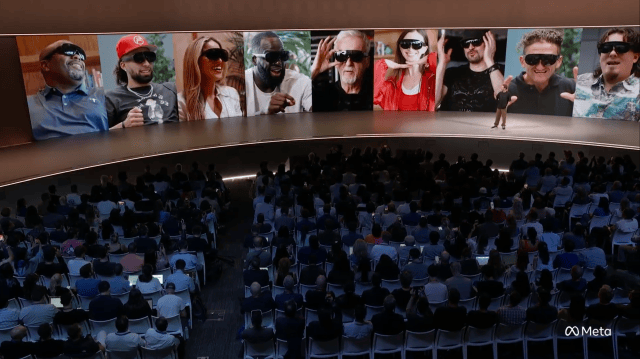
At the Meta Connect 2026 conference, CEO and founder, Mark Zuckerberg spoke to the full capacity crowd at their headquarters in Menlo Park. His keynote focused heavily on personal AI and the next generation of lightweight wearables. This marked a major shift from previous years, which concentrated primarily on the Metaverse.
“Because when we started building glasses, we thought at the time that the metaverse this idea of bringing the physical and digital worlds together. We thought that would come first and that advanced AI would come later,” Zuckerberg reflected. “But now it is actually quite clear that personal superintelligence will not only come first, it will be much bigger and more important. So we have shifted our focus to building the best devices for personal superintelligence.”
“A lot of people agree that augmented reality glasses with holograms are clearly going to be part of the future, but we’ve also heard that a lot of people are less interested in wearing a headset.”
Indeed, the majority of people who have tried a VR headset have complained about its physical and practical disadvantages. It’s bulkiness and weight cause facial pressure and neck fatigue after a short period. In addition, the battery life remains a major area that could be improved.
“We have built a new kind of VR device that delivers the same magical feeling of presence and immersion with high resolution displays and views of the world around you in a form factor that is a pair of glasses for the first time ever,” Zuckerberg remarked. “It has the best display system that we have ever made. It is the result of more than a decade of work. The colors are richer, the blacks are deeper and whenever we show this to people, it’s the display and the quality of that is what jumps out because they just can’t believe that something this thin and light can have such a good display.”
“As a matter of fact, the form factor is so small that you probably didn’t realize that it has been sitting here with the rest of our glasses in plain sight the whole time.” Zuckerberg then turned around toward the wall display of hundreds of glasses behind him on stage and grabbed the Meta VR glasses to show to the enthusiastic crowd. “Here it is. Meta VR glasses.”
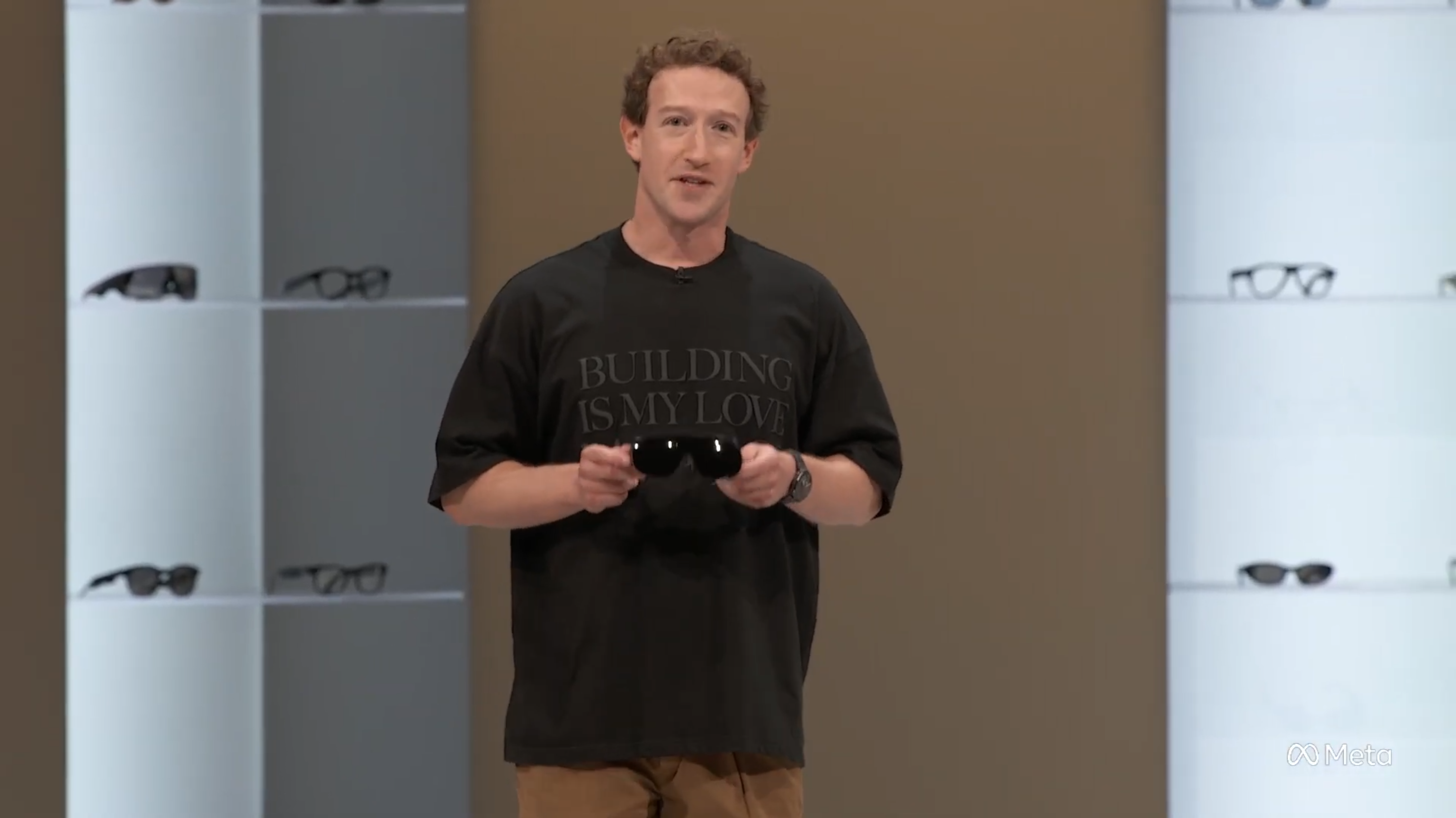
The Meta VR Glasses feature a 5K Infinite Display has built on micro-OLED panels, with 37 pixels per degree, delivering stunning clarity and detail — great for text legibility. The ultra-compact pancake lenses built specifically for this device are the reason cinema-grade clarity can live in something that looks like glasses. With Dolby Vision, every scene come alive with ultra-vivid color, sharp contrast, and lifelike detail and Dolby Atmos spatial audio is integrated directly into the frames.
For the hearing impaired, the audio is clear and powerful enough to serve as a substitute for traditional hearing aids at a fraction of the cost.
Meta VR Glasses are also powered by Qualcomm’s new Snapdragon Reality Elite processor, enabling an exceptionally high-performance experience, fast load times, and breakthrough efficiency. The puck battery delivers up to three hours of continuous high-resolution media playback and supports 45W fast charging.
“Meta VR glasses are built for Muse (Meta’s personal AI agent) too, so this is the first time that we have integrated an AI agent directly into the operating system” Zuckerberg announced. “So now instead of navigating through layers of menus, you just talk to it and say what you need (for example: play a movie, open an app, adjust your workspace or search whatever you are looking for). Every interaction can be done with a combination of your eyes, your hands, and your voice. You just look at something. You can use a small hand gesture to control it. You can do little finger movements. When you want to get work done, you can turn any flat surface into a really good keyboard and trackpad.”
Controllers are optional.
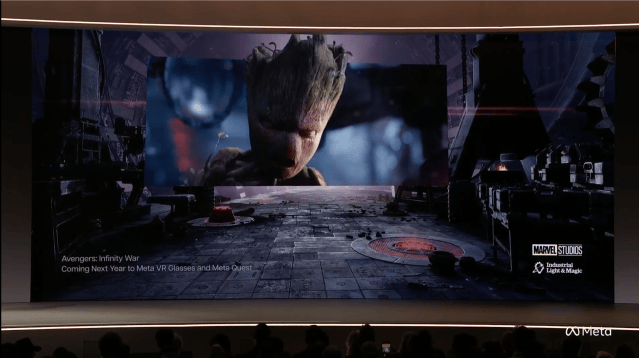
EXCLUSIVE IMAX MOVIES:
The Meta VR Glasses will be the first ever IMAX Enhanced certified VR device and will be one of the only ways to experience select films in IMAX’s exclusive expanded aspect ratio at home.
Subscribers will also be able to watch VR Enhanced versions of iconic films like Avengers: Infinity War and Star Wars: A New Hope in the new Disney Immersive Cinema by ILM app. The surroundings will be transformed with immersive environments, dynamic effects, stunning 3D visuals, and spatial audio to feel like one is not just watching a scene, but living inside it.
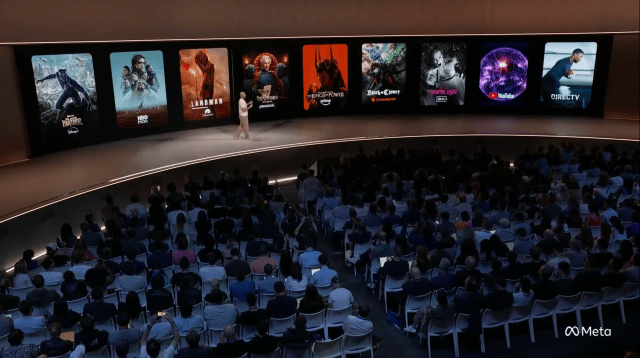
EXCLUSIVE 3D – MOVIES
3D movies may be making a resurgence. Once highly popular as the peak of the 3D movie boom around 2010–2011 following the massive success of James Cameron’s Avatar, major blockbusters and premium screens allocated roughly 70% to 80% of their prime showtimes and ticket sales to 3D presentations. 3D may come back roaring like vinyl records did.
“There’ll be new 3D experiences from Peacock, Paramount Plus, HBO Max, and you’ll get 2D streaming apps from YouTube, Prime Video, Crunchyroll, and more. It’s pretty good,” announced CTO Andrew “Boz” Bosworth.
The library will keep growing, with thousands of titles available internationally by Meta VR Glasses’ launch, including 3D favorites from Lionsgate. They are also partnering with director James Cameron and Lightstorm Vision to debut “first time in 3D” blockbusters in 2027.
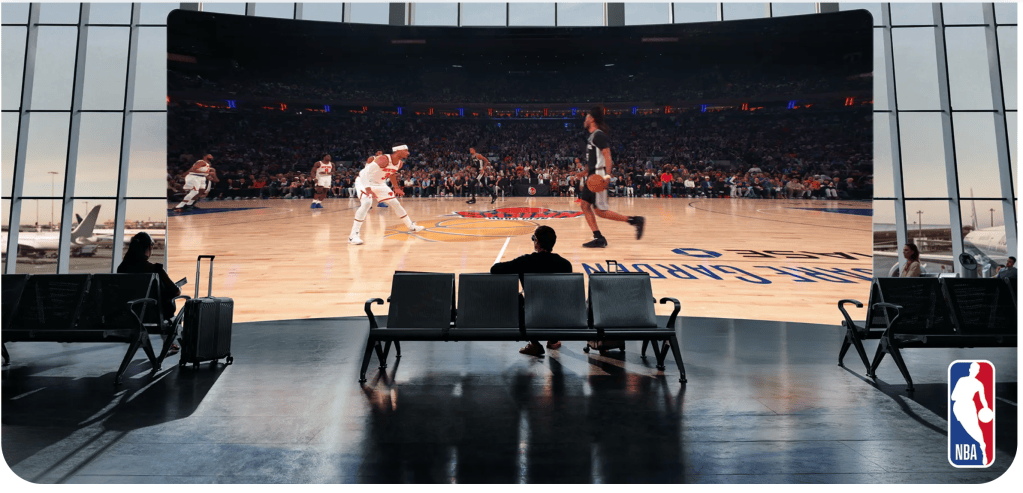
For the sports enthusiasts, Meta has been working with ESPN to give viewers “Immersive Sports” with a front-row seat, 8K streaming, and 180-degree views, starting with college football this year on their Meta Quest. When the Meta VR glasses launch, they plan to have over 100 immersive live sports events to watch each year from the best seat in the house partnering with MLB, NBC Sports, TNT Sports, and UFC.
For the gamers, Meta will have 75 VR games ready on launch day designed to be played with just your hands, no controllers required. Hundreds of games with XBOX Cloud Gaming can also be streamed, or users can connect a console or handheld to play on the massive display.
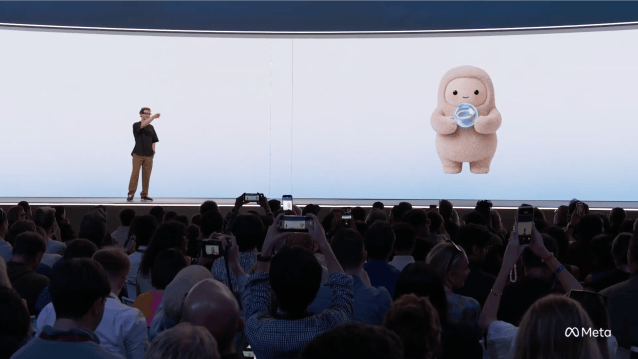
MEET YOUR PERSONAL AGENT
However, the main attraction was Meta’s cute personal AI agent. While Meta’s default setup name is “Jolly,” the agent can be renamed or redesigned to fit any preference. Meta CTO Andrew Bosworth renamed his agent “Cooper” and demonstrated to the crowd how to interact with it onstage during the keynote.
“You can use any flat surface for surface typing in your keyboard and mouse. I don’t happen to have a flat surface, so I’m going to make Cooper do the work for me,” Bosworth told the crowd. “Cooper, can you grab those schematics Mark just sent over and merge them with the latest hardware rev from last night and then render the whole thing in that material that we used for the fashion collab last year and then you better grab an hour of my calendar tomorrow so I can prepare for that meeting with Mark and then keep an eye on that auction for that camera lens we talked about. I want to know if that moves.”
Eight seconds later, Cooper replied, “Got it. Update schematics, merge hardware, render materials, block calendar, track option. I’m on it.”
“You’ve got a private cinema, a computer with multiple monitors, and a game console in a pair of glasses for the first time ever,” Zuckerberg summarized. “There’s really nothing else like this. It is a glimpse of the future.”
“Soon you’ll be able to join video calls from your display glasses and appear exactly how you want, no matter where you are or what you’re doing,” Bosworth added.
List price $1299. Ships in the Spring of 2027.
We should all be a “Mused”.