
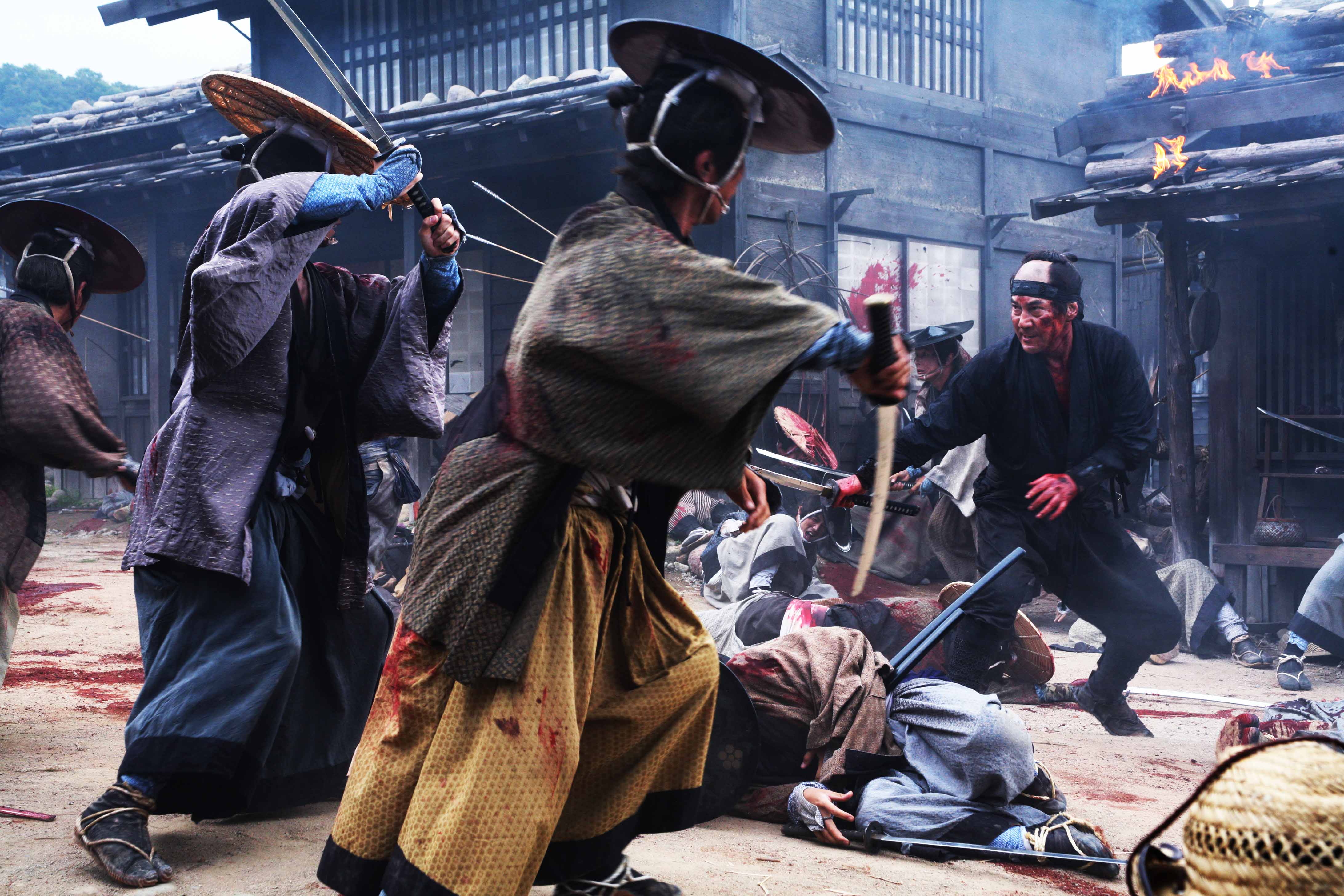
 Koji Yakusho in 13 ASSASSINS, a Magnet Release. Photo courtesy of Magnet Releasing. |
In fairness to Miike, you can’t judge a director from just one film. Especially if he’s done well over eighty of them over his prolific ten year career, averaging about three to four per year. (He makes more films a year than most people get their oil changed in a year.) His genre of films range all over the map; from Romantic Horror (“Audition”), Nouveau Western (“Sukiyaki Western Django”), New Musical (“Happiness of the Katakuri’s”), or Yakuza (“Dead or Alive”).
Regardless of the genre, all of his films are unquestionably “over the top” and an “acquired taste” to an eccentric audience, mainly male, who are usually quite forgiving given the unevenness quality of his output, but have an insatiable and intoxicating appetite for more. Many of Miike fans are in it for the shock value, but also have come to known him as a filmmaker who is out to surprise his audience, as well. Regardless of what you think of his films, you will find the directors’ trademark all over each of them.
Based on a true incident, the movie takes place in Feudal Japan in 1844, at a time when peace reigns, and samurai’s are set in “relax” mode. This quickly changes, as soon as the film opens with a stark and brutal scene showing a hara-kiri of a nobleman. Though no fault of his own, he takes his own life due to the shame of his innocent daughter, though no fault of her own, had disgraced the family because she was raped and murdered by the ruler, Lord Naritsugu. It was also an act by the family of protest of having a savage, such as Lord Naritsugu, as a ruler.
He is keenly obsessed with his own forms of sadistic violence. He enjoys the fear that he instills on his victims. At will, he will rape, kill, and dismember for sheer pleasure, just because he has the power and no one will stop him. Not even women, children and babies are safe from his whimsical actions. He is a merciless tyrant. Just ask the limbless woman whom he used as a plaything…oops, she can’t talk.
Like “Seven Samurai”, the film shows how the assassins are rounded up and why they wish to fight. Shimada hires eleven samurai, along with his nephew. Even though they all have different reasons for fighting, (glory, money, revenge) they all have the same duty and honor of a samurai; to bravely fight and die as a samurai.
The thirteenth assassin, Koyata, like Toshiro Mifune’s, Kikuchiyo , whom we later meet along the way, adds some surrealistic comic relief to the film, and it works to the films advantage.
Though, the characters are not quite as well compassionately defined as Kurosawa’s, the film is quite remarkable, nevertheless. Miike has rarely been this accessible, and the film demands to be seen on the big screen, as it is a cinematic feast and a grand action samurai film. The sets, costumes, and art direction are reason alone to see if at your local theatre, if you are lucky to find one nearby. Don’t wait for it on video. You’ll do yourself a disservice…unless this movie doesn’t sound like your cup of tea.
website: http://www.13assassins.com/
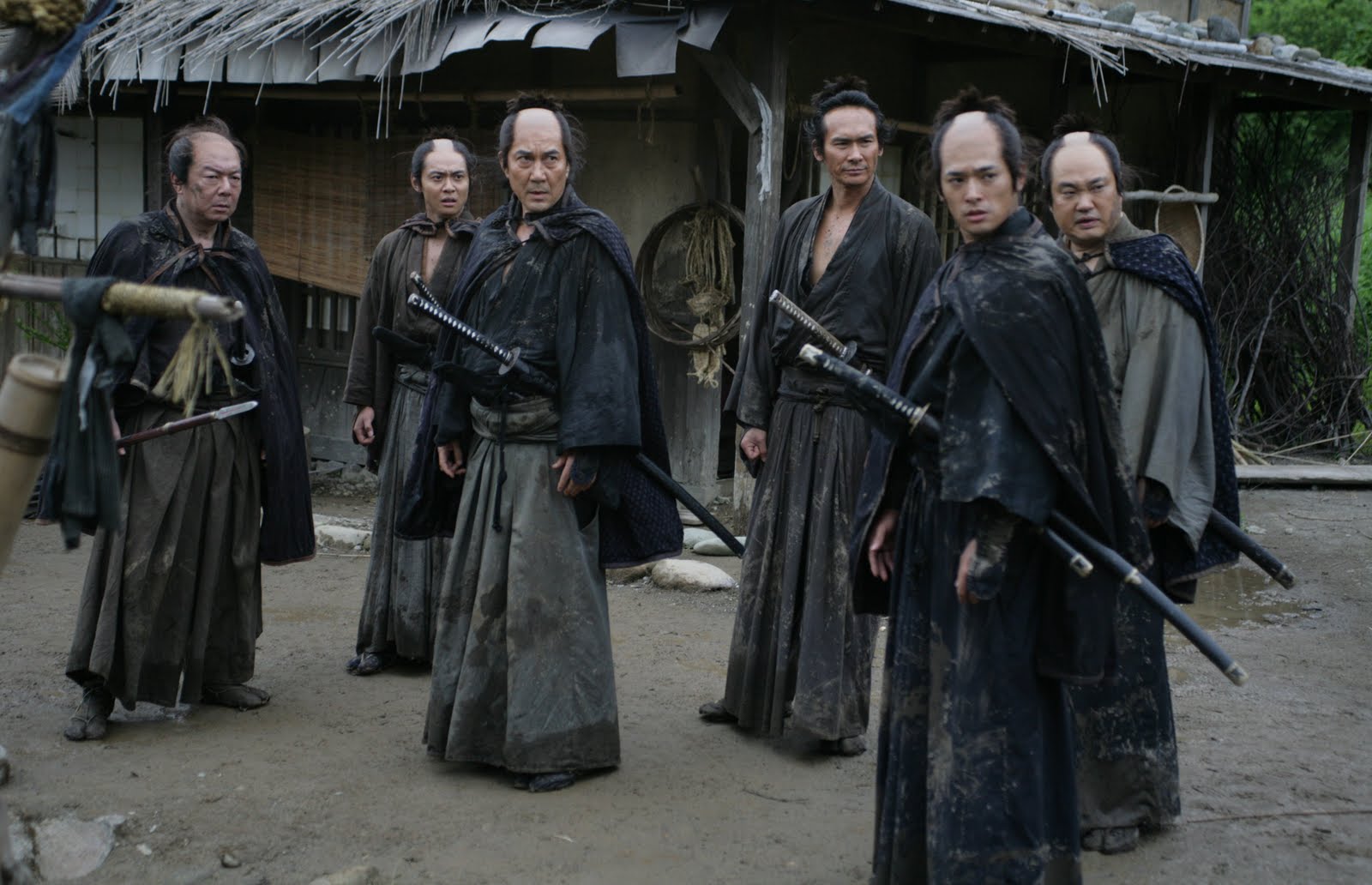 |
| Koji Yakusho in 13 ASSASSINS, a Magnet Release. Photo courtesy of Magnet Releasing |


 mlsentertainment