
Opening Keynote: Paul Otellini
The Evolution of Computing: Looking Ahead
September 13 @ 9:00 a.m.
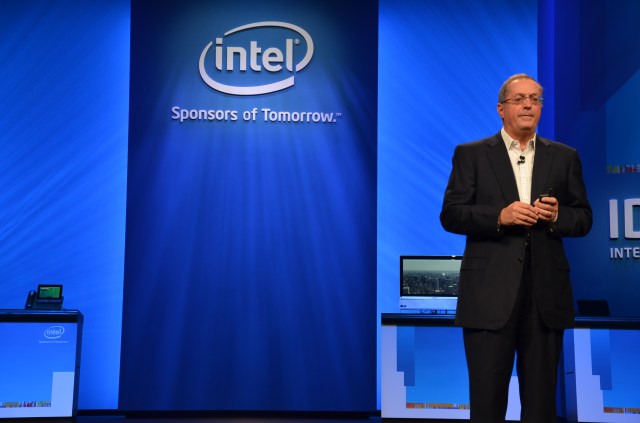
Paul Otellini, President & CEO of Intel Corporation addresses the IDF2011 conference in San Francisco at Moscone West.
PHOTOS BY MARCUS SIU
INTEL DEVELOPER FORUM, San Francisco, Sept. 13,
2011 – Intel Corporation today announced a new effort with Google* that aims to
accelerate Intel’s business in smartphones.
The company also revealed that Intel’s engineers are working on a new class
of platform power management for Ultrabooks™ that will aid in the delivery of
always-on-always-connected computing.
Intel’s President and CEO, Paul Otellini, made the announcements during the
opening keynote of the Intel Developer Forum in San Francisco.
“Computing is in a constant state of evolution,” said Otellini, describing
the opportunities and challenges facing Intel and the industry. “The
unprecedented demand for computing from the client devices to the cloud is
creating significant opportunity for the industry. Intel is innovating and
working with our partners to deliver computing experiences that are more mobile,
secure and seamless. I’m excited about the new experiences that will be created
across a range of devices, and we’re just getting started.”
Growth in New Market Segments
Addressing a major corporate goal of growing Intel’s business in adjacent
computing market segments, Otellini discussed the company’s recent efforts to
accelerate its smartphone business and showcased a form factor reference design
based on Intel® Atom™ processor, and running the Android™ platform.
Otellini then introduced Andy Rubin, Senior Vice President of Mobile at
Google*. The two executives outlined plans to enable and optimize future
releases of the Android™ platform for Intel’s family of low power Intel® Atom™
processors. The joint effort is designed to speed time-to-market of Intel
technology-based smartphones running the Android platform.

Andy Rubin of Google joins Otellini onstage discussing the strategic alliance between Google's "Android" and Intel.
“Our collaboration with Google will bring a powerful new capability to market
that helps accelerate industry innovation, adoption and choice,” said Otellini.
“I’m excited by the possibilities of this collaboration. It will enable our
customers to bring exciting new products and user experiences to market that
harness the combined potential of Intel architecture and the Android
platform.”
Today’s announcement builds upon the two companies’ recent joint initiatives
to enable Intel architecture on Google products. Joint initiatives include
Chrome OS, Google TV, and the Android Software Development Kit (SDK) and Native
Development Kit (NDK).
Pushing the Limits of Low Power for Ultrabooks™ and
Beyond
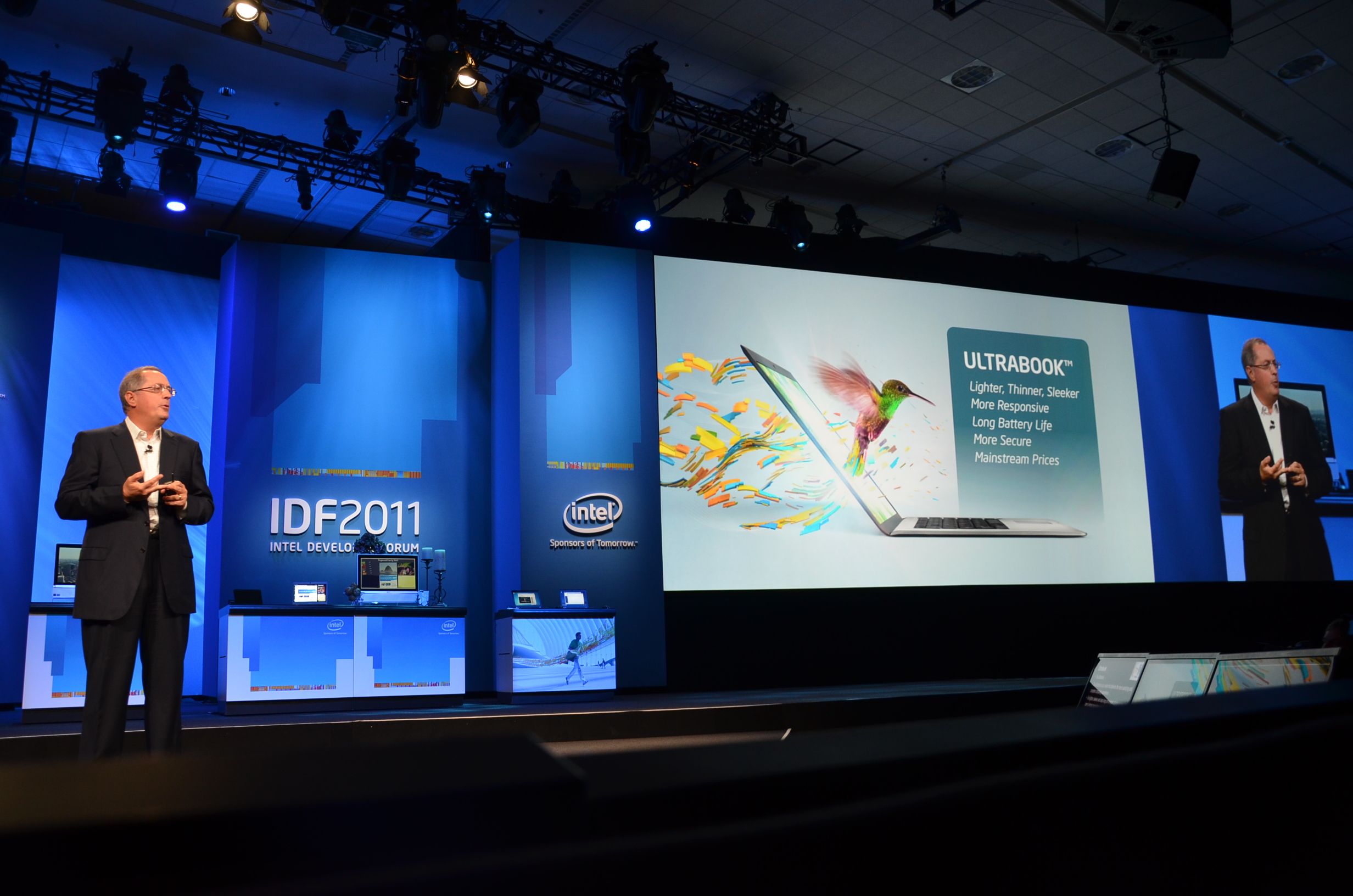
Paul Otellini, President & CEO of Intel Corporation announces the Ultrabook, which will be released this fall.
Otellini predicted that Ultrabook systems will provide the most satisfying
and complete computing experience. The company is working with industry partners
to deliver mainstream-priced products beginning this holiday season for this new
category of lighter, sleeker compute companions.
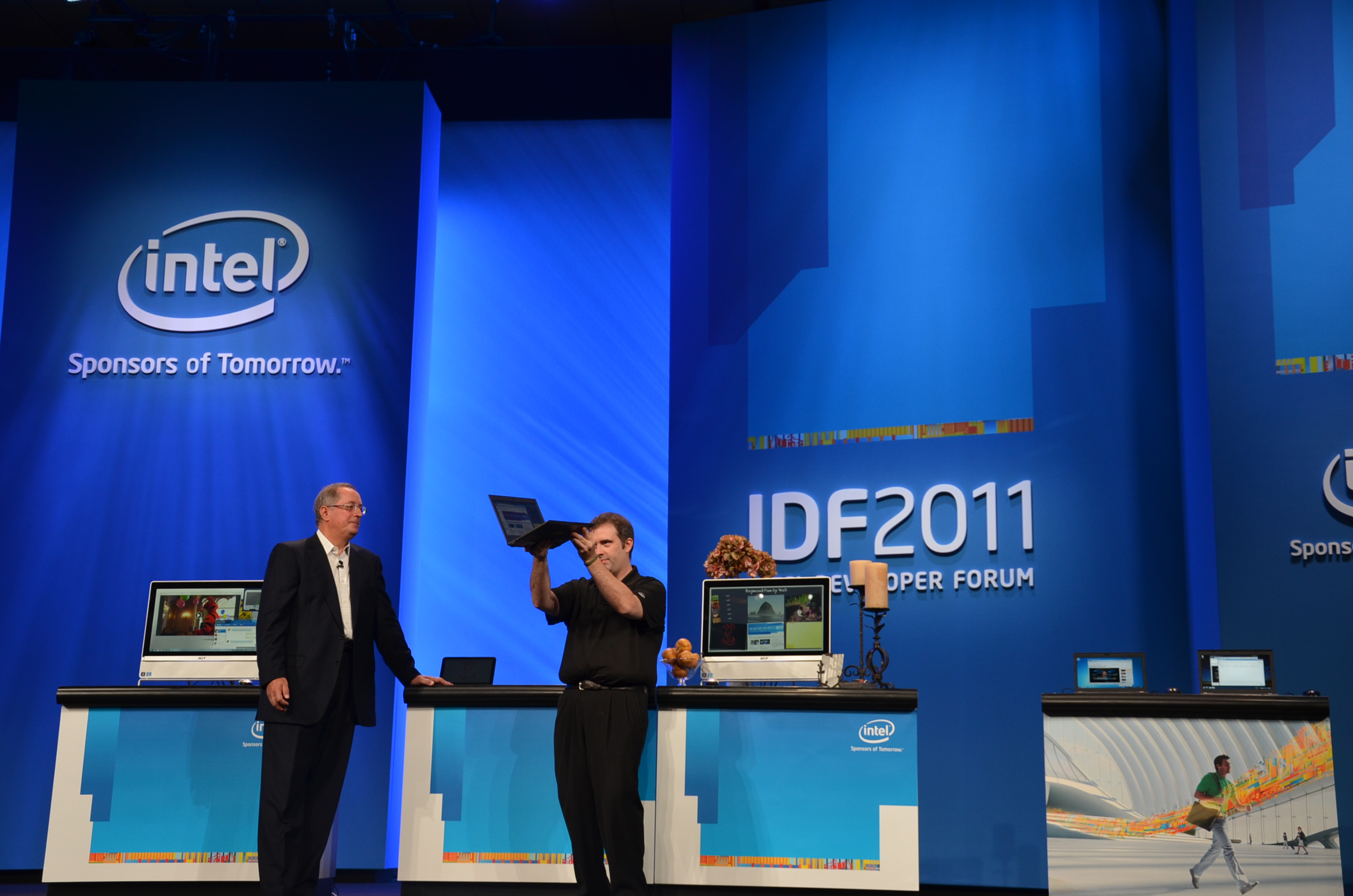
Craig Raymond displays the ultrathin Ultrabook, which is no higher than 21mm, which is not even one inch.
Intel’s CEO said the company’s engineers will further accelerate Ultrabook
innovation with Intel’s “Ivy Bridge” 22nm technology early next year with the
help of the company’s revolutionary 3-D Tri-gate transistors.
He highlighted the broad enabling work between Intel and Microsoft, and
pointed to the future opportunities that Windows 8 will present across tablets,
hybrid devices and new form factors such as Ultrabooks™.
Otellini also described the new class of platform power management in
development for the 2013 “Haswell” products for Ultrabooks. The advances in
silicon technology and platform engineering are expected to reduce idle platform
power by more than 20 times over current designs without compromising computing
performance. Otellini said he expects that this design change, combined with
industry collaboration, will lead to more than 10 days of connected standby
battery life by 2013. The advancements will aid in delivery of
always-on-always-connected computing where Ultrabooks stay connected when in
standby mode, keeping the e-mail, social media and digital content
up-to-date.
Looking further into the future, Otellini predicted that platform power
innovation will reach levels that are difficult to imagine today. Intel’s
researchers have created a chip that could allow a computer to power up on a
solar cell the size of a postage stamp. Referred to as a “Near Threshold Voltage
Core,” this Intel architecture research chip pushes the limits of transistor
technology to tune power use to extremely low levels.
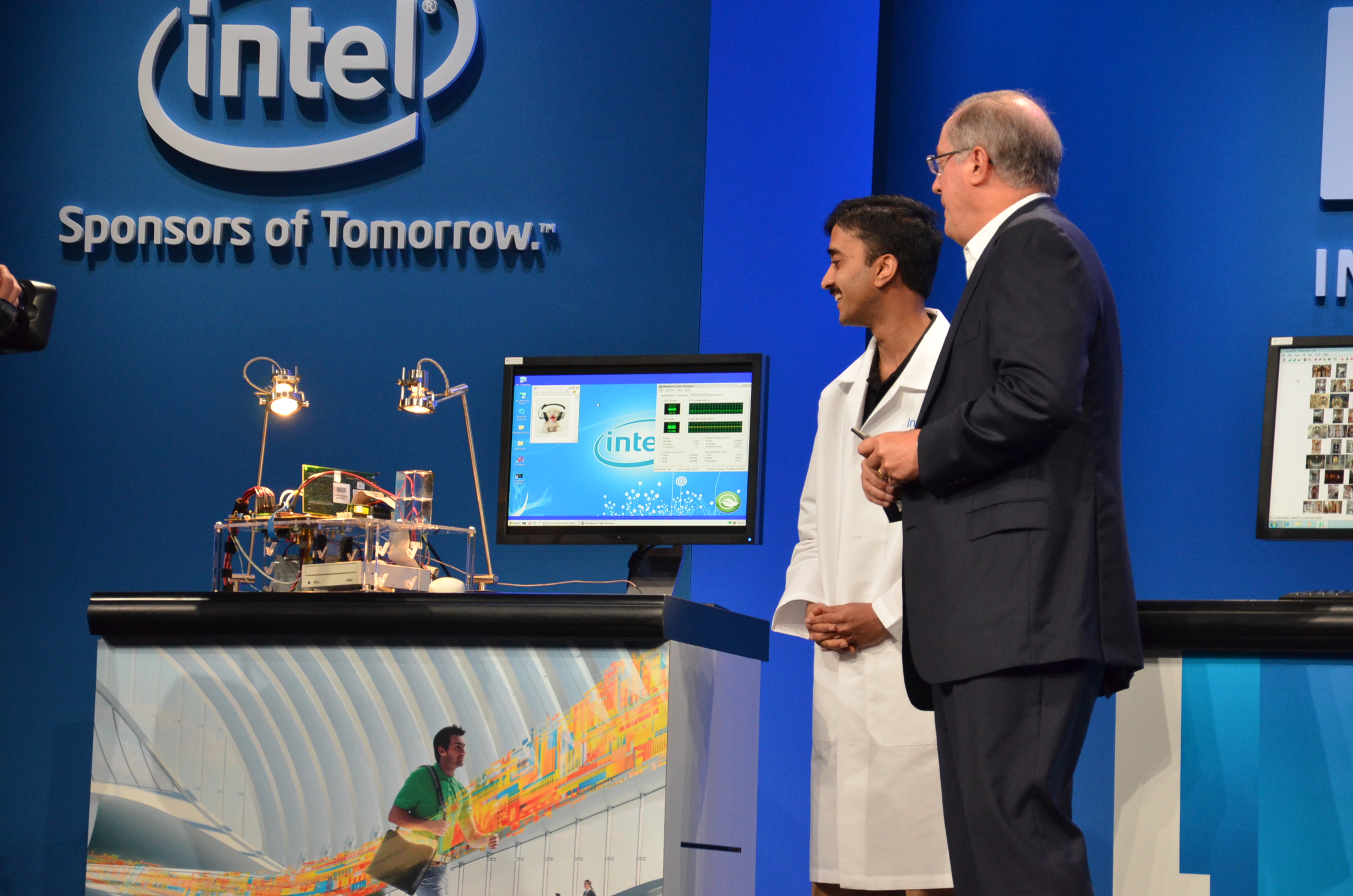
Sriram demonstrates a proto-type processor which is running through a small solar cell, the size of a postage stamp.
Securing the Next Billion Computing Devices
Otellini was joined on stage by Candace Worley, senior vice president and
general manager, Endpoint Security at McAfee. She discussed how Intel and
McAfee have been working together on a range of innovative hardware assisted
software security solutions.
The two executives reinforced the growing need for continued investment and
innovation as billions of new computing devices are expected to connect to the
Internet and with one another.

Candace Worley of McAfee Security discussing the "DeepSAFE technology Platform", joins Otellini onstage.
Worley introduced McAfee’s new DeepSAFE technology platform that works with
hardware capabilities found in the Intel® Core™ i3, i5 and i7 processors.
DeepSAFE technology provides new levels of security and a different vantage
point by operating below the operating system. This technology will launch in a
McAfee enterprise product later this year.
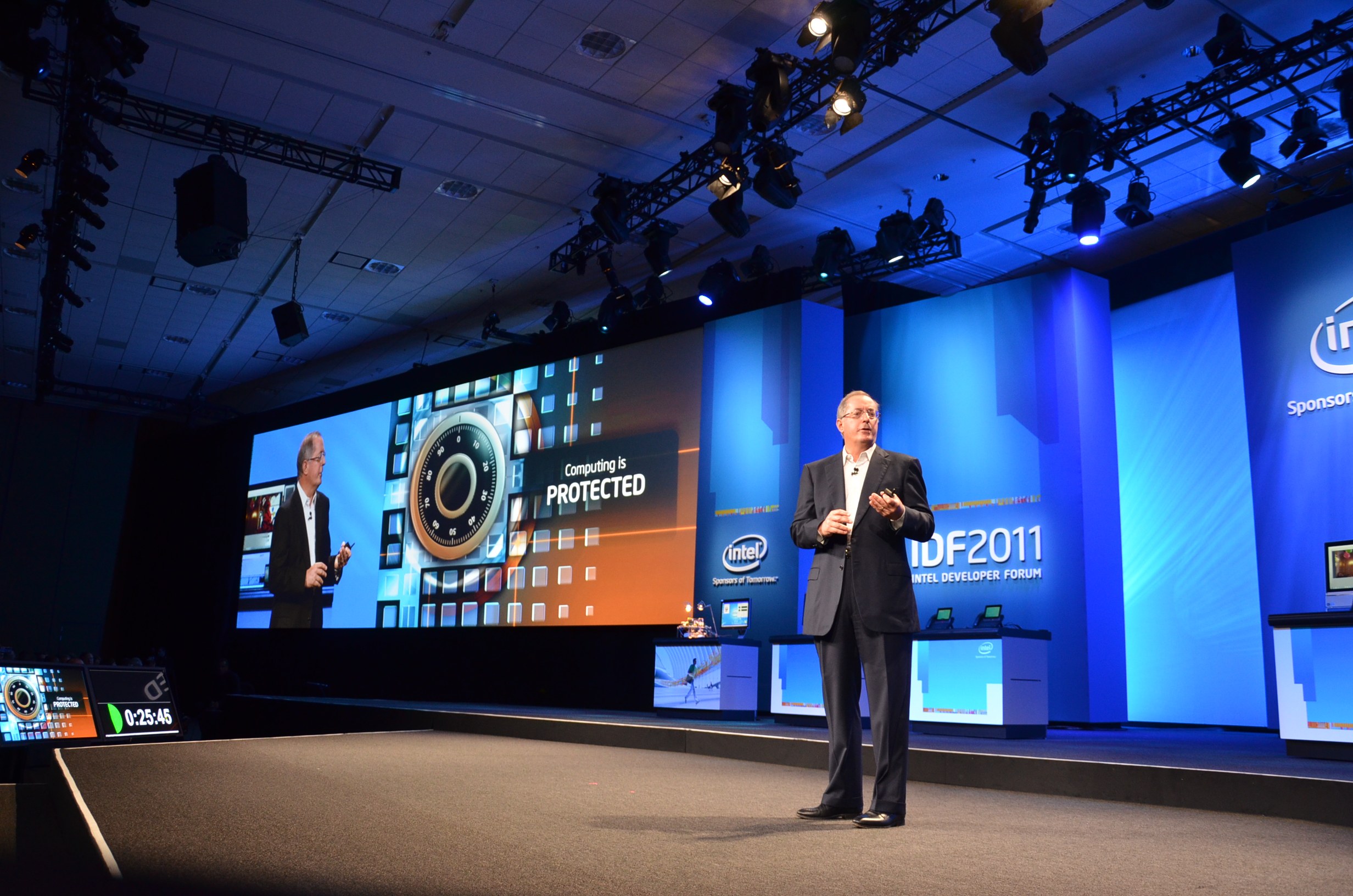
Otellini announced that Intel is working with McAfee on a roadmap of security
solutions that extend across the spectrum of computing from embedded devices to
the cloud.
Seamless, Consistent, Interoperable Experiences
With computing continuing to evolve, Otellini emphasized the need for
seamless, consistent and interoperable experiences across a variety of devices.
To help support this vision, Intel is now building capabilities into a broad
array of devices including Ultrabooks and all-in-one computers. Otellini
demonstrated several new capabilities that will be available on Acer*, Lenovo*,
and Toshiba* systems later this holiday season.
More information about the products and technologies demonstrated in the
keynote is available at www.intel.com/newsroom/idf.
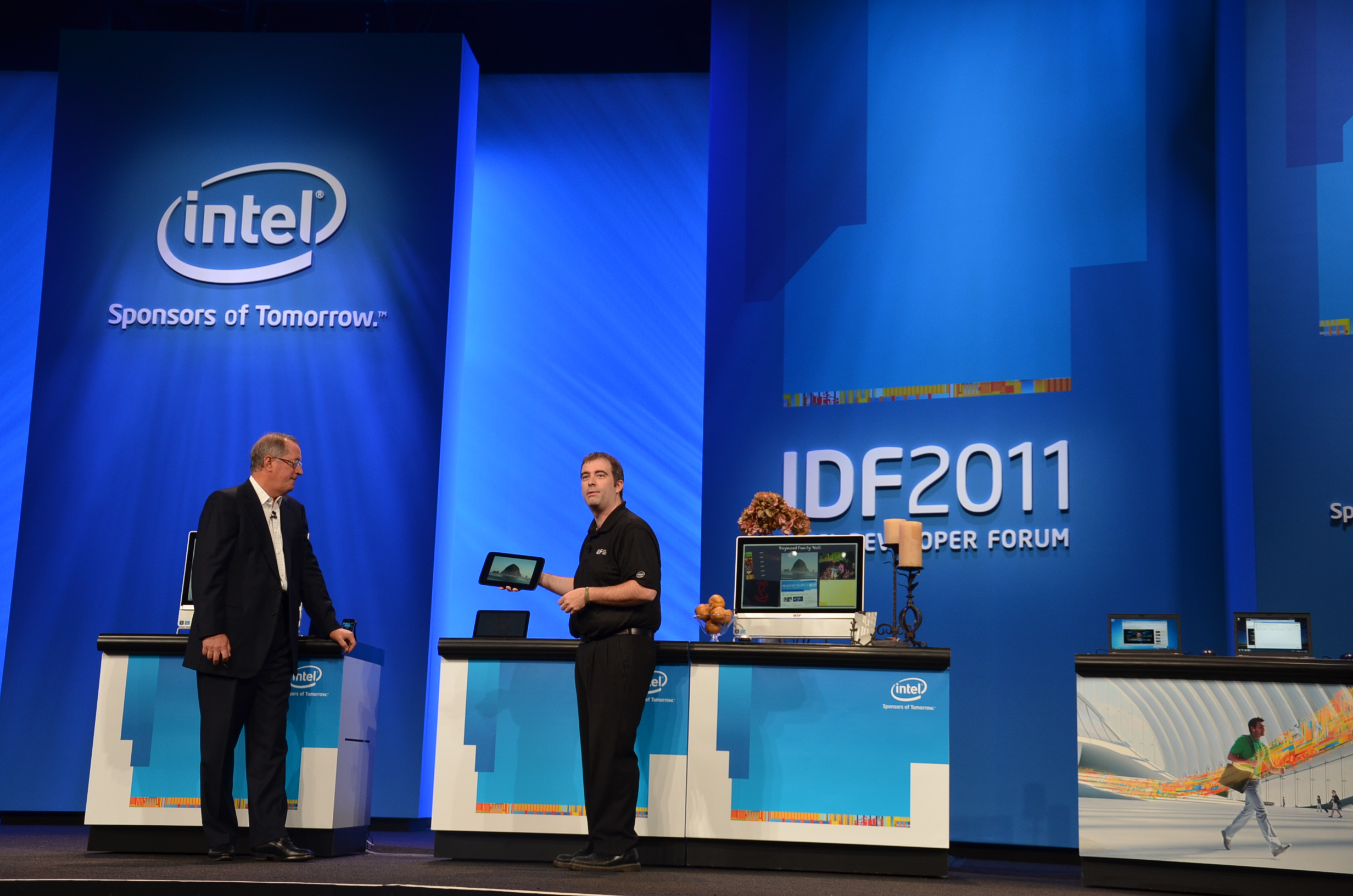
Intel prototype Medfield-based Android tablet using the Atom processor was used in the continuum demo.
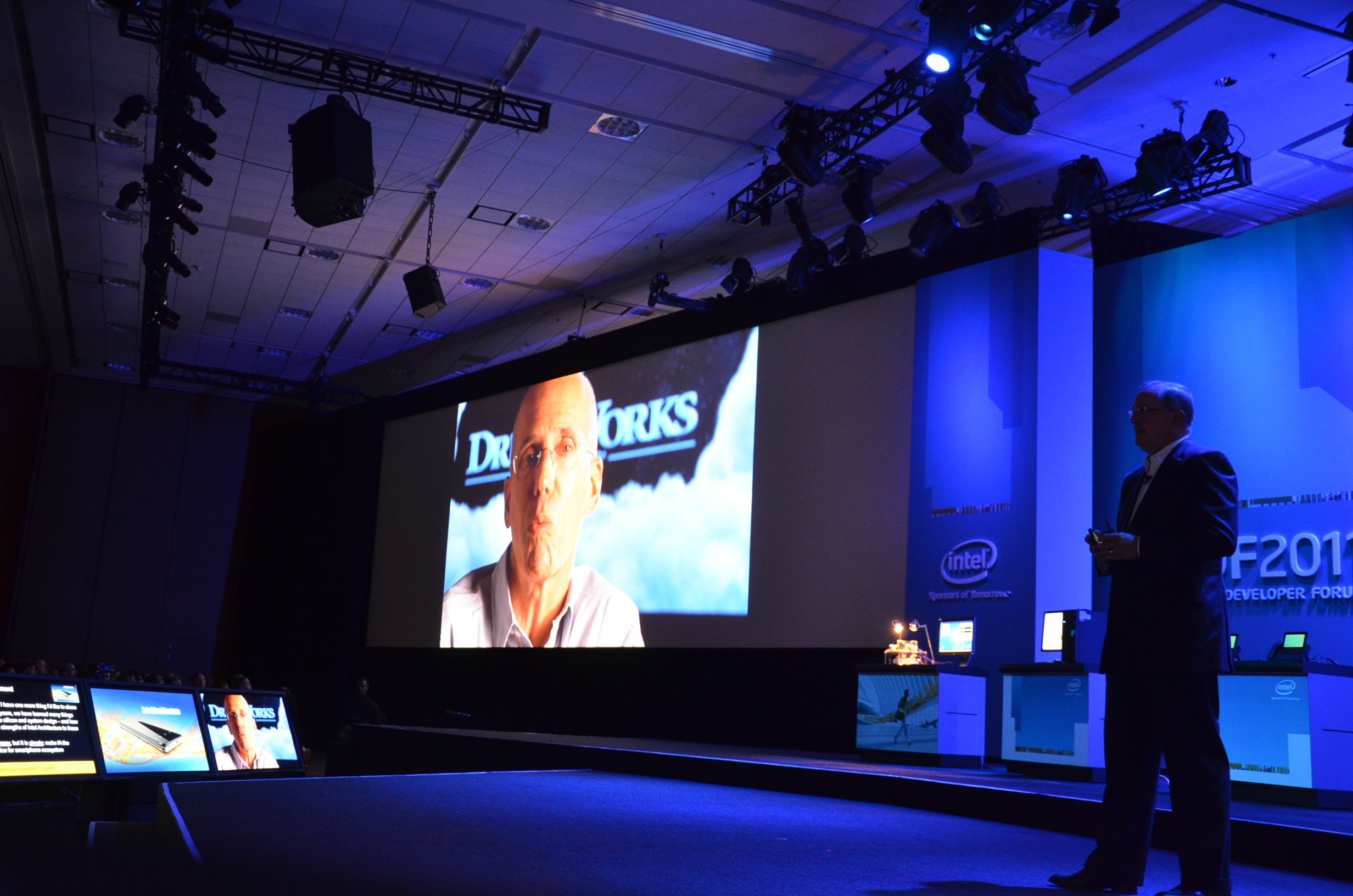
"At Dreamworks Animation, we animate movies. At Intel, they animate the world." - Jeffrey Katzenberg
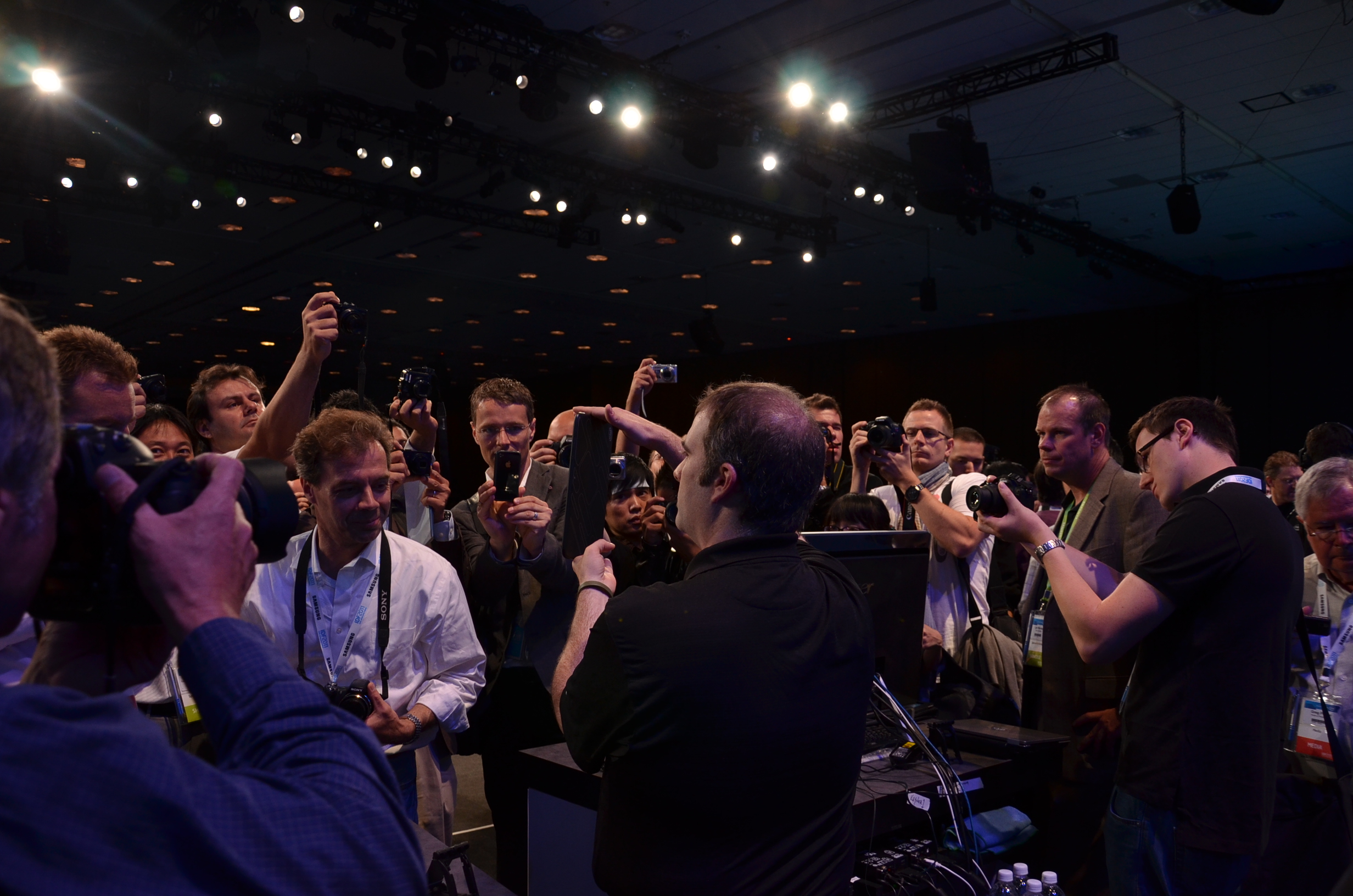
The prototype Medfield based Intel tablet was the star of the show.
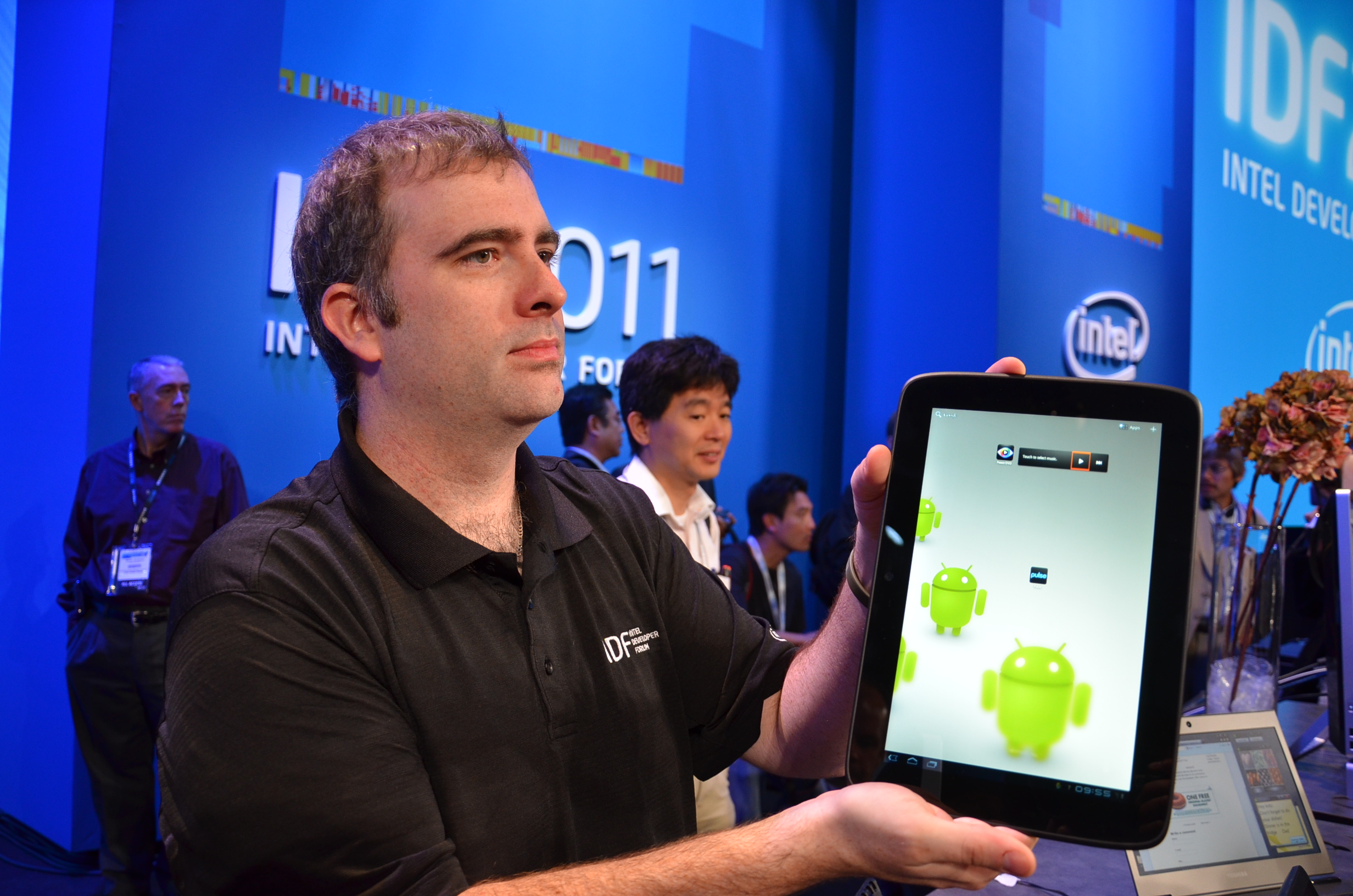
The prototype Intel Medfield-based Android tablet, running Google's Honeycomb operating system.
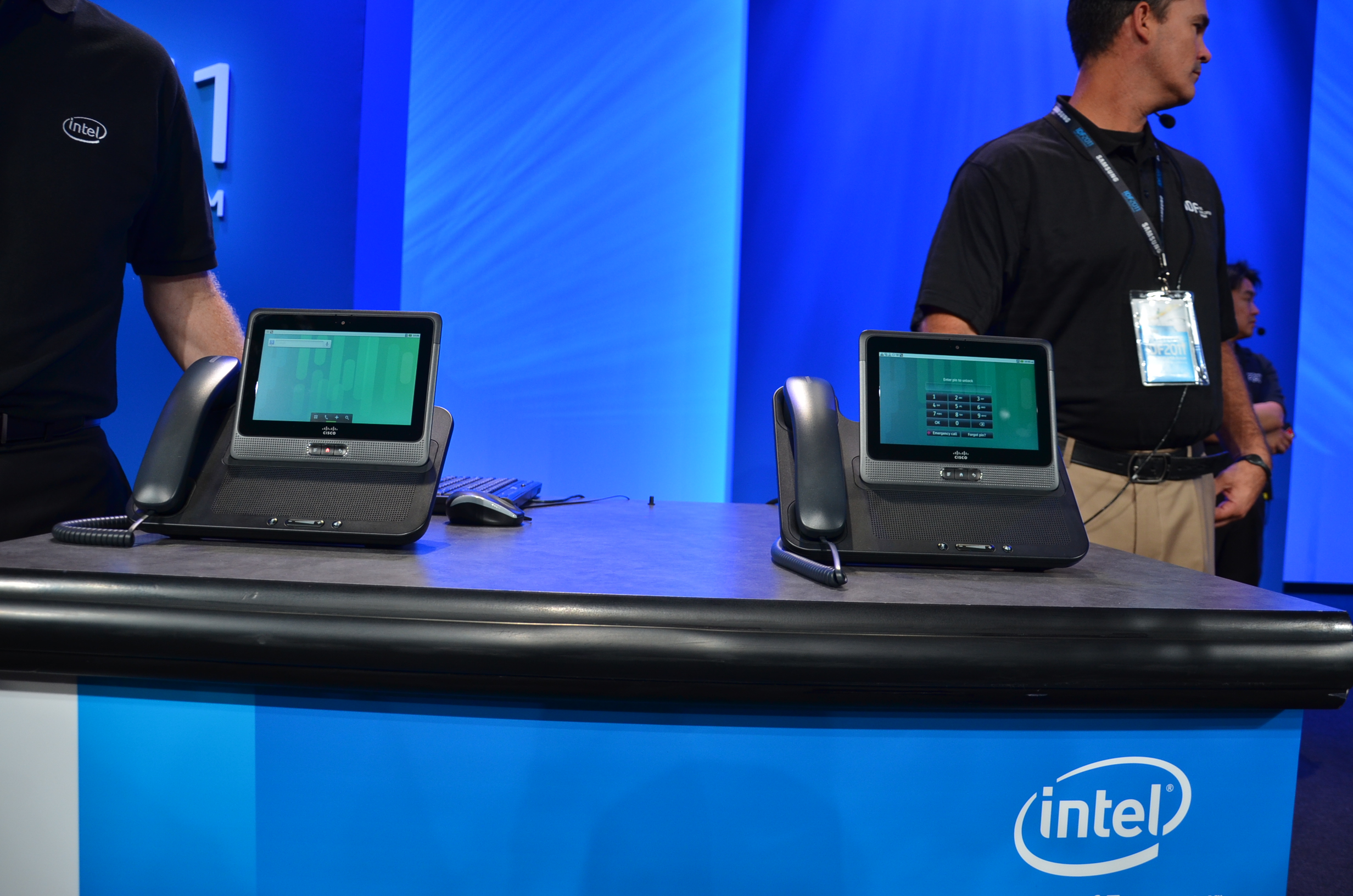
Intel and Cisco partnered up to update the "Cius", which should replace the office phone. Not only does it take phone calls, but also video chats, e-mails, web-ex sessions, instant messages. It's also a tablet that you can take on the go.
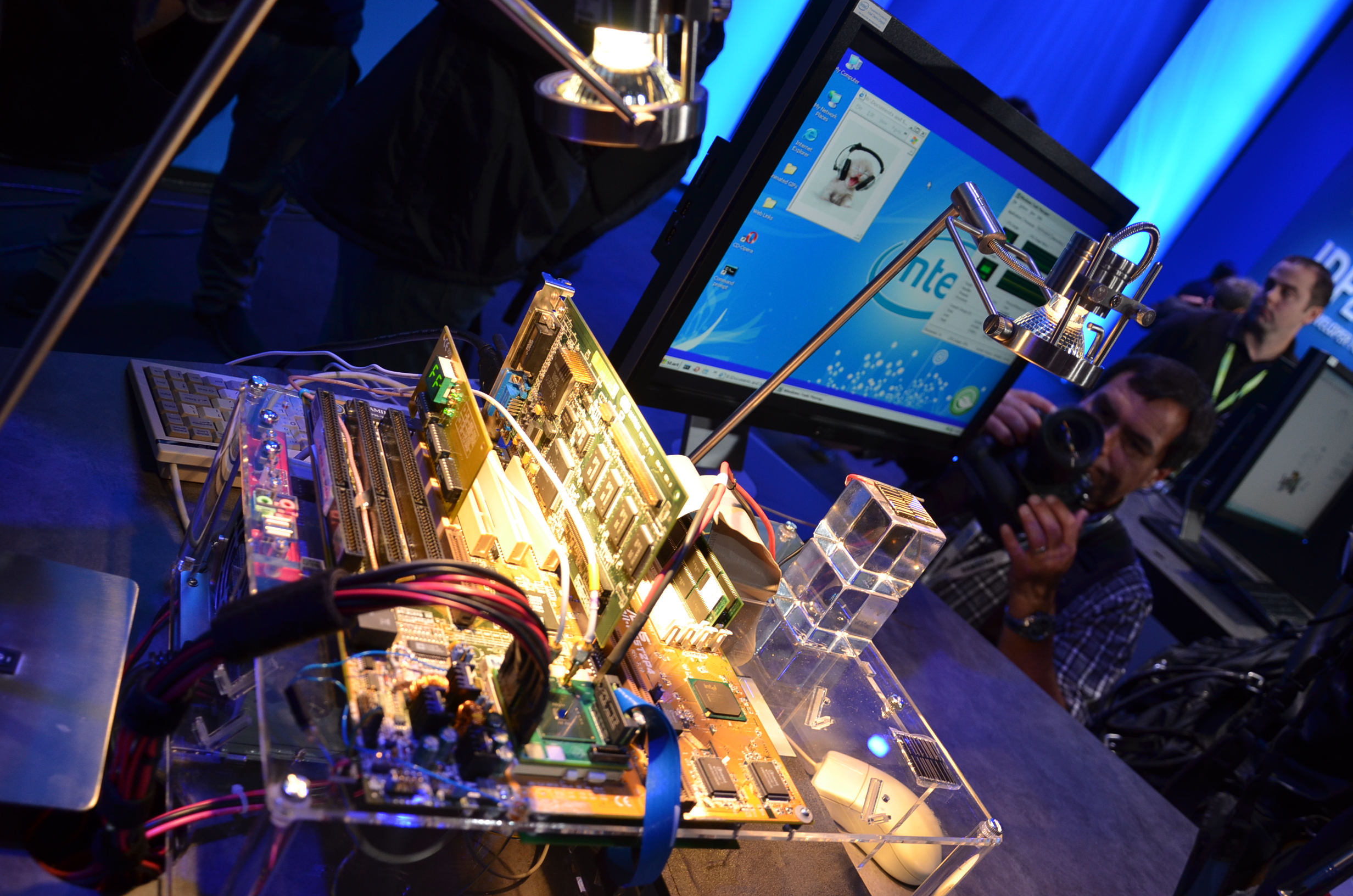
Up close and personal: a closer look at the prototype "postage stamp" processor.

 mlsentertainment