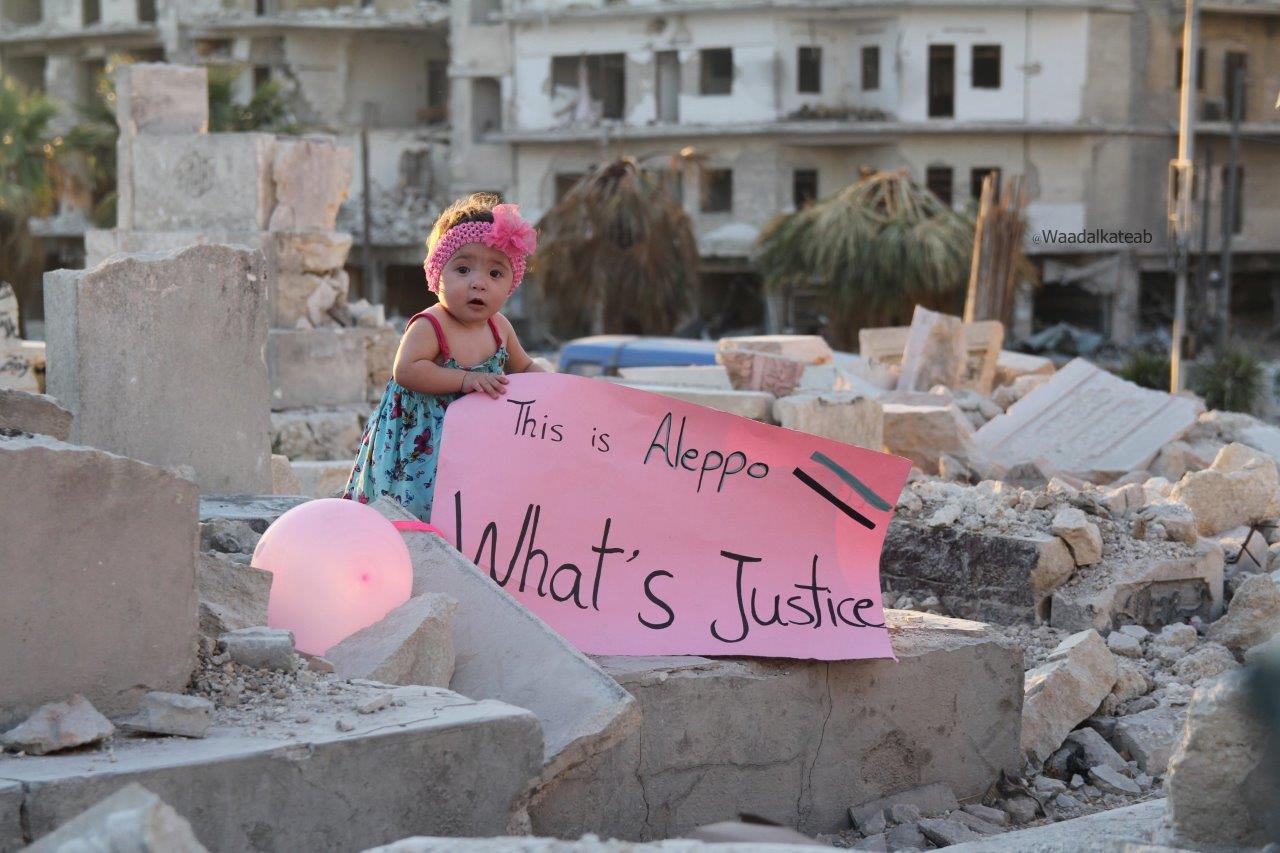
Sama pictured in September 2016, in the bombarded east of the city with a placard in response to US presidential candidate Gary Johnson’s infamous gaffe “What’s Aleppo” Courtesy of PBS Distribution
FOR SAMA is both an intimate and epic journey into the female experience of war.
A love letter from a young mother to her daughter, the film tells the story of Waad al-Kateab’s life through five years of the uprising in Aleppo, Syria as she falls in love, gets married and gives birth to Sama, all while cataclysmic conflict rises around her.
Her camera captures incredible stories of loss, laughter and survival as Waad wrestles with an impossible choice – whether or not to flee the city to protect her daughter’s life, when leaving means abandoning the struggle for freedom for which she has already sacrificed so much.
The film is the first feature documentary by Emmy award-winning filmmakers Waad al-Kateab and Edward Watts.
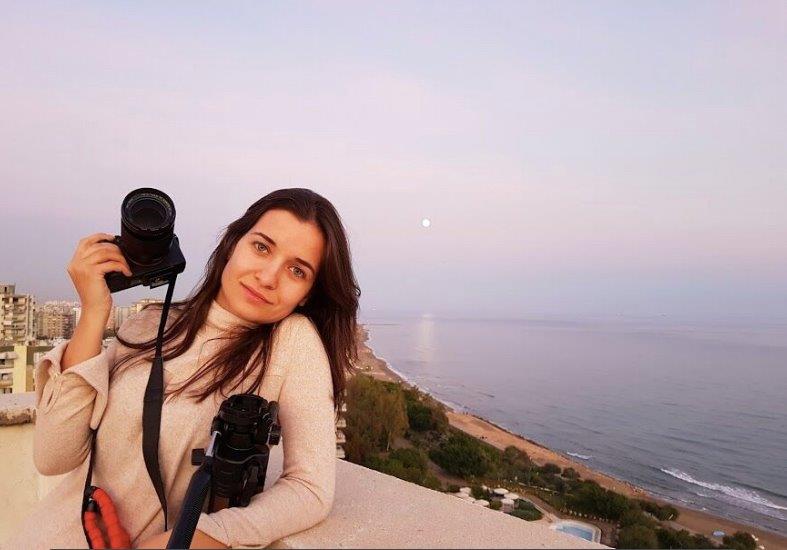
Director, cinematographer, and activist survivor of “For Sama”, Waad al-Kateab. Courtesy of PBS Distribution.
Article by Marcus Siu
The documentary,”For Sama”, seems to have all the right elements for a classic Hollywood love story. A young and optimistic college co-ed shows up at a peaceful anti-government demonstration protesting for human rights at the local University. There she meets a young doctor among a group of friends, who shares the same passion for life as she does. They fall in love, get married in a joyous wedding ceremony, move into their very first home and immediately become proud parents to an adorable beautiful baby girl named “Sama”.
Sounds perfect, right? Not quite.
We need to rewind back to 2012 when Waad al-Kateab was a young co-ed college student majoring in Economics at the University of Aleppo, where she joined thousands of anti-government protesters at a peaceful demonstration. As the demonstration evidently became more violent, with the increasing tension between the demonstrators and the authoritarian Syrian government led by President Bashar-al Assad, she began to document footage on her mobile phone. From that day on, she started to record on a regular basis.
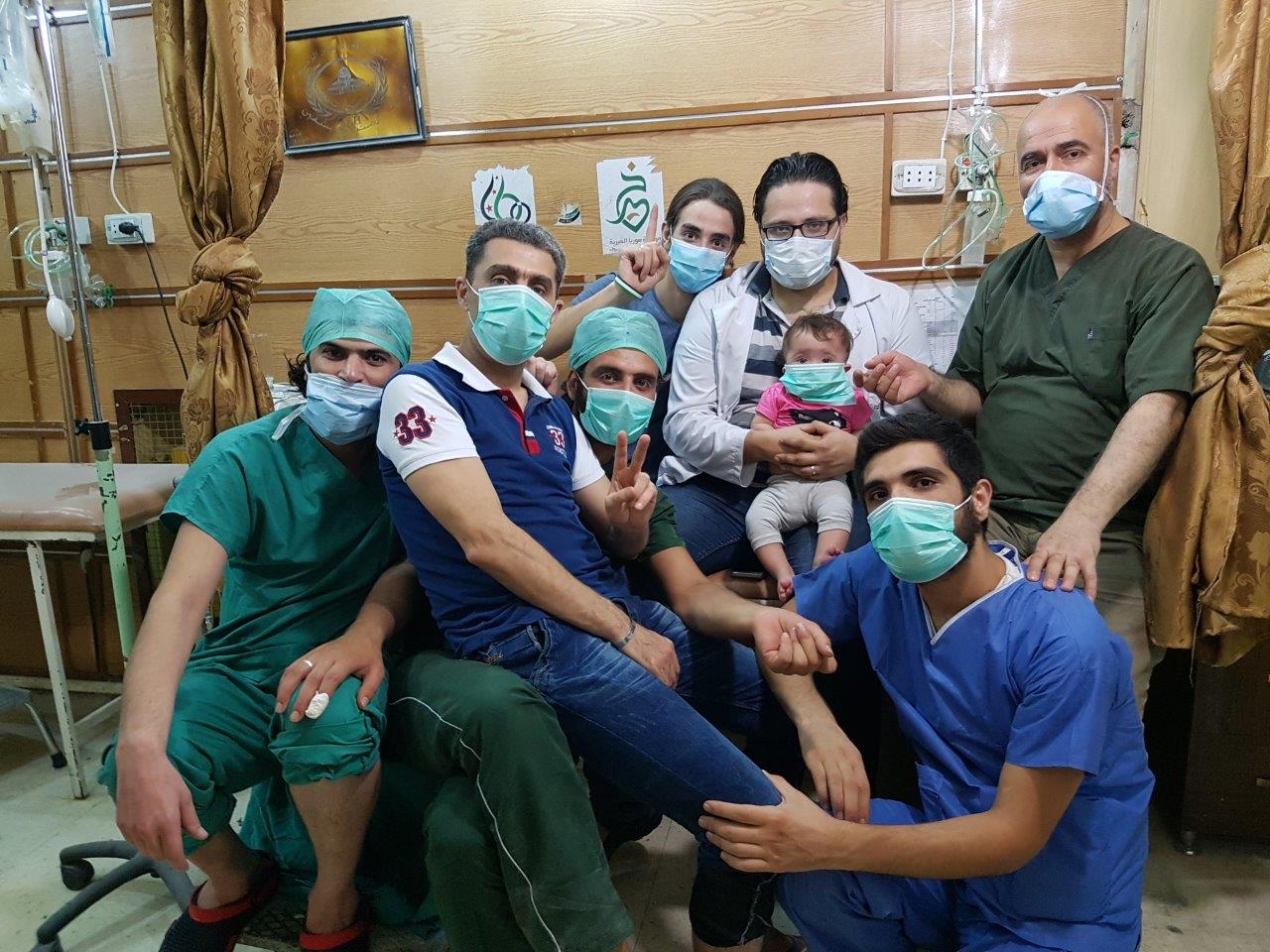
Hamza, Sama and the staff of al-Quds hospital, which Hamza set up in 2012 in east Aleppo. Courtesy PBS Distribution.
Among with her activist friends, she meets her soon-to-be husband, Hazma, who works as a doctor at the Al-Quds hospital that he set up in Aleppo. She moves in with him there along with the rest of the medics and became part of his “family”. This enabled her to gain access to film at to the hospital that would normally would be off limits for any other outsider.
While her camera documented much death and destruction, there were numerous scenes of heroism at the hospital, as well. Many lives were saved, including a pregnant woman with her unborn baby. The unconscious woman is brought into the hospital where the medics quickly do a cesarean to attempt to save her baby. When the baby is removed, he is also unconscious and not breathing, but after what seemed like endless perseverance in trying to resuscitate him, he is revived. This scene also reflects al-Kateab’s unwillingness to give up on hope. Any other filmmaker would have stopped the camera in a matter of seconds assuming the baby was dead, but instead al-Kateab’s camera continued to roll.
In addition to having direct access to the hospital, al-Kateab was able to document what it was like for children to be growing up and living in times of war. She follows the group of schoolchildren who are being transported and directed by female teachers into small classrooms located in the basement of buildings that provide a dual purpose for a conducive learning environment, as well as a protective bomb shelter. Many of the children shared their hatred for the Syrian government regime and leader.
When the children return home to their rubble piled neighborhood, they discover the remains of a school bus left standing with its smoked blown exterior shell and its steel interior. In it we see a boy spinning its still intact driving wheel pretending to be the bus driver as the other boys play in the back as though they were at a local neighborhood playground. A little girl watches them and speculates the bus was blown up by cherry bombs. In between the Russian air strikes, the children are given cans of different colored paint from the adults who encourage them to paint the exterior of the bus just for fun, though other children may have preferred jumping in the man made pond in between all the rubble.
In a heartbreaking scene, a little boy is standing overhead a ledge on the third story of his home overlooking the devastation all around him. He is deep in thought but is holding back his tears as much as he can. Al-Kateab asks why he is sad and he answers that he is a “little” disappointed that his friends his own age have fled from the city but he still prays and forgives them for abandoning him. Some of his friends and their family have been killed by bomb attacks and knows it can happen this can happen to him at anytime, as well, but his family has chosen to stay put since they have no other place to go.
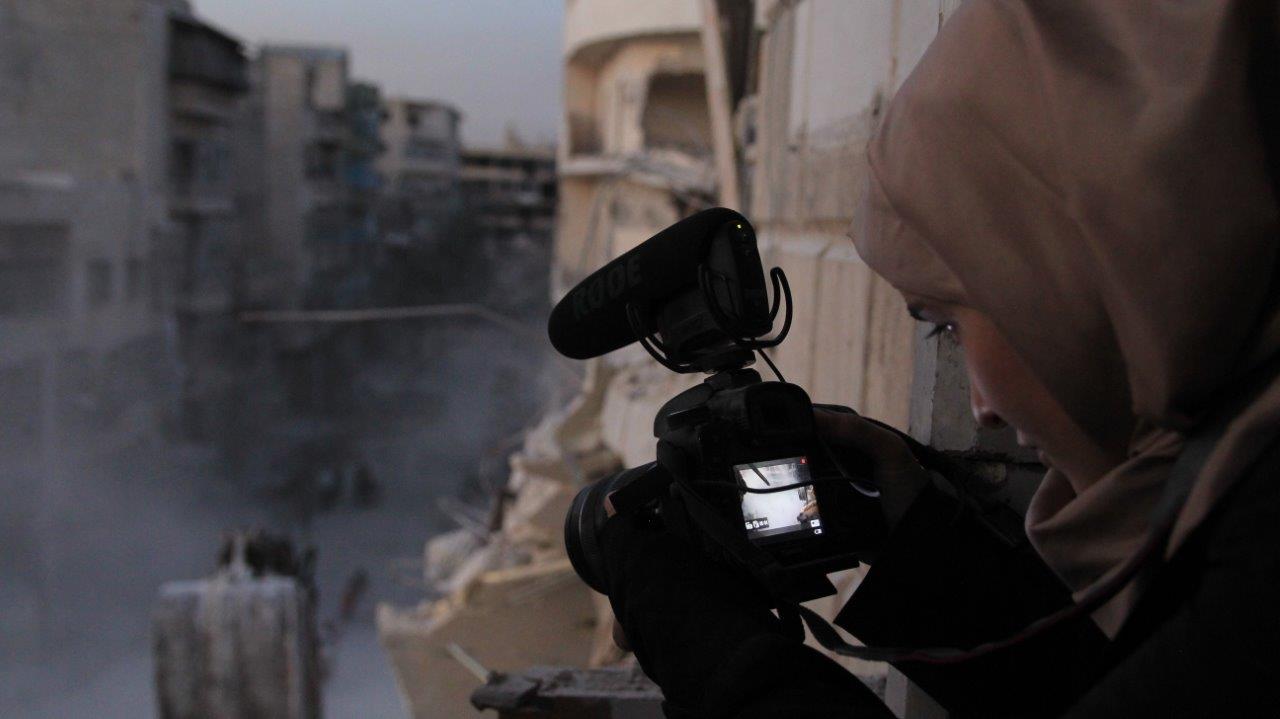
Waad al-Kateab filming the ruins of a building destroyed by bombing in besieged east Aleppo, October 2016. Courtesy of PBS Distribution.
Not everything Waad al-Kateab captures is about loss and devastation from the war, but joy and happiness from of her own personal life and milestones. There are intimate scenes sharing her declaration of love to Hazma; sharing jokes and good times with her friends; celebrating her wedding ceremony; and gleaming with joy in front of the mirror pregnant with Sama. Perhaps the most poignant scene in the movie is when we see a close up Sama peacefully sleeping, with her mother softly and lovingly repeating her name until Sama responds by cracking a little smile without opening her eyes.
War is no place for anyone, but certainly not for children whose childhoods were taken away from them with no say in the matter. Sama was born in January of 2016 during the last and most violent year for the battle of Aleppo. That was the same year that the government regime and its allies resorted to every imaginable atrocity to crush the rebels including bombing the last remaining hospital. The rebels are besieged and witness attacks by chlorine gas, cluster and barrel bombs, and massacres of women and children.

Waad, Hamza and Sama look at graffiti they painted on a bombed-out building, protesting against the forced exile of the civilian population of east Aleppo by forces of the Syrian regime and their Russian and Iranian allies, December 2016. Courtesy of PBS Distribution.
Both Waad and Hazma al-Kateab lost friends and narrowly escape death themselves at the hand of snipers, airstrikes and barrel bombs, scenes all captured on camera. During that time, Waad continued to struggle with the personal choice of abandoning Aleppo to protect Sama or her freedom in which she strongly believes in. “For Sama” is not just a love letter to her daughter, but also a document that will help comprehend the world that she grew up in; where children just like her are immune to the wartime sounds and destruction around them and accepts it as part of life.
Recipients of the “Golden Eye” at the Cannes Film Festival for “For Sama”, al-Kateab, along with her collaborating director, Edward Watts, have created a deeply riveting, intimate and personal film. Responsible for structuring her personal story from the many hundreds of hours of footage, Watts contributed to the cohesiveness in the first person narrative in which the audience can easily relate and sympathize with. It also puts faces onto the innocent victims of Syrians, of which approximately 500,000 people were killed in the country where 11 million people were seeking refuge or were replaced internally between 2012 and 2017.
This film not only shows the intimate and epic journey into the female perspective of war, but also it shows it as more of a more human one, as well. This is essential viewing for all.
Opens July 26th, 2019 in Los Angeles, New York, and San Francisco.
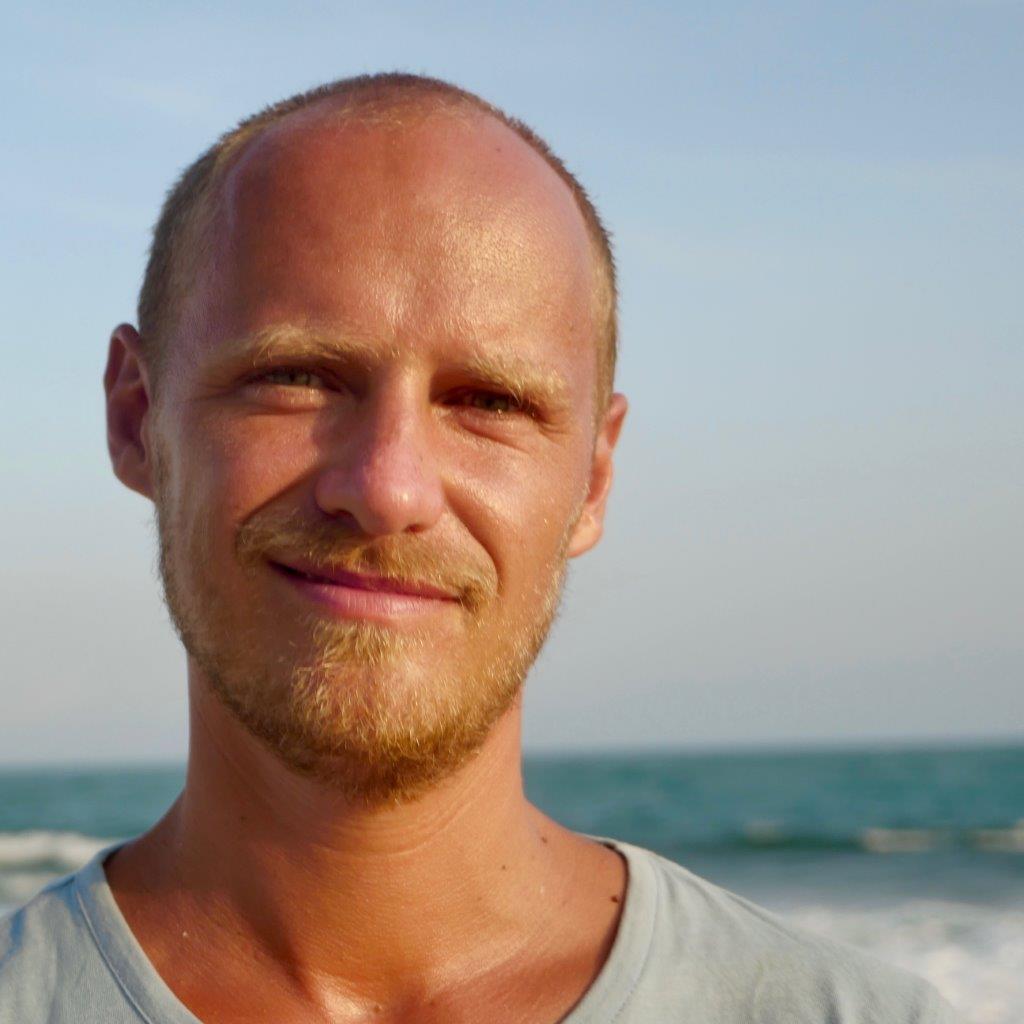
Director Edward Watts. Courtesy of PBS Distribution.

 mlsentertainment