IDF2011 – INTEL DEVELOPER FORUM – MOSCONE WEST – SAN FRANCISCO SEPT 13, 2011

This gallery contains 15 photos.

Opening Keynote: Paul Otellini The Evolution of Computing: Looking Ahead September 13 @ 9:00 a.m. PHOTOS BY MARCUS SIU INTEL DEVELOPER FORUM, San Francisco, Sept. 13, 2011 – Intel Corporation today announced a new effort with Google* that aims to … Continue reading

More Galleries | Leave a comment

2011 INTERSOLAR / SEMICON WEST – July 12-14, 2011

This gallery contains 36 photos.

Intersolar North America, held concurrently with SEMICON West in San Francisco’s Moscone Center West Hall, promotes the development of business opportunities throughout the U.S. solar industry. About 800 exhibitors and 22,000 trade visitors are expected across the more than 130,000 … Continue reading

More Galleries | Leave a comment

MONEYBALL TRAILER

For fans of the Oakland Athletics and Brad Pitt…

Here’s the trailer for “Moneyball”…opening September 23rd…

Moneyball trailer

Synopsis
Brad Pitt stars in the real-life tale of Major League Baseball general manager Billy Beane, who built up a winning team despite a decreased budget thanks to his sly use of statistical data to calculate the best — and cheapest — players for his roster. Aaron Sorkin updates Steve Zaillian’s adaptation of Michael Lewis’ fly-on-the-wall novel for Columbia Pictures, with Robin Wright, Jonah Hill, and Philip Seymour Hoffman co-starring. ~ Jeremy Wheeler, Rovi
Posted in Entertainment | Leave a comment

2011 MeeGo Conference


Photos by Marcus Siu

The MeeGo Conference was hosted by the Hyatt Regency in San Francisco.
Photo: by Marcus Siu
Hosted at the downtown Hyatt in San Francisco, CA, on May 23-25th, 2011, the MeeGo community looks to capitalize on its momentum. Positioned as an anticipated event for the future of open source mobile computing, on devices ranging from smart phones to in vehicle infotainment devices to netbooks and more, MeeGo 2011 San Francisco offers OSVs, OEMs, and other MeeGo project contributors a press-friendly stage to showcase their next generation devices and solutions.
MeeGo’s Tech Showcase room at the Hyatt Regency.
.
Another Tech Showcase room at the Hyatt Regency, featuring Igalia and Qt.
Nomovok launches new Steelrat tablet platform at MeeGo Conference in Hyatt Regency San Francisco, 23.-25.5.2011. Steelrat is a launchpad for MeeGo tablet for companies aiming to create even better MeeGo products.
ICS presents a real world demonstration displaying real-time data from automotive control modules within a Qt Quick based user interface, a new paradigm for design focused user interface development for consumer devices such as mobile phones, media players, netbooks and set-top boxes.
.
Party goers let loose at the Exploratorium with food, hosted libations, and the 80’s cover band Tainted Love.

About the MeeGo Conference San Francisco 2011

MeeGo Project

MeeGo is a Linux-based, open source operating system for small form factor devices. It was created with a unique user experience, designed from the beginning to look great on tablets, handheld devices, in-vehicle infotainment systems, smart TVs, netbooks, and more. MeeGo has a vibrant and active community of developers, enthusiasts, and users. MeeGo is a Linux Foundation project that was established in February 2010. Like with other open source projects, anyone can contribute to the MeeGo project and become a part of the MeeGo community. You can learn more at MeeGo.com.

Posted in Technology | Leave a comment

13 ASSASSINS – MOVIE REVIEW

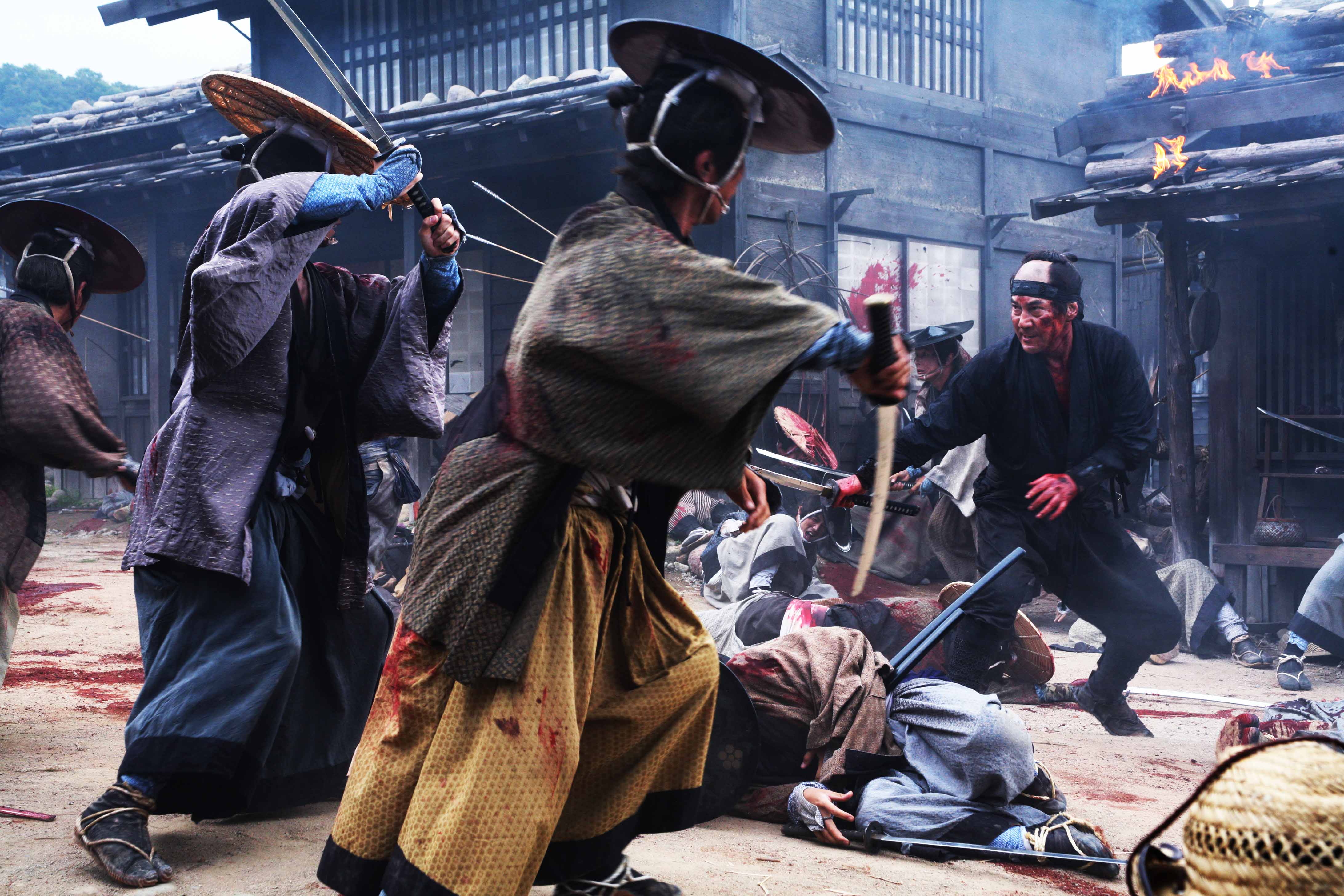
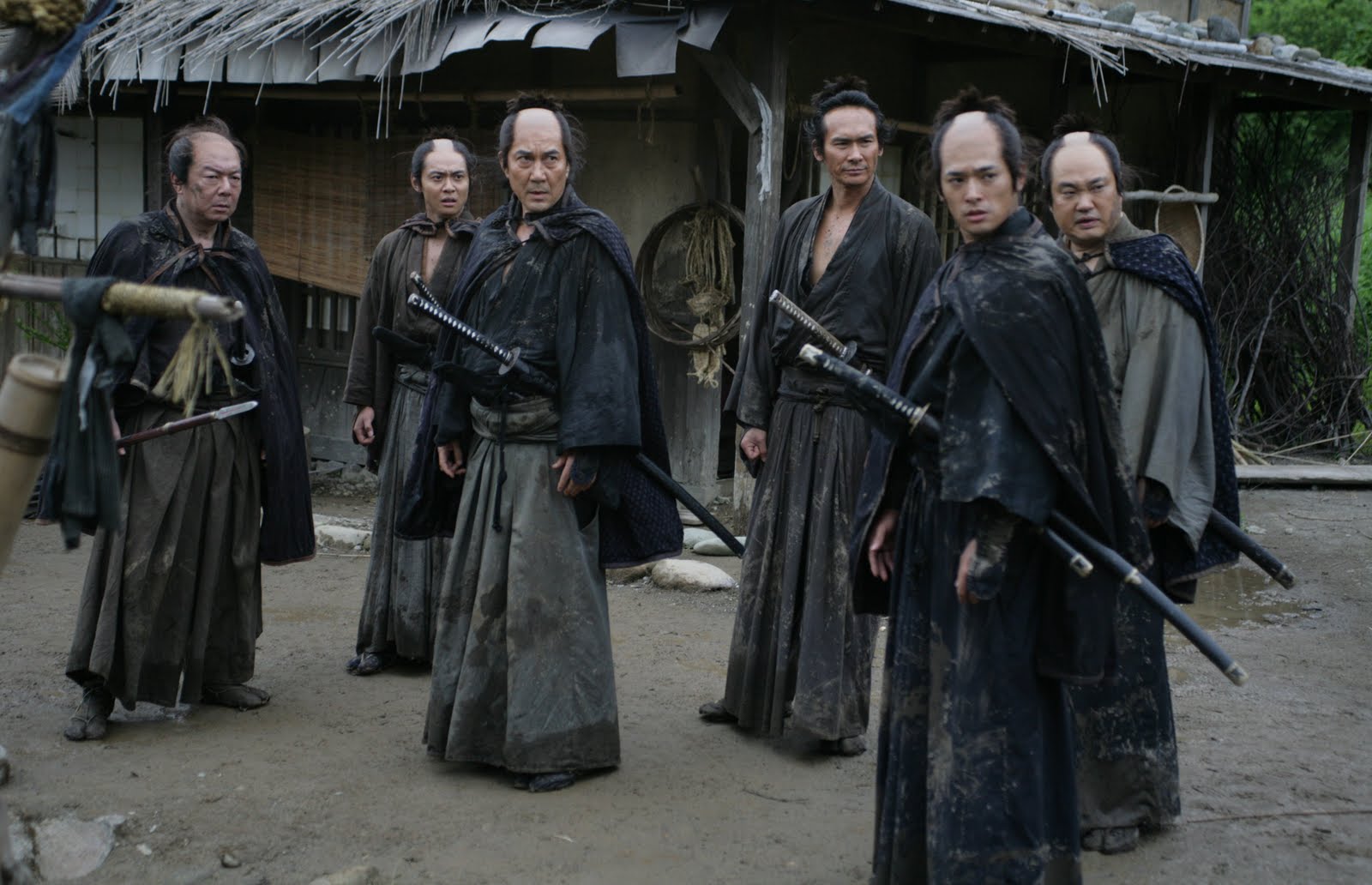
Koji Yakusho in 13 ASSASSINS, a Magnet Release. Photo courtesy of Magnet Releasing.

Imagine the epic scale of Akira Kurosawa’s samurai masterpieces, such as “Seven Samurai” and “Ran”, with its grandeur cinematic landscape and its unrivaled action sequences combined with the uncompromising violence helmed by the “Asian extremist” visionary, Japanese director, Takashi Miike, director of the “Ichi the Killer”, undoubtedly one of the most disturbing films ever.

In fairness to Miike, you can’t judge a director from just one film.  Especially if he’s done well over eighty of them over his prolific ten year career, averaging about three to four per year.  (He makes more films a year than most people get their oil changed in a year.)  His genre of films range all over the map; from Romantic Horror (“Audition”), Nouveau Western (“Sukiyaki Western Django”), New Musical (“Happiness of the Katakuri’s”), or Yakuza (“Dead or Alive”).   

Did I mention he does family-friendly films, as well?

Regardless of the genre, all of his films are unquestionably “over the top” and an “acquired taste” to an eccentric audience, mainly male, who are usually quite forgiving given the unevenness quality of his output, but have an insatiable and intoxicating appetite for more.  Many of Miike fans are in it for the shock value, but also have come to known him as a filmmaker who is out to surprise his audience, as well.   Regardless of what you think of his films, you will find the directors’ trademark all over each of them. 

 “13 Assassins”, a remake from the 1963 Japanese film, doesn’t seem to cram the story with scenes of excessive violence of blood, gore, decapitation, like the outlandish “Ichi the Killer” did.  This time around, the excessive violence is mostly justified and actually embellishes the story, making it quite authentic and credible.  After all, it is a real “slasher” movie.

Based on a true incident, the movie takes place in Feudal Japan in 1844, at a time when peace reigns, and samurai’s are set in “relax” mode.   This quickly changes, as soon as the film opens with a stark and brutal scene showing a hara-kiri of a nobleman.   Though no fault of his own, he takes his own life due to the shame of his innocent daughter, though no fault of her own, had disgraced the family because she was raped and murdered by the ruler, Lord Naritsugu.  It was also an act by the family of protest of having a savage, such as Lord Naritsugu, as a ruler.  

Rather than peace, Lord Naritsugu wants to change the country by governing it through the power of war.   Because he is the young brother of the Shogun, he is in power and can do anything he pleases, especially with all his devoted guards by his side.  He is also in line to be Shogun, leader of Japan. 

He is keenly obsessed with his own forms of sadistic violence.  He enjoys the fear that he instills on his victims.  At will, he will rape, kill, and dismember for sheer pleasure, just because he has the power and no one will stop him.   Not even women, children and babies are safe from his whimsical actions.  He is a merciless tyrant.  Just ask the limbless woman whom he used as a plaything…oops, she can’t talk.

Naturally, there are some people around him not approving of his actions, including a former shogun advisor, who secretly hires Shinzaemon Shimada (Koji Yakusho) (Shall We Dance, Memoirs of a Geisha, Babel) to kill Lord Naritsugu, before he takes over the throne and starts to endanger the lives of the entire country.   

Like “Seven Samurai”, the film shows how the assassins are rounded up and why they wish to fight.  Shimada hires eleven samurai, along with his nephew.  Even though they all have different reasons for fighting, (glory, money, revenge) they all have the same duty and honor of a samurai; to bravely fight and die as a samurai.   

Before the assassins leave, Hanbei, an old rival and sparring partner of Shimada’s, and now Naritsugu’s samurai meet and try to dissuade each other from their goals.  Neither budges.  

The thirteenth assassin, Koyata, like Toshiro Mifune’s,  Kikuchiyo , whom we later meet along the way, adds some surrealistic comic relief to the film, and it works to the films advantage.  

The last third of the movie is an unrelenting, forty five minute action battle sequence.  This is quite a remarkable spectacle: complete with samurai swords, bows and arrows, explosives, and booby traps galore, in a village that is camouflaged to entrap Naritsugu and his army.  This is well worth the price of admission alone. 

Though, the characters are not quite as well compassionately defined as Kurosawa’s, the film is quite remarkable, nevertheless.  Miike has rarely been this accessible, and the film demands to be seen on the big screen, as it is a cinematic feast and a grand action samurai film.   The sets, costumes, and art direction are reason alone to see if at your local theatre, if you are lucky to find one nearby.  Don’t wait for it on video.  You’ll do yourself a disservice…unless this movie doesn’t sound like your cup of tea.

website:  http://www.13assassins.com/

Cast:  Koji Yakusho, Takayuki Yamada, Yusuke Iseya, Goro Inagaki, Masachika Ichimura, Mikijiro Hira, Hiroki Matsukata, Ikki Sawamura, Arata Furuta, Tsuyoshi Ihara, Masataka Kubota,Sousuke Takaoka Director: Takeshi Miike Screenwriter: Daisuke Tengan Executive producers: Toshiaski Nakazawa, Jeremy Thomas, Takashi Hirajo Producers: Michihiko Umezawa, Minami Ichikawa, Toichiro Shiraishi, Takahiro ohno, Hirotsugu Yoshida, Shigeji Maeda Director of photography: Nobuyasu Kita Production designer: Yuji Hayashida Music: Koji Endo Costumes: Kazuhiro Sawataishi Editor: Kenji Yamashita
 Running time: 126 minutes
Koji Yakusho in 13 ASSASSINS, a Magnet Release. Photo courtesy of Magnet Releasing
Posted in Entertainment | Leave a comment

SOUL SURFER – EXCLUSIVE PHOTOS CLOSING NIGHT CINEQUEST


The beautiful California Theatre
AnnaSophia Robb, interviewer Marc Silber, surfer Jeff Clark, Bethany Hamilton
AnnaSophia Robb & Bethany Hamilton
AnnaSophia Robb and interviewer, Marc Silber
Director of “Soul Surfer”, Sean McNamara


Closing Night Party at South First Billiards
Kathleen Powell interviews AnnaSophia Robb and Bethany Hamilton.
Maverick Award winners AnnaSophia Robb and Bethany Hamilton
Marcus Siu and AnneSophia Robb
Bethany Hamilton and Marcus Siu
Posted in Entertainment | Leave a comment

SOUL SURFER

Bethany (AnnaSophia Robb) and Alana (Lorraine Nicholson) are competitors on the water, best friends on shore.

Imagine your favorite outdoor recreational activity almost ending abruptly in a near death experience.   The horrifying nightmare will probably stay with you forever.  It happened to mountain climber, Aron Ralston, portrayed by James Franco in the film, “127 Hours”.  Ralston literally went out on a limb and was stuck between a rock and a hard place in Utah.   A similar and equally terrifying accident also happened to surfer, Bethany Hamilton, who nearly met the “jaws of death, losing her left arm, along with over 60% of her blood, somewhere in the waters of Kauai.   Like Ralston, she was extremely lucky to make it out alive.
Based on Hamilton’s autobiography, “The Endless Summer”, “Soul Surfer” is a term coined in the 1970’s and used to describe a talented surfer who surfs for the sheer pleasure of surfing (although they may still enter in competitions, winning may not be the main motive) – since they scorn the commercialization of surfing. 
Perhaps, Brad Melekian, defines the term “soul surfer” more clearly, which was written from a 2005 article in Surfer magazine:
“…to pursue surfing not just as an athletic endeavor or as a sunny day diversion, but to try to glean whatever lessons you can from the practice. It means being aware of your surroundings, and respectful of the people and places that you interact with. It means being patient, mindful, kind, compassionate, understanding, active, thoughtful, faithful, hopeful, gracious, disciplined and…good.”
After seeing the film and reading what Melekian quoted, I now fully understand why the film was not called “Surfing with Sharks”. 
AnnaSophia Robb (Because of Winn Dixie, Bridge to Terabithia, Charlie and the Chocolate Factory, Sleepwalking) plays the youthful and spirited teenager, Bethany Hamilton, who had already been creating waves for herself as a surfer.  Since the age of eight, her skills catapulted her rapidly into the limelight, competing and winning many championships within her age group in her hometown island of Kauai.  With the constant ongoing encouraging and motivational support from her parents, well played by Dennis Quaid and Helen Hunt, along with her brothers, who are also avid surfers; it was only a matter of time when she would start thinking about turning professional.
Then her young life changed.  While laying sideways on her floating surfboard in the sunny waters at Tunnels Beach in Kauai, a 15 foot tiger shark attacked her and tore her left arm off,   Luckily, at the time, she was with her best friend, Alana, who witnessed the horror, and with the aid of her family, rushed Hamilton to a medical team, saving her life.  Hamilton was only thirteen years old.
Her life would never be the same for her after the incident.   She was no longer able to do the things that required coordination of both of her hands that she took for granted, like spreading butter on a slice of toast, let alone paddling with both hands in the water. Many of the locals treated her like some kind of mutant.  The press and paparazzi constantly harassed her in public, as well as at her own home.   Even makers of prosthetic arm products tried to capitalize on her, attempting to have her sponsor their product.
Feeling sorry for herself, she joins World Vision, an organization that helps young children who were devastated by the tsunami disaster in Thailand.  In one scene, she helps reacquaint the children to overcome their fear of the water.  Being in this supportive position, she realizes that she may have been the fortunate one, since she had succeeded in overcoming her fear of water, as well.
Sean McNamara, known mainly as a TV Director, does a first rate job capturing the mood and spirit surrounding the exciting surf competitions of Kauai.  Some of the cinematography of the surf scenes were quite breathtaking, probably because much of the footage was actually of the real life Bethany Hamilton, who was used as her own character’s stunt double.   No need for CGI in those scenes.
Even though you may know the story, the film is still quite entertaining, and is well written and strongly casted.  Robb’s performance is quite moving, filled with every possible emotion you can ask for in a role, especially for a teenage girl.   Look for Carrie Underwood, Kevin Sorbo, and Craig T Nelson in supportive roles.  
The story of Bethany Hamilton is quite inspirational, life affirming, and has all the qualities to make this a terrific family film.  It carries a clear message and makes us all a better person.  If you like “The Blind Side”, you will also love this film, as well.  Though, personally, I believe “Soul Surfer” has more of a bite to it.

Reviewed by Marcus Siu

Opens nationwide – Friday, April 8, 2011.
Director:SeanMcNamara;Producers:DavidZelon,DouglasSchwartz,DutchHofstetter,DavidBrookwell,
SeanMcNamara,DavidTice(Executive),DominicIanno(Executive);
Writers:SeanMcNamara,DeborahSchwartz,DouglasSchwartzandMichaelBerk(screenplay),BethanyHamiltonautobiography);Cinematographer:JohnR.Leonetti;
Editors:JeffW.Canavan,DavidW.Hager;Music:MarcoBeltrami;
Cast:AnnaSophiaRobb,DennisQuaid,HelenHunt,JeremySumpter,KevinSorbo,CraigT.Nelson,CarrieUnderwood,LorraineNicholson Length: 106 min.; Genre: Drama

From left to right - Bethany Hamilton and AnnaSophia Robb.

                       
Posted in Entertainment | Leave a comment

CINEQUEST FILM FESTIVAL 21 – WAR GAMES AND THE MAN WHO STOPPED THEM


War Games and the Man Who stopped them
Reviewed by Lidia Thompson & Marcus Siu
1. Ryszard Kuklinski at the Warsaw Pact Conference, 1980
© Apple Film Production
Were it not for the actions of one Polish Colonel, we might all be living in the wreckage of a nuclear war – Charlie Cockey
In the 1970s, the Warsaw Pact armies under the USSR control occupied Poland and most of Central Europe. The Treaty of Friendship, Cooperation and Mutual Assistance, commonly known as the Warsaw Pact, was a mutual defense treaty, subscribed to by eight communist countries in Europe.   In May 1955, it was established by the USSR’s initiative and realized in Warsaw, as a military response to an integration of West Germany to NATO Pact.
Colonel Ryszard Kukliński, who served over twenty years in the rank with the Polish Army, solely subordinated to political interests of the Soviet Empire. In 1972, Kukliński contacted the CIA, and for nine years, handed them over 40,000 secret Warsaw Pact documents.  His position had made him one of the most important sources of information that the Western world had in the Soviet Bloc during the Cold War era. His increasing knowledge about the Warsaw Pact plans, while working in the Operation Board of the General Staff, also played a significant role.  According to the plans, Poland could be destroyed and become a nuclear desert as a result from a possible third World War.  In 1980, after the Solidarity movement was established, Kukliński continued to inform Washington about the Polish government plans to suppress the Solidarity movement and implement the Martial law in Poland.  In November 1981, with his covert operations close to being exposed, Kukliński and his family evacuated to Berlin, and then afterwards, to the United States. On December 13th, 1981, the Martial law was established in Poland, becoming reality; military vehicles and soldiers patrolled the major cities of Poland, telephone lines were disconnected, airports and main roads access were closed.  Democracy was suppressed for eight long years.   
In 1984, in a secret court trial, the Warsaw Military Court sentenced Kukliński  to death.  In 1990, a year after the communist regime collapsed, his death sentence was changed to 25 years in prison.   In 1995, his sentence was cancelled and his ranking of Colonel was completely restored.  In 1998, he visited Poland but never returned, remaining in exile during the last years of his life in the United States.   His decision to not return to Poland remained controversial, as the Polish people did not know whether or not to deem him as a hero or a traitor. That issue was never fully solved for many Poles.   
“War Games and the Man Who Stopped Them”, written, directed and produced by Dariusz Jablonski, is a well done documentary.   Jablonski approaches the story from many angles by interviewing the members of the highest echelons from both sides and those most closely associated with Kukliński; from the U.S. head of espionage, General William E. Odom to the Warsaw Pact, Commander-in-Chief Viktor Kulikov, the Polish General, Wojciech Jaruzelski, and former Polish President, Lech Walesa, and to friends and family.  The film asks probing questions about Kukliński .  When did he become convinced to make his move to contact the CIA?  Did he ever regret what he did?  
In addition to the extensive archive footage, we see the officials during tightly-framed interviews and meetings in voice-over filmed with a small, often half-hidden camera.  Photos of Kukliński come to life with 3D motion effects, and the recurring theme of the war games.
Internationally renowned, Dariusz Jablonski, a graduate of the Directing Department at the Film Academy in Lodz, and recipient of many national and international awards, worked on some of the most ambitious film projects of Polish cinema in the Eighties.  He was the First Assistant Director on “The Decalogue” (1989), directed by Krzysztof Kieslowski, and a First Assistant Director on “Magnat” (1987) directed by Filip Bajon.  Jablonski is also member of the European Film Academy and the Board of the European Producers Club.  He is the founder of Apple Film Production; one of the first and leading independent production company in Poland, which to date has produced 21 documentaries, nine feature films and 15 television series.  
Director: Dariusz Jablonski; Producers: Izabela Wojcik, Violetta Kaminska; Co-producer: Patrik Pass; Writer: Dariusz Jablonski; Cinematographers: Tomasz Michalowski, Pawel Banasiak; Editors: Milenia Fiedler, Bartosz Pietras; Music: Michal Lorenc; Cast; Józef Szaniawski, Hanna Kuklińska, Stanisław Radaj, Zbigniew Brzeziński, Walter Lang; Countries: Poland, Slovakia; Language: English; Length: 110 min.; Genre: Drama
War Games and the Man Who Stopped Them plays on March 5th at 1:30pm, March 9th at 9:30pm, and March 10th at 3:45.  All screenings are at the Camera 12.
2. Ryszard Kuklinski at his yacht
© Apple Film Production
Posted in Entertainment | Leave a comment

CINEQUEST FILM FESTIVAL 21 – IRENA SENDLER


IRENA SENDLER: IN THE NAME OF THEIR MOTHERS
Reviewed by Lidia Thompson & Marcus Siu
Courtesy of Cinequest 2011
As a Polish Catholic social worker, Irena Sendler along with a group of young women in Nazi-occupied Poland managed to rescue 2,500 Jewish children from the Warsaw Ghetto.  They smuggled them under garbage, in suitcases, in boxes, though the canals, as well as other inconceivable passageways that would rescue them from being deported to the concentration camps, saving their lives from the Nazis.  Their unspeakable act of heroism and bravery was kept quiet for decades during the communist era.  The documentary “Irena Sendler: In the Name of Their Mothers”, directed and co-produced by American filmmaker Mary Skinner, brings this miraculous and profound story of human goodness to life.  Extensive archive footage and interviews with survivor, Sendler, her co-workers and the children she had rescued, is indeed, an unforgettable experience.
In 1939, when World War II began, over 3 million Jews lived in Poland with 400,000 residing in Warsaw, making up one third of its population.  In 1940, the Warsaw Ghetto was established and was the largest of all the ghettos in Nazi-occupied Europe.  The conditions in the Warsaw Ghetto were unbearable and worsening each day.   In 1941, the average food rations for Jews were limited to 186 calories, compared to 1,669 calories for Poles and 2,614 calories for Germans.  People in the Ghetto were starving and dying on the streets, while hundreds of orphans begged for a piece of bread.  The situation was traumatic for everyone, but especially for defenseless children.
Irena Sendler was 29 when the Nazis invaded Poland.  She served as a social worker in the Polish Underground and later with the Żegota Resistance Organization.  As an employee of the Warsaw Social Welfare Department, she had a special permit to enter the Warsaw Ghetto to check for signs of Typhus; something the Nazis feared would spread beyond the Ghetto.  During these visits she and her co-workers intercepted approximately 2,500 Jewish children and smuggled them to safety, rescuing them from their certain death in concentration camps.   Their risk of helping Jews in any way was extremely dangerous; if they were discovered by the Nazi’s.
“Nothing was more dangerous than as hiding a Jew” quotes, Polish Resistance Activist, Wladyslaw Bartoszewski, “because if you are hiding a box of ammunition, you don’t need to feed it every day, you don’t have to care for it if it becomes ill, and the neighbors don’t need to know about it”.  Not only did Sendler and those young women smuggle Jewish children out of the Ghetto, but they also provided them with false documents sheltering them in Polish families, and then were sent off to safer places like the catholic convents outside Warsaw.  In addition, Sendler maintained the identities of those young survivors.  She buried a jar keeping track of their original Jewish names along with their newly created Polish names, so when the war ended they could be reunited with their parents, if they were still alive.  In 1943, Sendler was arrested by the Gestapo, severely tortured, and sentenced to death, but in the last minute was rescued by the Polish Resistance.  She survived World War II, but during the communist regime she was prosecuted because of her connections with the Polish Resistance.  Her story was unknown for many years.
In 1999, Kansas students produced a play based on research into Irena Sendler’s life story entitled “Life in a Jar”.  This drama has now been performed over 285 times across the United States, Canada and in Poland.  It has since been adapted to television as “The Courageous Heart of Irena Sendler” and over 1,500 media stories.
Mary Skinner, director of the documentary, acknowledged on the official film website, “I grew up with stories about the courage and compassion of Polish heroines like Irena Sendler.  I heard about them from my Polish mother.  She was barely a teenager in 1941, when she was rounded up in Warsaw and sent to a concentration camp for smuggling food.  Her father had been killed, her mother was dying, and her brother and sister had already been taken.  No one else in her family survived the war. 
But my mother never forgot the ordinary women like Irena Sendler – the ‘angels of mercy’ in Warsaw who detested war, but would go to the devil for a war-wounded child like her.  Right before my mother died, I felt I needed to find those women, to tell their stories, to remember them.”
Director: Mary Skinner; Producers: Mary Skinner, Betsy Bayha, Piotr Piwowarczyk, Richard Wormser, Jan Legnitto, Paul Mitchell, Richard Adams; Cinematographers: Andrzej Wolf, Slawomir Grunberg; Editors: Marta Wohl, Anna Ksiesopolska; Music: Tom Disher; Countries: USA, United Kingdom; Language: English, German, and Polish, (w/ English subtitles); Length: 60 min.; Genre: Documentary
Preceded by the short film: Living For 32; Director: Kevin Breslin; 40 min.; USA; The inspirational story of a survivor of the tragic Virginia Tech shooting massacre and his courageous journey of renewal and hope.
Irena Sendler: In the Name of Their Mothers plays Sunday, March 6th, 2011 at 2pm at the San Jose Repertory, and Wednesday, March 9th, 2011 at 9pm at the Camera 12.
Posted in Entertainment | Leave a comment

CINEQUEST FILM FESTIVAL 21 – MIDNIGHT SON


MIDNIGHT SON (USA)

After having vampire symptoms and watching a vampire video on his TV, Jacob (Zak Kilberg) tests to see what would happen if he put a wooden cross against his forehead. He is happily surprised that his forehead did not burn.
Vampire movies produced in today’s Hollywood system have become too “popcorn” for my tastes.  I have become quite cynical when I see endless lines of teenage girls camped out several days in advance for a special midnight advance screening of the latest in the series of a franchise movie at their local Cineplex, so they can scream and drool over their favorite heartthrob, and perhaps, see the movie at least two or three more times before it is mandatory for them to return to school the following Monday. 
Not to say these particular movies don’t have any redeeming values to them.  If you look past all the blatant supernatural visual effects and vampire cliché’s that Hollywood bestows on its audiences, you will see that there can be something a little more cerebral hidden behind all those computer graphics (CGI). 
Recent international offerings in the last couple of years brought us a new wave of realism for vampire films, such as Sweden’s “Let the Right One In” and Korea’s “Thirst”, which make watching them a much more thought provoking and intriguing.   The independently made, “Midnight Son” belongs to this group, as it gives the overdone genre a new fresh perspective.  
Jacob (Zak Kilberg), a 24-year old security guard who works nights, has a rare skin disorder that prevents him from going out during the day.  He seals off his windows in his basement apartment, so he is not exposed to sunlight.   While painting artistic sunsets on canvas, he starts to discover that whatever he eats (mainly microwavable meals loaded with carbohydrates), his appetite is not satisfied, regardless of how much food he consumes.  He is diagnosed by a doctor who tells him his body is malnourished and thinks Jacob is lying about him “eating like a horse”, and tells him that his body is craving something.   As each night progresses, his body continues to change; much like a caterpillar turning into a butterfly.
As he starts to slurp the beef juices from the Styrofoam meat packages, he begins to recognize what his body truly craves.  Replenishing his empty Starbucks coffee cup with “red liquid” that he picked up at the local neighborhood meat market, he walks around naturally along the streets and into late night video stores.  He is slowly transforming into what we know as a vampire, but he is still trying to figure it out for himself, as his diet continues to change before us.   To fulfill his new appetite, he finds more creative ways to find his meal, so he doesn’t grow weak. 
In the meantime, Zak’s only social outlet is going to the neighborhood bar in the wee hours of the night, where he meets Mary (Maya Parish), who gets his attention by selling him candy and cigarettes outside the bar.  As they get to know each other, a relationship between them starts to bloom and develop.  At the same time, his condition worsens, as does Mary’s, who also has personal problems of her own, as well.   Strange things start happening even at work, where Zak becomes oblivious to strange events that happened nearby, surprising even the police department.  This is where the film takes you in for a wild ride. 
Director and writer, Scott Leberecht, along with an all around excellent cast led by Zak Kilberg and Maya Parish, create a moving, sort of a “coming of age” vampire movie; injecting humanity and compassion into their characters.   The chemistry within the two leads is quite natural and credible as they begin their relationship and both try to overcome their personal struggles.   
From the opening notes of the eerie musical score to some bleak cinematography, this is one film that grabbed me from the beginning and took me on a journey in different directions.   “Midnight Son” is an impressive feature film debut for Leberecht, and I certainly hope to see him continue his work as a filmmaker.   After all, “Everybody’s got their thing”.
Reviewed by Marcus Siu
Director: Scott Leberecht; Producers: Scott Leberecht, Matt Compton; Executive Producers: Eduardo Sanchez, Reed Frerichs; Writer: Scott Leberecht; Cinematographer: Lyn Moncrief; Editors: Ian McCamey, Scott Leberecht; Music: Kays Alatrakchi; Cast: Zak Kilberg, Maya Parish, Jo D. Jonz, Larry Cedar, Tracey Walter, Arlen Escarpeta; Country: USA; Language: English; Length: 88 min.; Genre: Drama
Midnight Son plays on March 4th at 9:30pm at San Jose Repertory Theatre, March 6th at 6:45pm at the Camera 12, and March 11th at 12:30pm at the Camera 12.
Jacob (Zak Kilberg) tries to conceal himself from Mary (Maya Parish) after his eyes turn yellow in a very intimate moment.
Posted in Entertainment | Leave a comment