Article by Marcus Siu
“Wars are won not by commanders, but by schoolteachers” – Vladimir Putin
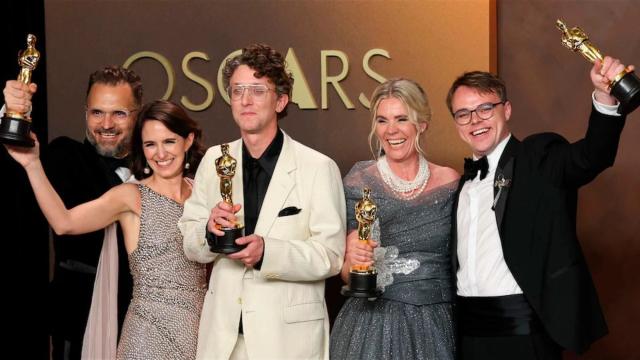
Just coming off a win from the 98th Annual Academy Awards for Best Documentary Feature, competing alongside some pretty serious heavy contenders, (The Alabama Solution, Come See Me in the Good Light, Cutting through Rocks, and The Perfect Neighbor), it’s refreshing to find a film and subject so serious, yet with a comedic grace and inspiring storytelling like “Mr. Nobody Against Putin”.
It’s also worth noting that the subject and filmmakers were risking their lives in the making of this film.
The film follows Pavel “Pasha” Talankin, a primary school teacher at a school in Karabash in the Ural mountain region in Russia, a destitute industrial mining town known for their copper smelting plants that has a reputation as being one of the most polluted places on the planet.
Known as a mentor and a prankster to his students, Pasha resists government-imposed indoctrination following the 2022 invasion of Ukraine, using unorthodox methods such as playing Lady Gaga’s rendition of “The Star-Spangled Banner” instead of the Russian national anthem to inspire his students.
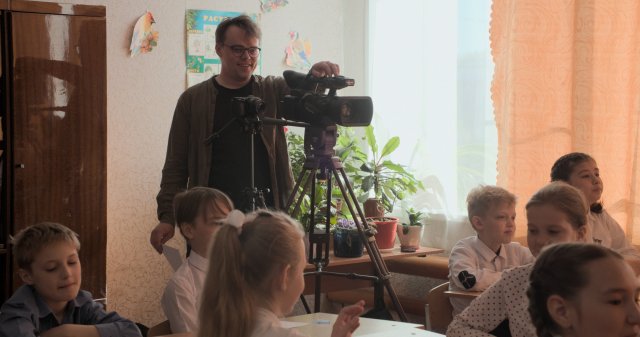
In addition to his teaching, Pasha serves as the school’s videographer. The documentary highlights his personal and political challenges he faces while advocating for truth and resistance, staging an individual protest against authoritarianism in which he also documents the movements of Putin’s regime to control public perception to justify the ongoing Russo-Ukrainian war.
Courtesy of Kino Lorber
“The film is about Russia”, Pasha states. “About how its history has tangled itself so deeply into the lives of its people that it feels like they’ve already lived countless lives and that this one is just something to endure — a little more time spent doing things you hate. It’s about love, too — love for your city, your people, your country. But it’s also about death: the death of rights, freedoms, laws, the education system, and even hope. The death of humanity itself.”
Forced to promote state-sanctioned messages and horrified by the transformation of his school and community, he struggles with guilt and a sense of powerlessness, leading him to become an international whistleblower.
One of the most outrageous yet priceless scenes in the film is when mercenaries from the Wagner Group arrive at the school to give a lecture. The lead instructor is giving the classroom of small boys tips on how protect yourself in war. “Never clasp your helmet…It will break your neck is you get shot in the head”, as the seven to ten year old boys listen attentively but emotionlessly still in the classroom.
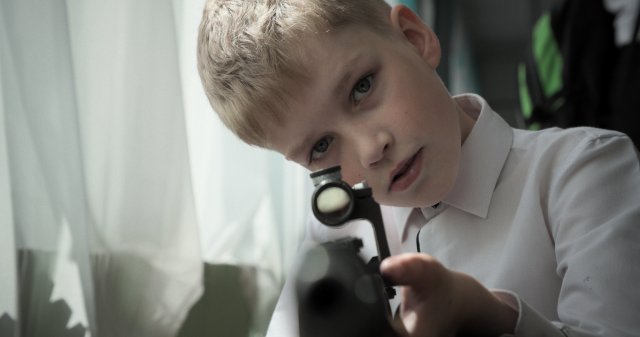
photo credit – Pavel Talankin Courtesy Kino Lorber
“For me, this film is a way to show the world what’s happening around me. To point to the problem. Maybe some day, it will help Russians to look back, face their mistakes, and prevent this from happening again.”
“By chance, David (Borenstein), a foreign director, found this topic compelling — the intertwining of war and propaganda, how death becomes part of life. Since he wasn’t Russian, we could show the world what’s happening now: how propaganda crushes schoolchildren, how it fuels war.”
Not only did Pasha shoot the film, but is credited as being co-director with Borenstein, who never set foot on Russian ground as he was on much safer ground in Switzerland. They both established an encrypted line of communication and a secure way to transfer video files.
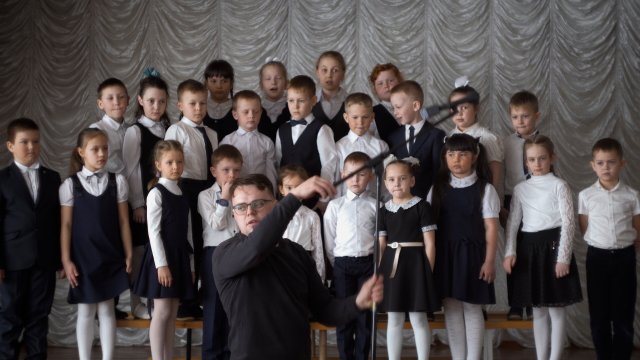
photo credit – Pavel Talankin Courtesy Kino Lorber
“The collaboration was exhilarating,” Borenstein recalls. “For more than two years, Pasha and I spoke weekly over encrypted phone calls. Through these conversations, we built a deep friendship, navigating countless setbacks, insecurities, and moments when it felt like all was lost.”
“We set out to create a film that captured the reality of life for ordinary people during this extraordinary moment in Russian history. We wanted to show how the war traumatizes communities, but more than that, we aimed to celebrate the joy and beauty Pasha cultivated at his school. By depicting this life in Karabash, we could convey the true devastation of Russia’s all-encompassing militarization. Pasha as a whistleblower is showing us something really important. He’s giving us an unprecedented inside look into Russia’s full-scale militarization that has occurred since 2022.”
“Mr. Nobody Against Putin” had its world premiere at the World Cinema Documentary section of the 2025 Sundance Film Festival, where it won the Special Jury Award. It was selected as the Danish entry for Best International Feature Film at the 98th Academy Awards, but it was not shortlisted for a nomination. However, it did get nominated for Best Documentary Feature Film category and the rest is history.
“While Pasha had much to say about Russia, I became most captivated by him as a person. He is one of the bravest people I’ve ever met, yet also reckless, wounded, and something of an enigma. What drove him to take such extraordinary risks in filming? Why did he so fully embrace dancing on the edge of the abyss? And why would he be willing to leave his life behind to make this film with me?“
– David Borenstein, co-director
AND THE WINNER FOR BEST DOCUMENTARY FEATURE IS…
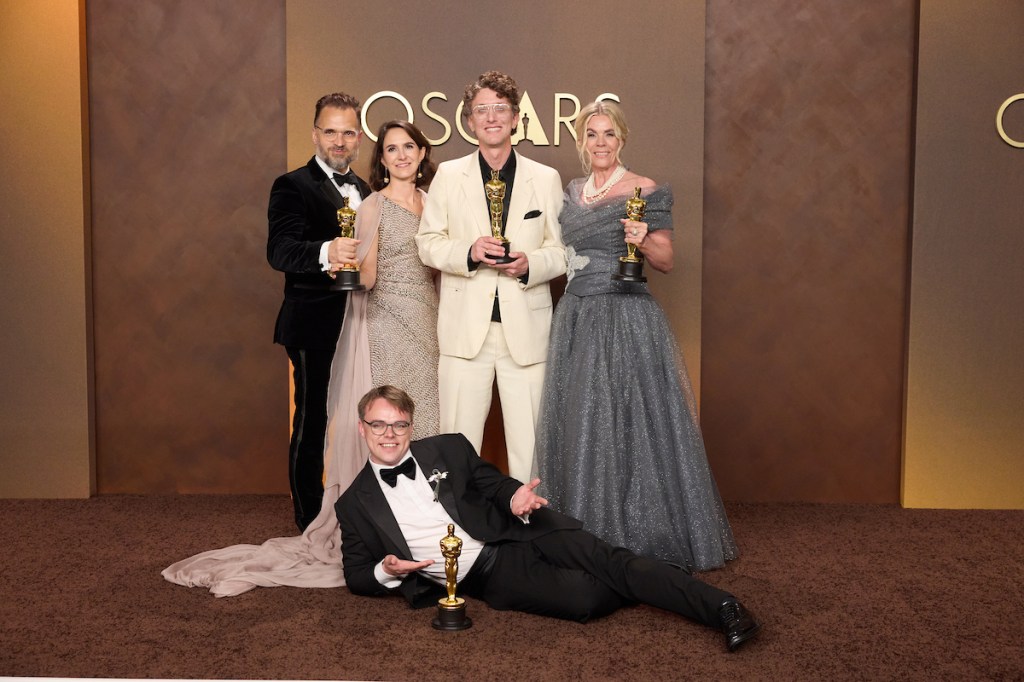
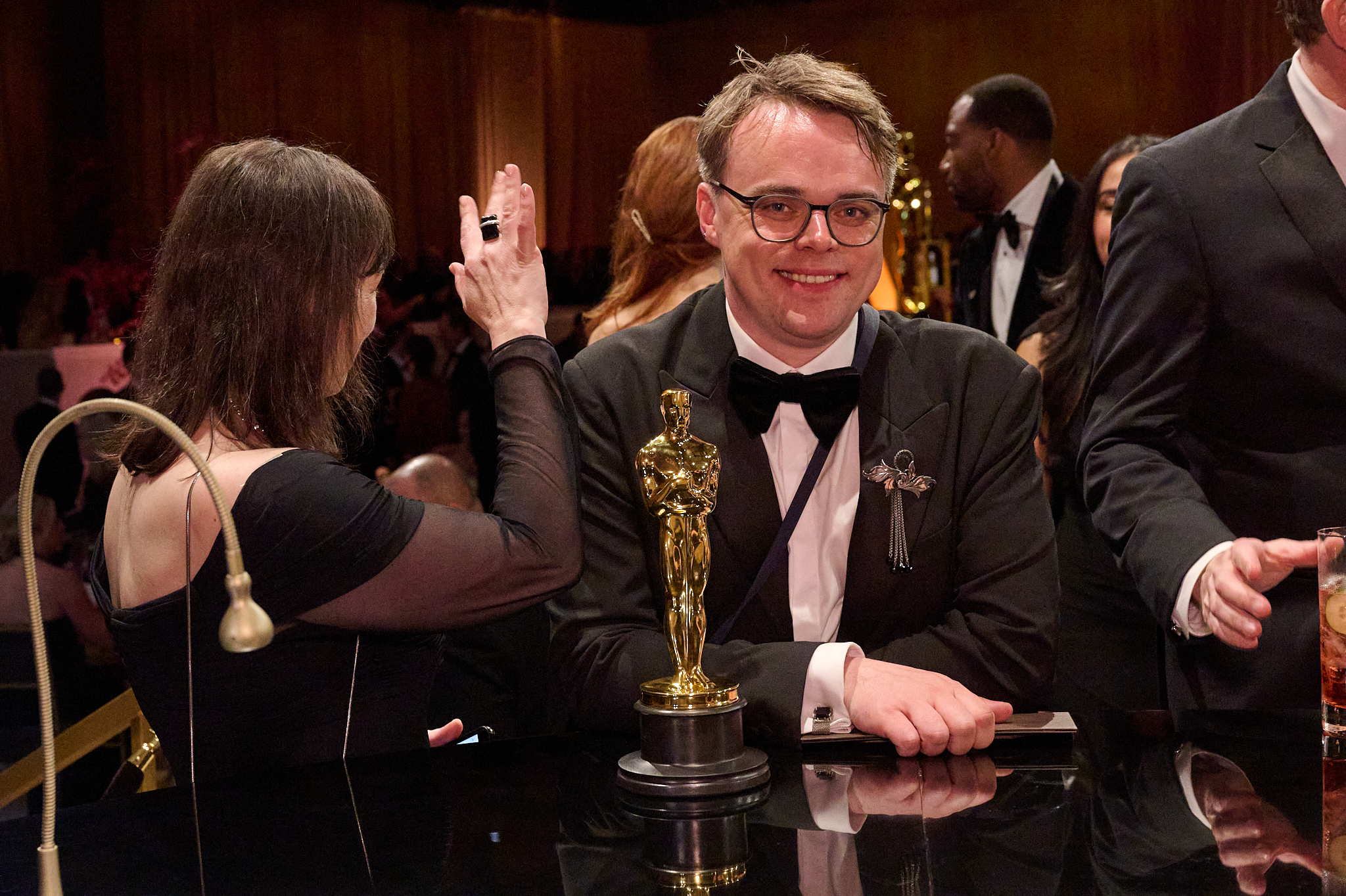
Backstage, co-directors Pavel “Pasha” Talankin, David Borenstein, and executive producer Radovan Síbrt answered a few questions to the international press after it had just won the Oscar for Best Documentary Feature at the 98th Annual Academy Awards.
Q: What do you hope can be gained through the increased attention that this that your film will receive as a result of this win?
A: (Borenstein) “There’s several things you can look within Russia and you can see what this film shows, which is that there is no stopping with Ukraine. If you simply watch the film and you see what Putin is teaching to the kids of Russia every day, you can see that it’s about a future of war and empire. That doesn’t stop here, so. It’s very, very important to support Ukraine.”
“The other thing that I hope that we get is a conversation that we’ve been having as we’ve been touring America these last few months. We need to be having a talk about resistance. When is it appropriate to resist? When? What kind of moral choices do we face when societies around us are transformed by dark forces. I think Pasha shows a great example of how anybody can have a voice, how anybody can make a difference because nobody can become a somebody and nobody can make a difference…and all of our individual choices matter. So that’s what I have to say.”
Q: You explained how dangerous filming was at a Russian school…what moment while filming remains with you for the rest of your life that was particularly dangerous?
A: (Pasha) “The most dangerous moment that wasn’t during the process of filming, but in the process of making the film was when I tried to cross the border of Russia and leave with all of the hard drives and materials. Because, you know, Russia is the government where when you leave, they can search all of your belongings. They could have looked at everything I had, all of your correspondence, everything.”
Q: Because the Czech Republic was involved, when did the conversation start that the involvement of the Czech Republic should come and make this altogether happen and why?
A: (Síbrt) “From the very beginning, it was very clear that there would be no film if Pasha stayed in Russia…and then we had to figure out how to get him from Russia into European Community. So basically as producers, we were looking for holes in the system to get him to European Community and we get him political asylum. That’s what we did as producers because it was quite clear that if Pasha stayed, he would face over 20 years in prison or worse.”
Q: It seemed like you were making a parallel in your acceptance speech with what might be happening in America. Do you see parallels or are we reading too much into it?
A: (Borenstein) “Well, one interesting thing about working with a team of Russians throughout this process has been my desire as an American to constantly compare the situation in America to Russia. But a lot of my Russian colleagues and friends always said no. No, it’s not the same situation. It’s actually happening quicker in America than it’s been happening in Russia. Trump was moving a lot quicker than Putin in his early years. So that’s kind of all I have to say to that.”