Article by Marcus Siu
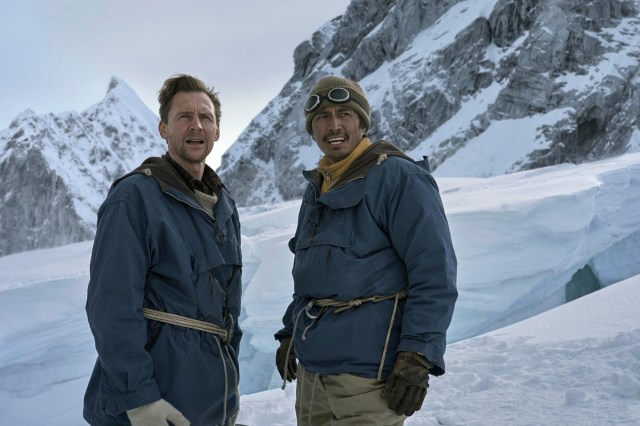
Tenzing is the new biographical drama film based on true events about Tenzing Norgay. It tells the little-known and inspiring story of one of the most important mountain climbers in history who, alongside Edmund Hillary, became the first person to reach the summit of Mount Everest in 1953. The film stars Tom Hiddleston, Genden Phuntsok, and Willem Dafoe.
It was recently awarded “Overall Audience Favorite” at the 49th Annual Mill Valley Film Festival.
Known for her acclaimed documentaries and narrative feature films about extreme environments and human stories, such as Mountain (2018), River (2023), and Deeper (2025), Tenzing is the first live-action feature film directed by Jennifer Peedom, but it looks like the work of an accomplished veteran filmmaker, as her execution is nearly faultless.
Certainly, she does not ever seem to ever get tired of Mount Everest as her subject. In 2008, she directed Miracle on Everest, a documentary about Australian climber Lincoln Hall, who was pronounced dead close to the summit of Mount Everest but lived to tell the tale. Then, in 2015, she directed Sherpa, the critically acclaimed documentary focusing on the 2014 Mount Everest icefall avalanche and the experiences of the Sherpa community that planted the seed to make Tenzing.
“The response to that film was so overwhelming and people were so grateful for that perspective,” Peedom said at a recent screening and Q&A at the Lucasfilm Premier Theater in San Francisco, joined by Norbu Tenzing (Executive Producer) and Stefan Duscio (Cinematographer).
“I knew, having researched deeply for that film, that Tenzing’s story couldn’t be told as a documentary, because none of the story that made him who he is—which is everything before Everest—had been documented,” Peedom said. “It was clear that it needed to be told as a drama. I’m frankly flabbergasted that no one beat me to it, because I just think it’s such a great story, and I don’t know why it’s taken this long. It took me ten years to kind of go from that film to finally getting to this stage.”
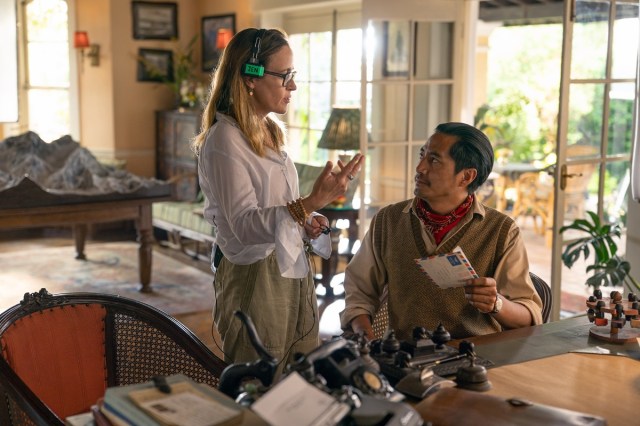
While interviewing subjects for the documentary Sherpa in 2014, Peedom met Norbu Tenzing, the son of Tenzing Norgay, and they have remained friends ever since. However, it was the following year at the Sydney State Theatre—where an enthusiastic crowd gave Sherpa a standing ovation—that the tides turned. She asked Norbu if he wanted to make a live-action feature film about his father. Norbu gladly accepted, joining forces on the project as an executive producer.
“We have waited 73 years to share this story with the rest of the world, to see who this man behind the mask was,” Norbu said. “He personified every part of Sherpa life, culture, and character. He embodied that spirit and so we’ve always felt that this narrative has been told from the other side; for a change, we thought it should be told from my father’s perspective.”
As Norbu pointed to the director onstage, he said, “In Jen, we found a partner and a friend who deeply understood our culture and language. And in a way, she understood my father more—and probably better—than I did.”
On her very first trip in the Himalayas as a climbing camera operator, Peedom found herself drawn to the Sherpa community rather than the mountains themselves. This deep connection shines through in her work, demonstrating the Australian filmmaker’s profound understanding of both nature and Sherpa culture.
“I have many Sherpa friends and to understand that connection to landscape and culture and the inherent conflict between working on the mountain and worshipping the mountain to me was very interesting and was what drew me from the very beginning,” Peedom continued. “So to show that there is another way to look at nature, there’s another way to approach nature, was always part of the idea of this film, to shift the lens and tell it from Tenzing’s point of view necessarily takes you through a more spiritual perspective and that was the driving idea.”
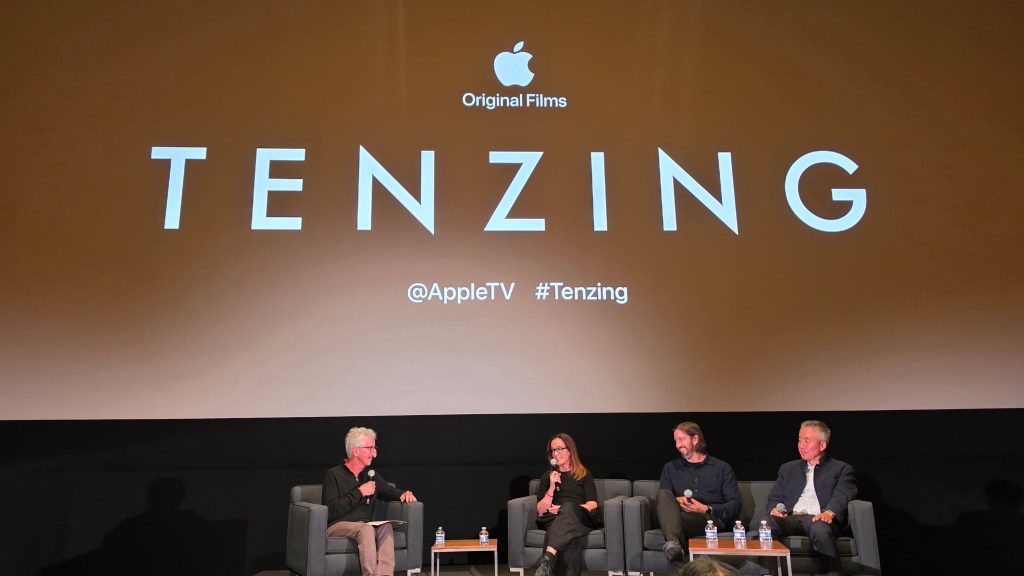
Executive Producer Norbu Tenzing at a Q&A of “Tenzing” Photo by Marcus Siu
Principal photography for Tenzing took place across Nepal and New Zealand, with all flashback sequences set in the Tibetan Plateau, Nepal, and India. Modern-day expedition scenes were filmed on location at the actual British Embassy, across Nepal, and along the route to the Khumbu Valley.
Because the director insisted no green screens be used, the cinematography had to be nothing short of spectacular to tell this compelling story—and it shows. Cinematographer Stefan Duscio successfully navigated a myriad of challenges, ensuring that Mount Everest and the other principal locations felt like characters themselves, while the climbing stunts were captured with absolute realism.
“We shot in the highest mountains of New Zealand in the Southern Alps, which are still very perilous, dangerous mountains to operate in but a bit more comfortable than Everest because we didn’t need oxygen,” Duscio continued, “and they still looked fantastic and they had ice falls and glasses and crevasses and some racks and steep ridges, but a little bit more film friendly.”
“We had to put on many hats. I could never have made a film like this several years ago. This brought together every skill set I’ve ever learned on any job,” Duscio continued. “We were all outside of our comfort zones in many ways. Many of us work in feature films, not documentaries, and we’re not in environments as intrepid as this.”
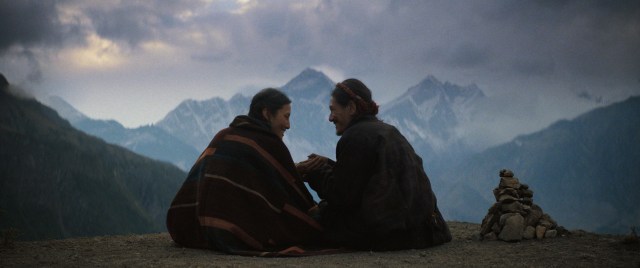
Duscio, a recipient of several cinematography awards and accolades in his native Australia, has also worked on Hollywood studio films such as The Invisible Man, Upgrade, and The Dry.
“There were some days when we were lighting and crafting scenes that were very delicate, like in the monastery, for example, where they’re getting blessed by the Rinpoche. That one’s more traditionally crafted, lit, and shaped,” Duscio explained, “and yet days later, we were hanging on the side of a mountain in the snow with a camera on my shoulder, no lighting at all, and just Jen and I and a very small amount of cast and crew figuring it out. So there was just such variety across the entire production.”
While many people may think they know the story of the first men to reach the summit of Everest, this movie tells the story from the Sherpa and Tenzing family perspective—a true path that very few actually know. Now, movie audiences will finally know who the man behind the mask was in that iconic Mount Everest photo, and what motivated him up the mountain.
While Tenzing is currently streaming on Apple TV+, it desperately demands to be seen on the big screen and experienced in a movie theater, if you are lucky to have one in your area.
Even Mr. Amazing would wholeheartedly agree that Mount Everest should never be dwarfed.


