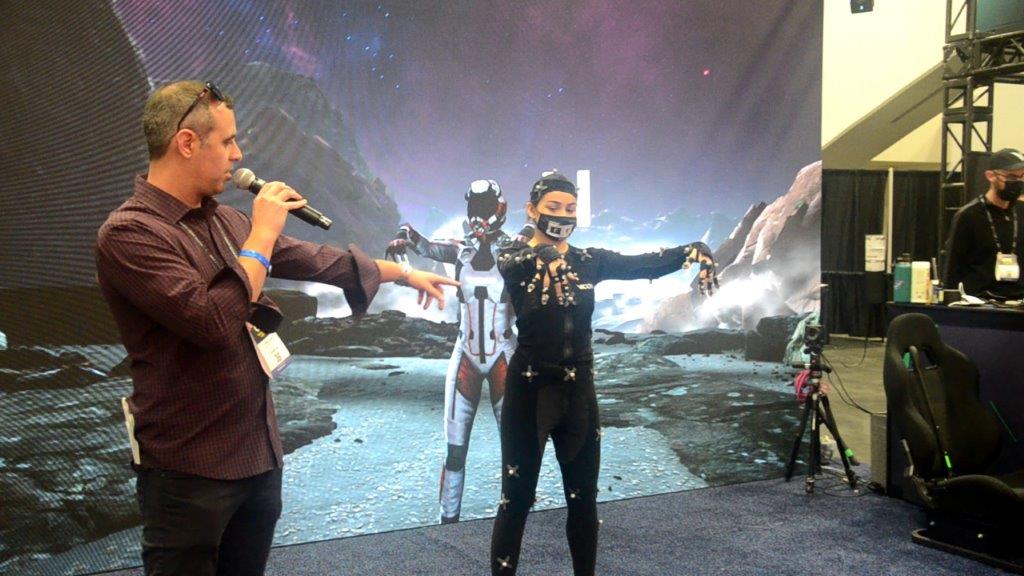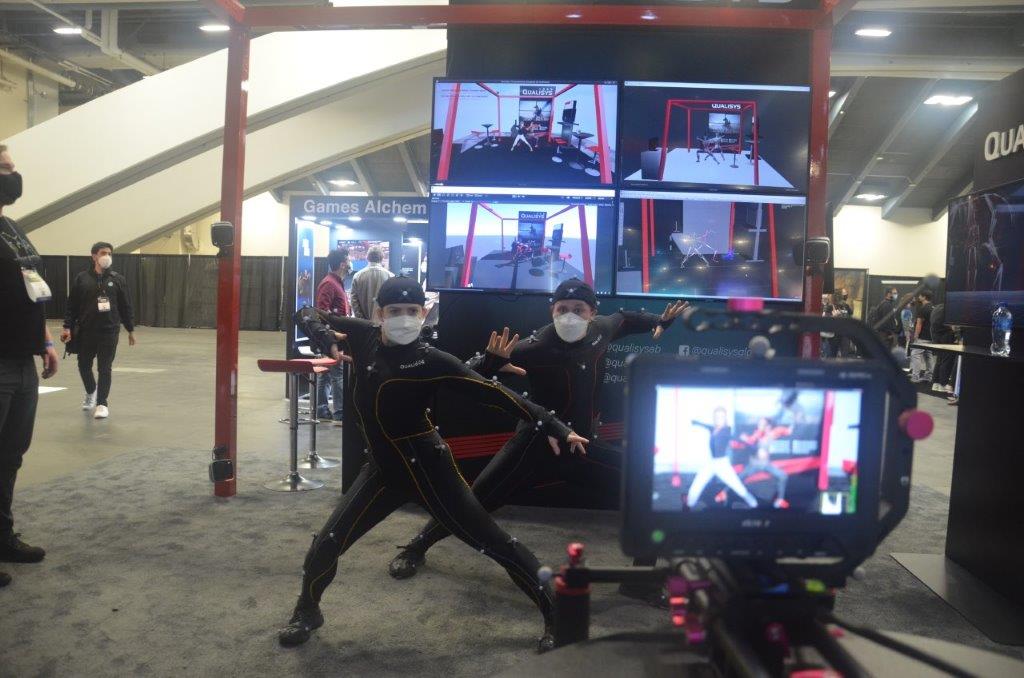

Jeffrey Ovadya and Veronica demonstrating real-time performance capture and finger tracking with Vicon Shōgun 1.7 at GDC 2022.
Article and photos by Marcus Siu
In the very early days of the the film industry, motion capture was accomplished via rotoscoping, invented by Animator Max Fleischer in 1919. Rotoscoping is the process of recording actual footage, and tracing over this footage frame-by-frame. In those days, animators need to hand-draw each frame, which is a laborious and time-consuming process
A lot has happened since then.
In 2002, when Gollum was introduced to the world in “The Lord of the Rings – The Two Towers”, it took audiences by surprise how amazing CGI characters could be so lifelike. Andy Serkis, the pioneering actor who would become a household name for his performance/motion capture work, proved that characters could be fully realized and emotionally compelling. His work as Gollum was instrumental to the success of “The Lord of the Rings” trilogy, as was his portrayal of Caesar from the latest “Planet of the Apes” trilogy, which most thought made the remake of the franchise vastly superior than the original.
To those who aren’t familiar, motion capture is the process where actors’ physical movements are captured and then recreated on digital character models allowing actors to give realistic movement to fantastical CGI creatures, bringing them to life. The Marvel Comic Universe, for example, would have been nearly impossible to create, if it wasn’t for this process.
In contrast to gaming, by recording human actions and using them to animate digital models, 3D artists bring deep realism to video game characters. Performance motion capture technology allows artists to create animated image models directly from actors’ movement and facial expressions. More than 90% of the top selling games are dependent on motion capture.
Now one hundred years later since rotoscoping, motion capture now has evolved into “real time”, which was the theme at this years Games Developer’s Conference.
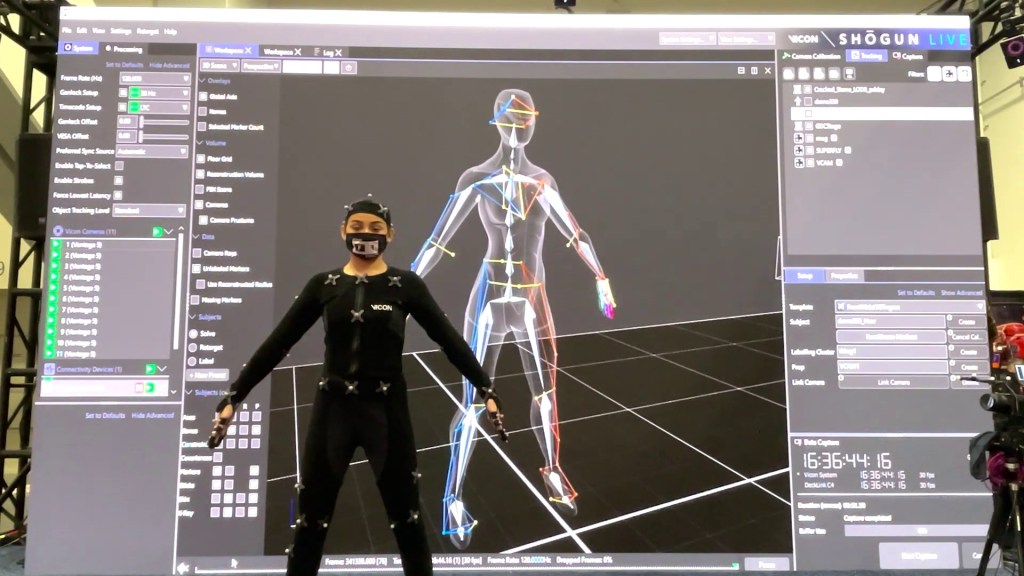
Live Subject Calibration with Veronica at the Vicon demo booth at GDC 2022.
Setting up a motion capture is fairly simple. You will need a Optical motion capture software on your computer, a room with a infrared camera system (along with the ground and forward axis), an actor in a mo-cap body suit with markers, assigning an A-Pose or T-Pose to the skeleton for calibration to the software…and you are ready to go live. After motion capture is done, you are ready to import everything into the Unity or Unreal engine and assign animations to a character. Easy peasy.
VICON
I got a chance to chat with Jeffrey Ovadya, the director of Sales Support and Marketing for Vicon Motion Systems, the global leader in Motion Capture Cameras, software and Motion Capture Systems for the VFX, life science and engineering industries for the past 35 years.
Q: So tell us about the latest Vicon project at GDC…
A: We’ve got Two complete demonstrations right now.
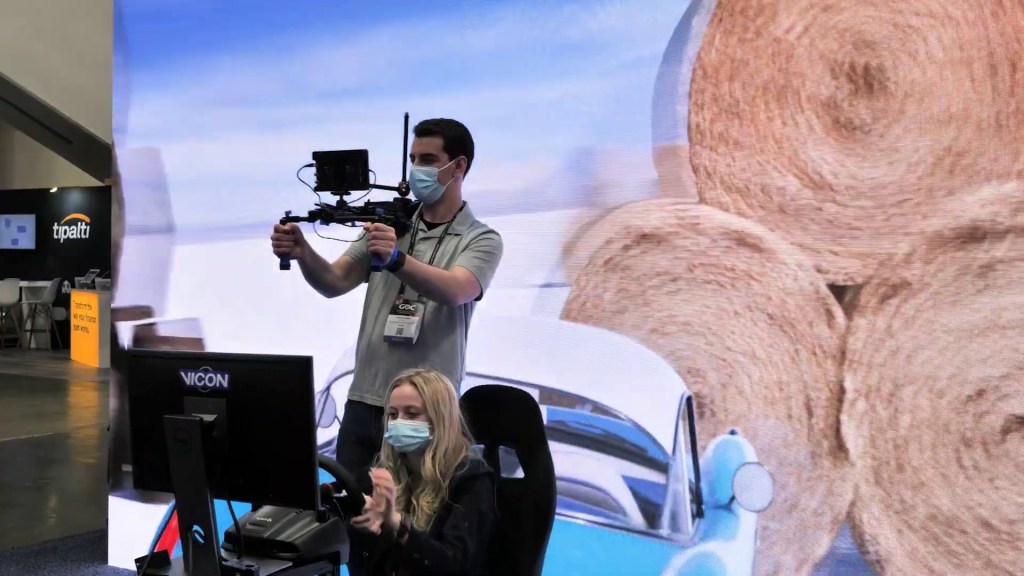
We have partnered with ROE Visual who have given us 60 panels in this 16 X 19 foot LED power wall so we can showcase some virtual production pipeline using a virtual camera running in real time with a game that our team created – Mitchell Whitmore and Connor ended up making this racing game here that’s all live and Unreal. We’re letting people not only drive the racing simulation in Unreal live but also change the camera angle so that you can see the perspective on the ROE Powerwall. ROE is the the LED panel manufacturer that’s used in “The Mandalorian” and all of those other shows as well so this is a really fun demo.
Virtual Camera Tracking at the Vicon demo booth at GDC 2022.
Then later on today we’re gonna do a traditional Performance Capture presentation where we showcase the latest in our Shogun software and we’re going to have some talent come in. We’re going to do live 10 finger capture, we’re going to show some new STI camera calibration for virtual production, pipeline some new auto skeleton features just things to make performance capture, motion capture and virtual production easier across the board with the best product in the industry.
Here is a two minute video that captures both demo’s.
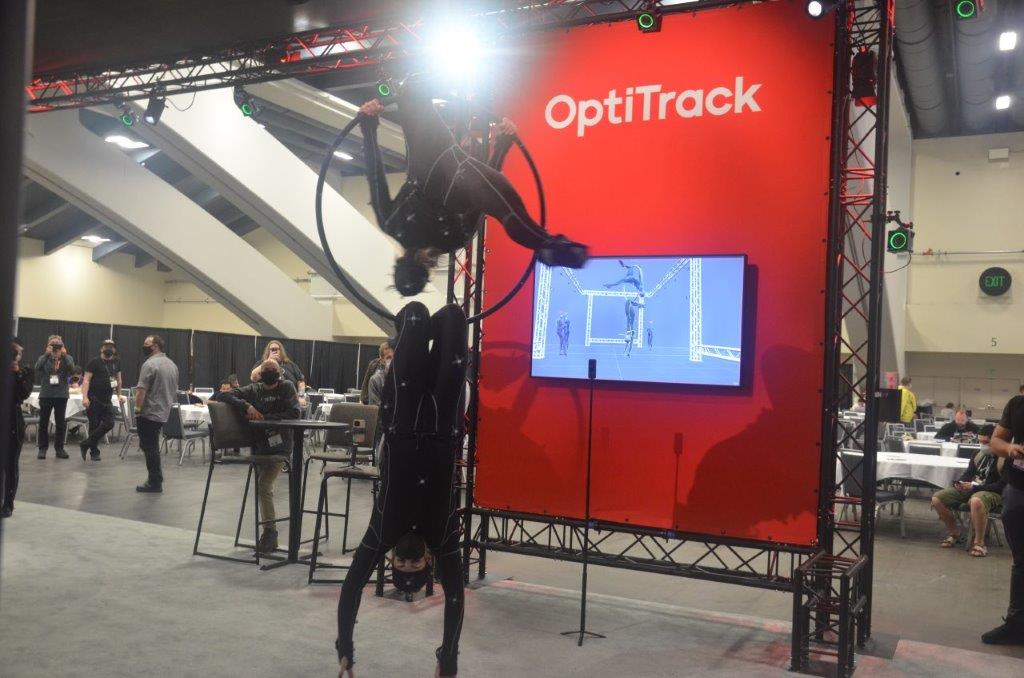
Other noteworthy demo’s on the GDC 2022 floor include, OptiTrack, Qualisys, and Manus below.
Live tracking demonstration from OptiTrack at GDC 2022. Photo by Marcus Siu.Qualisys’ animation solution live and location-based solution in the immersive 20’x20′ demo booth. Photo by Marcus Siu.Everyone deserves a hand at the demo booth at Manus Quantum Metagloves at GDC 2022. Photo by Marcus Siu.
As a regular gamer of “Call of Duty” over the years on the Sony PlayStation platform, I’ve always noticed that the number of online “undesirables” tend to increase as it gets later and later into the wee hours of the night. These are the diehard gamers who play 24/7 with a few cans or Red Bull next to them to keep them jolted. For them, winning is a life and death situation, so they do absolutely everything in their favor for that desired outcome. Even if it’s cheating, yelling obscenities and insults at their fellow teammates to do things differently.
For certain, these aren’t the friends I want to hang out with.
Even though “Call of Duty” games are rated PEGI 18, only suitable for 18 or over, there is always a mix of children, teenagers and adults playing online during the peak hours of the evening. However, when it’s past bedtime for those kids, it becomes super aggressive with toxic adult gamers. At times, I can’t believe how much swearing or threats I would hear online. In those circumstances, I wish I could recruit some online military SWAT team to take that player out.
Back in the day, when everyone wore headsets, it was exciting to chat with your teammates to plan strategies with each other. However, because of the toxic environment online gaming has quickly become over the years, especially when e-sports came around making gaming a professional sport, typical players nowadays don’t even want to use their headsets so they can enjoy their game at their own pace and skills level.
I’ve always wondered if there was any hope to battle this type of online conduct, and was very happy to discover the answers during my visit at GDC 2022, the Game Developers Conference in San Francisco last month.
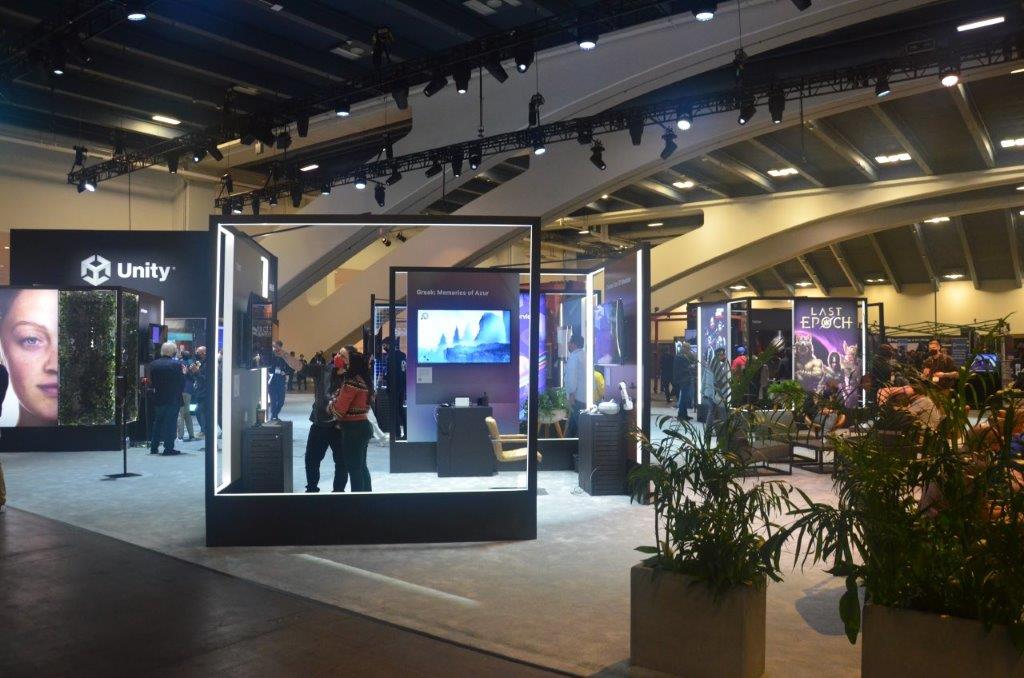
The Unity booth at GDC 2022 Photo by Marcus Siu
UNITY
Last August, Unity, the world’s leading platform for creating and operating real-time 3D content, acquired OTO, an AI-driven acoustic intelligence platform that can be leveraged to build and foster safer gaming environments with voice and text chat environments. OTO will be integrated into Unity’s industry leading Vivox platform as a cornerstone for solving one of gaming’s global challenges: the rise of toxic behavior that leads to poor player experience, and ultimately, lost revenue for game creators.
Unity also released findings from a new survey conducted by The Harris Poll on its behalf that illustrates the growing problem around toxicity that impacts not just players, but profits for developers and creators. This survey was conducted online within the United States from June 21-23, 2021. Key findings of the survey include:
Nearly seven in 10 (68%) of players – defined as those who played multiplayer games in the past year – said they’ve experienced toxic behavior while playing multiplayer games (e.g., sexual harassment, hate speech, threats of violence, doxing).
Nearly half of players (46%) say that they at least sometimes experience toxic behavior while playing multiplayer video games, with 21% reporting it every time/often.
67% of players were very/somewhat likely to stop playing a multiplayer video game if another player were exhibiting toxic behavior.
92% of players think solutions should be implemented and enforced to reduce toxic behavior in multiplayer games.
Q&A with CLEANSPEAK
CleanSpeak handles content filtering and moderation platform protecting online communities from inappropriate content. Self hosted or cloud based, their products serve customers worldwide. The company helps the world’s largest companies manage their user-generated content and protect their brand from PR disasters and user attrition caused by offensive and inappropriate content.
Founded in Broomfield, Colorado, the company works with most of the large game companies in the world from all ranges that use this platform including EA, Ubisoft, Activision, Big Fish, Amazon Games, Per Blue, Pokémon, and even Nintendo.
I spoke with Brian Pontarelli, the founder and co-CTO of CleanSpeak, as well as Fusion Auth, which deals with identity & access management. Both companies are under the umbrella parent company, Inversoft.
He gave me some insight on the company on how the company deals with online profanity, as well as origins of the company.
“I started the company about 15 years ago and I was working on a social network at the time and we were wanting to do filtering around users profiles, their usernames, any content that they were posting because we wanted to keep the community clean, and as we grew it we just started to realize it was a great fit for game companies.”
“Game companies started coming to us and they said, “we’re trying to filter usernames, we’re trying to filter our chats, we really want toxicity to go down, and we really want users to enjoy playing, and get rid of like trolls and issues”. So, then we started building on moderation tools where you could actually discipline and kick users out in real time as events were happening”.
Q: Could you give me an example of what gets a player kicked out?
A: “Let’s say a player is being really inappropriate; they’re using racial slurs, they’re telling people that they’re going to kill them or they’re just using a lot of profanity in a really obscene way. A moderator might see that activity or CleanSpeak might analyze their profile and realize that they’re being really offensive…and then what we’ll do is we’ll do is what’s called a “discipline,” so we’ll activate an “event” on their account that causes them to be kicked out of the game and not be able to log in for a certain period of time.
Q: How can they get back in?
A: “In most cases they can go ask the moderation or open a support ticket. They can ask the moderation team to let them back in and basically take off that “discipline”, but most of the time they just have to wait. What that does is it just reduces the overall toxicity of the environment, and a lot of times when gamers realize that their account might be taken away that they worked really hard on, they tend not to come back in and keep doing it.”
Q: Do they get a warning?
A: “You can do warnings. We have lots and lots of layers. Everything is customizable so you can start with a warning. You can go to “mute” so that they can still play the game but they can’t chat and then you can go all the way to a band. It’s all customizable. Our customers get to define what is best for their company.”
Q: Is Sony PlayStation going to enlist?
A: “Potentially, you know we’ve been talking to Sony now for a number of years and we hope that they join the team… join the family”.
Playing video games should be for everyone, no matter what skill level they are at. No one needs to play in an toxic environment where it’s no fun to play with gamers who treat their gaming like “boot camp” as their life depends on it. It’s nice to know that there are companies out there that will make it more enjoyable for all of us as they continue to reduce the problems that many game companies and gamers face.
It used to be so simple. The Academy Award nominations would be announced and six weeks later, movie goers would have more than ample time to search out which theaters are playing the nominated movies so they can be on “top of things” when they attend an Oscar party.
Not so much anymore. Things have changed. Blame it on streaming or blame it on COVID.
TV VIEWERSHIP OF THE OSCARS:
The Academy of Motion Picture Sciences (AMPAS) have recently tried to boost their TV audience ratings for their Oscar telecast, by increasing the number of nominees of Best Picture nominees to ten from five, hoping that the bottom half of the nominees were more mainstream features that most people have seen and connected with. Since over the last one or two decades, movies nominated were deemed too “art house” and not the commercial “box office darlings” titles that the public loved to watch with their bottomless popcorn and soda.
The movies rewarded were deemed more artistic and daring within the industry with their peers…in other words, there wasn’t much of a common ground. Last year, ratings of the Oscar telecast has dropped to 10.4 million viewers, or 60% decrease from the prior year, so much that ABC is thinking of not televising at all.
This year they decided to “eliminate” eight categories from the live telecast and edit them in later for the sake of making sure that the telecast makes the three hour cut. It reminds me of how picture in picture commercials slowly got into sport broadcasts. It’s completely irritating and offensive. .
THE WORLD OF STREAMING
However, the latest threat with movie going these days is that many don’t get a movie theater release date, but a streaming date. Movies are getting all types of distribution and not necessarily a guarantee you will be able to see them in movie theaters. Some are exclusively in theaters, exclusively streaming, same-day streaming and limited release in the theaters. It makes it confusing for the audience to figure out where and how to see such films.
Here’s a question I would like answered: How many of the Academy voting public actually seen all the ten Best Picture nominees in movie theaters before having them been nominated? My guess is that hardly anyone did.
Not only are movie theaters being skipped, which is really the “only way to see a movie”, they are now being streamed on different channels. For example, two movies that are vying for Best Picture have been streaming on Netflix and Apple+. Unless you saw “The Power of the Dog” or “CODA” at a film festival, you probably won’t have access to see it, unless you subscribe to Netflix and Apple TV.
Movies have shifted much of the content away from movie theaters and are now streaming in their living rooms. Unfortunately, that’s not the way $100 million dollar movies should be seen, like “West Side Story”…let alone “Dune”, that was made for $200 million dollars. I wouldn’t be surprised if there were more Oscar voters who have watched all ten nominated movies on their cell phone than in the actual theaters We have “dumbified” what essential movie going is all about.
It’s as though we are going through an new “mp3” generation for movies now.
OSCAR PREDICTIONS
Here are my predictions for the 94th Annual Academy Awards.
BEST PICTURE:
It’s the little picture that could. I believe when Apple TV bought this Sundance classic that didn’t even play in the movie theaters in Park City for $25 million dollars, they knew what they were doing. It was the first film that swept the three major Sundance Awards: The Grand Jury Prize, The Audience Award, and the Special Jury Award, as well as the Director’s Prize. For the longest time during the award season, “The Power of the Dog” seemed likely to win the big prize, but CODA, surprised everyone recently winning the SAG Ensemble and Producer’s Guild prizes.
Emilia Jones, Troy Kotsur, Marlee Matlin and Daniel Durant in “CODA,” now streaming on Apple TV+.
BEST ACTOR
Will it be Will or Benedict? Though Cumberbatch even outdoes himself in “Power of the Dog”, the fact that Will just won at the BAFTA tells me that he will also get the Oscar for “King Richard”. Neither have ever received the Oscar, but the industry gets to choose who the better peer is…and with so much “Will power” in Hollywood, he’s got this cemented. 40-love.
(L background-r) SANIYYA SIDNEY as Venus Williams and WILL SMITH as Richard Williams in Warner Bros. Pictures’ inspiring drama “KING RICHARD,” a Warner Bros. Pictures release.
BEST ACTRESS:
The toughest category to predict where all five of the nominees were all career topping performances. My choice is with Jessica Chastain for “The Eyes of Tammy Bakker”. Many people passed on the movie when it came to theaters, not interested in this biopic, but there’s no denying Chastain transformed herself into the evangelical Bakker, and made her seem like a true compassionate person that people in the 80’s never seem to understand . She and Kristen Stewart, who plays Princess Diana, are the only ones in this category to not win an Oscars, and though both of them, as well as the others who have one them, Chastain is well liked by her peers and should have enough support for the win.
Best Picture: “CODA” Best Actor: Will Smith, “King Richard” Best Actress: Jessica Chastain, “The Eyes of Tammy Faye” Best Supporting Actor: Troy Katsur, “CODA” Best Supporting Actress: Ariana DeBose, “West Side Story” Best Director: Jane Campion, “The Power of the Dog” Best Adapted Screenplay: Siân Heder “CODA ” Best Original Screenplay: Kenneth Branagh “Belfast” Best Cinematography: “The Power of the Dog” Best Costume Design: “Cruella” Best Film Editing: “Dune” Best Makeup and Hairstyling: “The Eyes of Tammy Faye “ Best Music (Original Score): Hans Zimmer, “Dune” Best Music (Original Song): “No Time to Die”
Best Production Design: “Dune” Best Sound: “Dune” Best Visual Effects: “Dune” Best Animated Feature Film: “Encanto” Best Foreign Language Film: “Drive My Car” Best Documentary (Feature): “Summer of Soul” Best Documentary (Short Subject): “Lead Me Home” Best Short Film (Animated): “Robin Robin” Best Short Film (Live Action): “Please Hold”
PlayStation VR2 and VR2 Sense Controllers. Courtesy of Sony PlayStation.
Article by Marcus Siu
As the technology continues to thrive and the general public starts to embrace it as mainstream entertainment, whether its gaming, or social media, it seems more and more likely that Virtual Reality will be here to stay with us indefinitely, especially when the hardware and software keeps constantly improving.
Most people are becoming well aware of VR, thanks to the ad campaigns from Meta. The company formerly named Facebook believes that VR is the future of social media, and continues to run its commercials, such as those played during the Super Bowl.
For the uninitiated, many of them are wondering what they are missing. My guess is that the many of those TV viewers have never really had the pleasure to experience VR on a stand-alone unit, such as an Oculus or an HTC Vive, or even on the original Sony PSVR.
Though many have experienced it on the Samsung GearVR headsets that came with their Galaxy smartphones that Oculus stopped supporting years ago, it’s not a comparable experience…not even close.
It has been over eight years ago since Sony PlayStation jumped aboard on the VR bandwagon, Though they were a little late to the scene, it was very gratifying to see them at this year’s CES 2022 show fully committed to the technology as they announced their upcoming new and improved “second generation” PlayStation VR2.
The PSVR2 virtual reality system pairs with the PS5 gaming console and is an optional accessory, along with the PlayStation VR2 Sense controller. Though not wireless like Meta’s Quest 2, the PSVR2 will no longer need a camera mounted on your TV, like you did on the original PSVR, but still needs to be tethered to its PS5 gaming console via USB-C on a single cord.
As far as the physical design of the headset, it’s very similar in color to the first generation model but has a much slimmer design with a headband-type visor compared to the original VR strap-on headset. Expect it to be much more ergonomically comfortable than its predecessor, as well. The headsets have built-in microphone and stereo headphone jacks, just like the original.
The PSVR2 promises to have four times the resolution compared to the original PSVR headset with two 2000 x 2040 OLED displays for each eye. The refresh rate remains the same with 90Hz and 120Hz, but the new version will have four built in cameras so you can look in your virtual environment clearly with pinpoint accuracy to whatever you are focusing on, thanks mainly to the headsets’ foveated rendering techniques, which gives you the best visual experience with less pixels.
Two features new to the headset design include an eye tracking movement that allows emotional responses and expressions when meeting people online and a single built-in motor that adds vibration to the headset that immerses the gamer with realism along with the sensor controller’s haptic feedback. Imagine all the whirring sounds flying by you in 5.1 or maybe a virtual punch to the head that adds realism, similar to the “dual shock” on the PS remotes.
According to the Sony, here are the highlights of the PS VR2:
Visual Fidelity: For a high-fidelity visual experience, PS VR2 offers 4K HDR, 110-degree field of view, and foveated rendering. With an OLED display, players can expect a display resolution of 2000×2040 per eye and smooth frame rates of 90/120Hz.
Headset-based Controller Tracking: With inside-out tracking, PS VR2 tracks you and your controller through integrated cameras embedded in the VR headset. Your movements and the direction you look at are reflected in-game without the need for an external camera.
New Sensory Features: PS VR2 Sense Technology combines eye tracking, headset feedback, 3D Audio, and the innovative PS VR2 Sense controller to create an incredibly deep feeling of immersion. Headset feedback is a new sensory feature that amplifies the sensations of in-game actions from the player. It’s created by a single built-in motor with vibrations that add an intelligent tactile element, bringing players closer to the gameplay experience. For example, gamers can feel a character’s elevated pulse during tense moments, the rush of objects passing close to the character’s head, or the thrust of a vehicle as the character speeds forward. Additionally, PS5’s Tempest 3D AudioTech makes sounds in the player’s surroundings come alive, adding to this new level of immersion.
Eye Tracking: With eye tracking, PS VR2 detects the motion of your eyes, so a simple look in a specific direction can create an additional input for the game character. This allows players to interact more intuitively in new and lifelike ways, allowing for a heightened emotional response and enhanced expression that provide a new level of realism in gaming.
In addition to the announcement of the VR PlayStation VR2, Sony announced announced a new game designed and originally built for the PS VR2 Platform, “Horizon Call of the Mountain from Guerrilla and Firesprite”, one of the biggest PlayStation franchises.
As of this time, there is no release date or retail price.
VR2 Sense Controllers. Courtesy of Sony PlayStation.
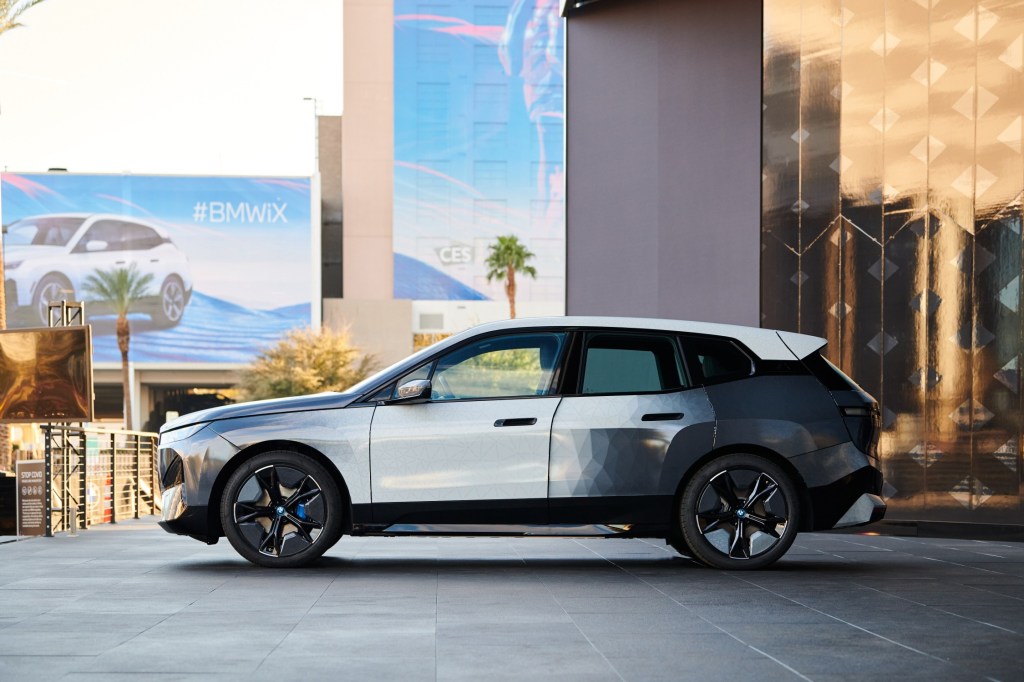
BMW has just made it much more difficult for police cars to chase bad guys in the future. That’s if the bad guys decide to drive away in a car that changes the color exterior of a car just like the one that was demonstrated at this year’s CES show in Las Vegas.
The German luxury automaker brought in their all new electric sporty BMW iX showing off its ground breaking concept E-ink technology that practically “wraps” the surface of the car. With just the touch of a button from a smart-phone app, it is able to change the car’s exterior color in just a matter of seconds.
The wrap contain a low voltage electrical connection similar to that of an Amazon’s Kindle, where it is able to change from any two colors, such as from white to black or black to white as in their demo, along with shades of grey in between.
The fact that this technology gives you two colors to choose from, and white and black are the most popular colors in the country for luxury autos according to Kelley Blue Book, it confirms that the King of Pop, Michael Jackson was right. It doesn’t matter if it’s black or white. So, if you’re spouse wants white and you want black or vice versa, it’s a win-win situation for both of you.
Another great feature of having a black and white car is how it adapts to the seasonal weather. As we all know, for example, black cars can be unbearable in hot weather and heat up the interior much more dramatically more than white cars do. Summer weather would be best to drive a white car, and winter weather would be best to drive a black car. Just by switching colors during seasons, its will help the efficiency of the internal heat and air conditioning in the car, which will help prolong the battery life and consumption, which is equivalent to more mileage for the vehicle.
Last but not least, another feature worthy of noting is for those absent-minded drivers who have a hard time locating their car in a parking lot when returning from their chores, which I confess, happens to me from time to time. Instead of relying on a chirp from your key alarm which may give you a general idea where your car is, you can now have it flash in your peripheral vision. That will be a huge plus for many drivers as they traipse to their car.
Though, presently this technology is restricted to two colors and is not quite economically feasible for mass production, it gives us an idea of how E-ink technology might change our lifestyles with custom made personalization. Rumors have it that E-ink is initially looking at personalizing license plates, but imagine in the future where you will be able to change and create the colors on your wall and surface space in your house based on your mood.
For the mostly virtual CES show, which saw a 70% drop in attendance this year compared to the pre-pandemic levels in 2020, the lucky few 40,000 or so attendees that were able to make it there in person were in blown away from what BMW had shown them. Demos like this make it a shame that more people couldn’t see this up close and in person as seeing is believing.
Courtesy BMW
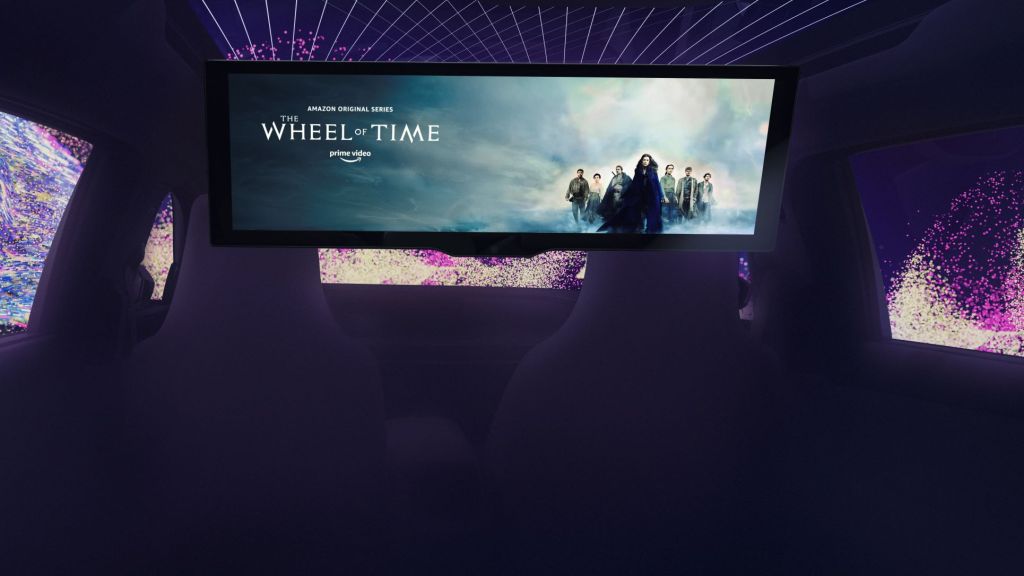
The BMW Theatre Screen is our idea of luxury in-car-entertainment of the future. It brings the ultimate digital experience to the back seats of your car, transferring it into a real driving cinema.
– Adrian van Hooydonk, Senior VP BMW Group Design
WHAT ELSE IS NEW?THEATER SCREENWITH 4D SOUND
Now that we are in a world where EV’s will be dominating the future, it seems BMW is taking it further by not only letting you personalize the colors on your car, but also putting an entertainment theater right into the comfort of your back seat.
They showed off their new concept of the 8K “Theater Screen” in one of their luxury vehicles, which is a 31-inch, 32:9 ultra-wide panoramic screen that can display 16:9, 21:9, and cinemascope 32:9 aspect ratios. It’s fitted atop the ceiling of the car and is accompanied with 30 Bowers and Wilkins surround sound speakers, including those installed in the back seat of the vehicle, much like how the vibrating chairs in the Dolby Atmos Theaters are built, for a more immersive experience, which BMW describes as “4D” sound.
It’s display has Smart-TV functions, that runs its content through the Amazon Fire TV that is directly built in and uses 5G technology. Your choices are endless. You can listen to music, stream movies, watch TV episodes, and use any of it’s apps for a truly immersive experience. The screen is touch-enabled, but there are also touch controls on each of the rear doors, giving passengers a choice of how they want to interact with the display. Headphones are optional.
As the screen descends down from the ceiling of the car, the roller sun blinds from the side and rear windows close, and the ambient lighting is dimmed, it creates a true cinematic experience, transforming the backseat of the car into a “private cinema lounge.”
BMW promised something similar to its “Theater Screen” concept in the near future for all their cars.
With its presence at CES capturing the headlines for its innovation, the company have demonstrated that they are revolutionizing how things might look (and sound) in the future and have come to the forefront of personalizing the future of automobiles for consumers.
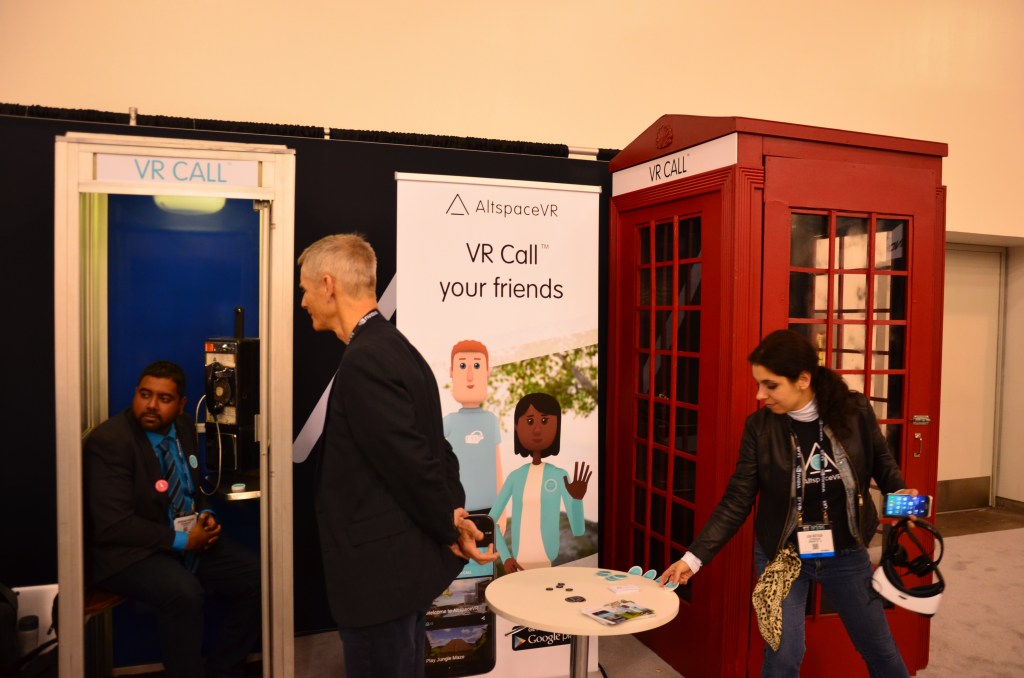
AltspaceVR created the first social VR platform in 2015 allowing users to interact as avatars in a virtual environment. Photo was taken from the 2016 Silicon Valley VR conference. Photo by Marcus Siu
Article and photo by Marcus Siu
“I believe the metaverse is the next chapter for the internet.” – Mark Zuckerberg
With the COVID-19 epidemic surging among the population in record numbers around the world, it has negatively impacted us while dramatically altering our lifestyles for the worse. With shelter in place rules becoming more now of a decisive lifestyle choice for many of us as new variants emerge and continue to bombard us, such as the Delta and Omicron, it certainly has decelerated our psychological well-being (PWB), which is driven by our own physical and emotional health that includes social loneliness.
This has been problematic for most of us, as we simply do not want to go out like we have in the past. To be safe, we need to wear a mask, keep a distance from others in order to protect ourselves and our families from the coronavirus. Gone is the immediate social interaction and independence that we were so used to before the pandemic. Face to face gatherings may be a thing of the past…at least for now, until the virus begins to disappear.
While a portion of our population stays unvaccinated as new variants emerge, the question remains:
When will we ever get to go back to the “pre-pandemic” good old days?
Regardless of what happens, as we constantly thrive for human connection, we will continue to use a wide variety of social apps, such as Zoom, WhatsApp, WeChat, TikTok, and countless others to get us by. Thanks to these social apps and platforms on our smartphones, we have always been connected to the world. If it weren’t for these apps, I’m sure the suicide rates would have gone way up.
THE RISE AND FALL OF SAMSUNG GEARVR
It was 2016 at the Silicon Valley VR Conference when I visited the AltspaceVR booth and took their demo. I put on their Oculus Rift headset they provided me and made my first virtual call. I was suddenly transported in a virtual world at a party with other avatars who would come and greet me. I had no idea who they were, but discovered that I was talking with people from all around the world. Though the avatars were fairly simplistic and had limited movement, it was still quite eye opening.
The following year, a vast majority of consumers were introduced to AR and VR through Samsung’s GearVR headsets. That was the year when Samsung essentially threw in the headsets for free as part of the Samsung Galaxy S7 smartphone package. The GearVR headset, powered by Oculus, who is owned by Facebook. Alongside Samsung, Oculus, HTC Vive, Google, and much of the media were all betting that VR would change the world, especially in the world of gaming.
Unfortunately, that was not to be the case, at least in the short term. It was just a temporary fad as the majority of the consumers did not gravitate to it. Most people surveyed said that they could not wear the bulky headsets for more than 30 minutes at a time because not only was it uncomfortable on their head, but they would also get motion sickness and headaches from it. Many women also complained it messed up their hair.
Similar to the popularity and demise of 3D HDTV’s, the interest for Samsung GearVR headsets was eventually rejected by consumers. At the same time, VR still had a niche market for Business to Business (B2B) applications, AR, VR, and MR (mixed reality) were used mostly practical for technical and training purposes for companies who decided to develop “in house” for their employees.
Compatibility issues within platforms along with the lack of industry standards was always a sore issue with VR developers, though, Nvidia has come up with their “Omniverse” which has changed everything for Game and VR Developers. The Nvidia Omniverse addresses the challenges of creating massive libraries of 3D content that helps game developers build photorealistic, physically-accurate games with record speed by unifying artists, their assets, and software tools in one powerful platform.
THE FUTURE OF SOCIAL INTERACTION IN THE META WORLD
It was no accident Facebook purchased Oculus for $2 billion seven years ago. Mark Zuckerberg, the CEO and co-founder of Facebook had a much broader vision than anyone could ever imagine what Facebook could do with Oculus, who most people just saw as a VR gaming company. Even business experts had questioned why Facebook squandered all that money at the time. Now we know.
With the recent surging popularity of the Oculus Quest 2, which just surpassed the Oculus Rift as becoming the world’s most popular VR headset, it is becoming obvious that Facebook, now Meta, is heading into a new era of social media. Meta has come to realize that it’s the world of future social connection that will be part of Facebooks’ rebranding, along with the companies under it’s umbrella; Facebook, Instagram, and WhatsApp which are sure to be incorporated into the Metaverse.
“We’re going to make Oculus a platform for many other experiences,” Zuckerberg commented while announcing the deal. “Imagine enjoying a courtside seat at a game, studying in a classroom of students and teachers all over the world or consulting with a doctor face-to-face — just by putting on goggles in your home. This is really a new communication platform.”
Perhaps one day, we will be able to have all our friends at one big virtual gathering at a favorite spot such as the home they grew up in, a favorite restaurant, music venue, sports arena or bar. We can even throw a virtual birthday party, graduation, wedding, or even a funeral, and invite friends who are living on the other side of the world who normally wouldn’t be able to attend a real one. Everyone can meet each other virtually that might not have ever happened in reality due to logistics.
Instead of being limited to the number of friends you can sit and watch the Super Bowl, we can do what AltspaceVR did. Invite 200 of your friends and watch it with them. That would be some super party.
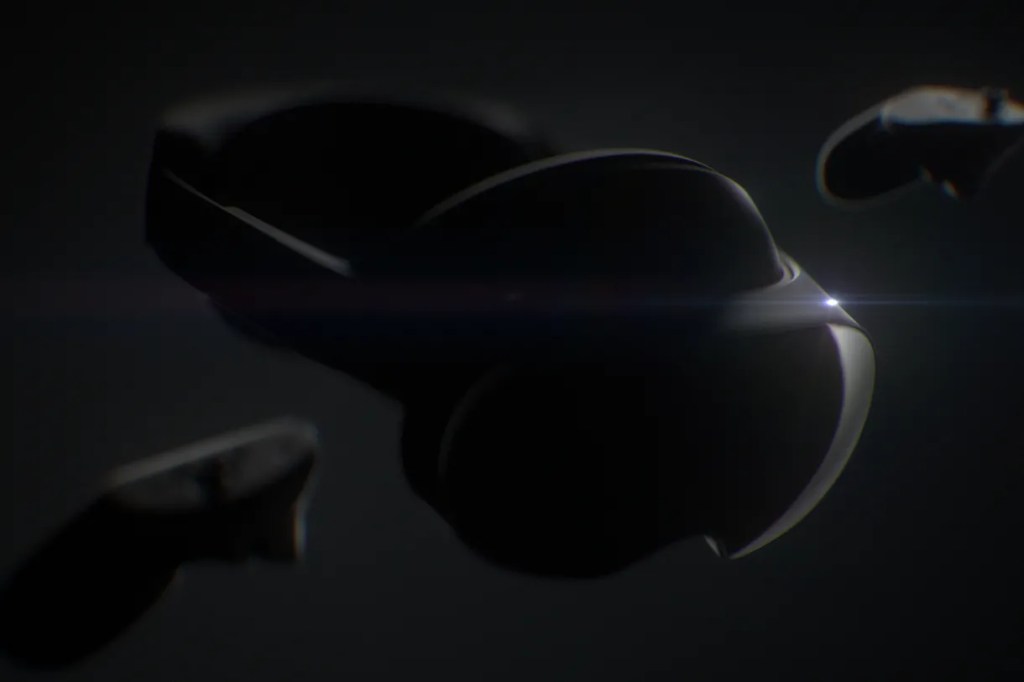
Or you can imagine that you are on the planet of Pandora; James Cameron’s “Avatar” environment with your own lifelike Avatar that resembles yourself that tracks your face and eye movements from your headset. This is no longer science fiction, but may be reality soon as Meta is currently developing “Project Cambria”, a very high end VR headset that will be able to do these things that will probably be released late 2022 or 2023.
Project Cambria/Meta
Instead of being distracted by their smart-phones at the dinner table, kids will be soon distracted by their VR headsets or glasses as mom and dad get irritated and lose their patience.
“Take off those damn VR headsets kids and tell your friends you have to eat dinner in the real world! NOW!….”Dinner is getting cold!”
With the Metaverse right around the corner, we may soon be immersed in an a brand new virtual world experience that will be more gratifying as Mark Zuckerberg had originally envisioned. It will also be a more peaceful one knowing that there are no pandemics where humans get sick, regardless of how many viruses are on the computer. Last, but not least, the bulkiness of the headsets will be a thing of the past and the headsets will just be no heavier than a pair of google glasses.
With the fact that people no longer want to go anywhere due to COVID, perhaps the Metaverse will be here sooner that you think and holiday dinners with the family will never be the same again
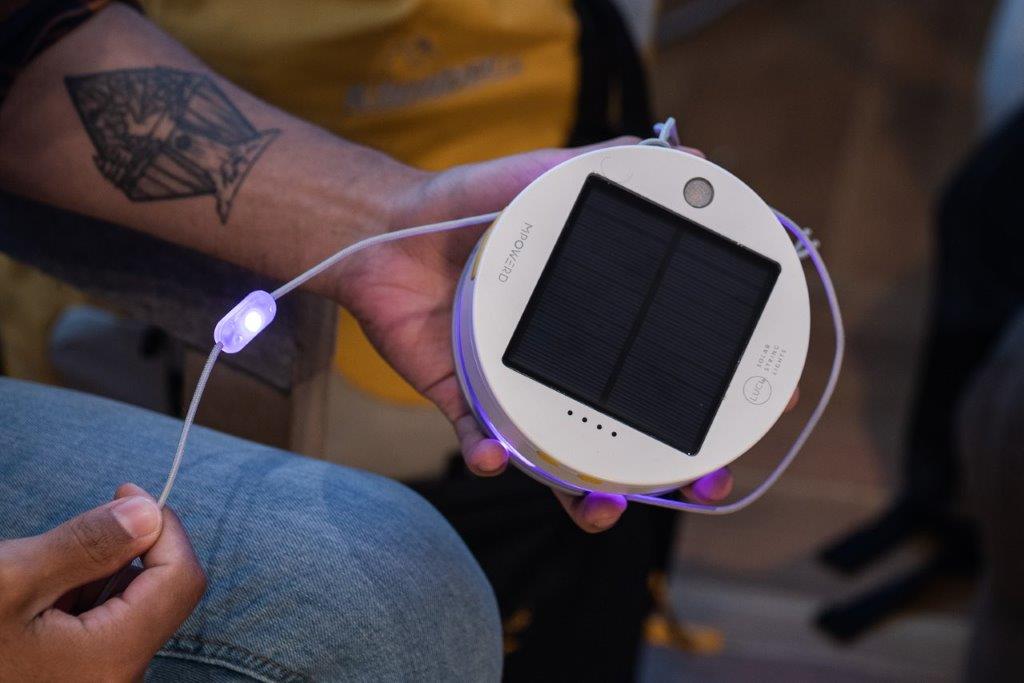
Luci’s Color Solar String Lights can be utilized outside or inside. Photo Courtesy of MPOWERD.
Article by Marcus Siu
When it comes to setting the right mood, it seems there is absolutely nothing more important than colored lighting, especially during the holidays. Whether you are driving through a dramatic city backdrop with buildings splashed in multi-colored lighting, walking through a holiday decorated neighborhood with homes surrounded by lively flashing colored lights, or just simply relaxing at home entertaining guests in a festive illuminated environment, it quickly makes people feel lively in a a fun filled party atmosphere.
With MPowerd Luci Solar String lights, you can take the festivities and party anywhere you want to be; whether it’s just the backyard patio, a campsite, or at a beach. The unit is very compact and convenient enough to just throw it in a purse or small bag.
Unlike having to deal with long traditional stringed lights that takes time to untwist, your stringed lights will be set up instantly in just a few minutes from the palm of your hand. Though it wasn’t intended to displace traditional Christmas light decorations around your house and in large area spaces, it’s certainly a great alternative option for lighting up small intimate spaces where people gather.
There are two different Luci Solar String lighting products; the Luci Color Solar String Lights and the Luci Solar String Lights. They are essentially the same product, except that one utilizes color and the other one doesn’t. The Luci Color Solar String Lights has six different colors that you can choose, all with a touch of a button: blue, violet, turquoise, green, pink, cool white + color cycle mode while the other just uses basic warm white LED’s. If you wish to be more traditional then the white LED’s would be your choice.
Wrapping and unwrapping the Luci Color Solar String Light. Photo Courtesy of MPOWERD
It’s power is generated through the sun through its solar panel, so your electricity bill cost will not be affected. The round canister pack twists off by hand. In it contains the wires and string lights all in one. After the unit is charged, all you need to do is unroll it out of the canister, find the area you wish to light up and find something, such as a tree twig or stake that you can wrap the tip of the wire to. If you plan to use it indoors, a plain small nail will do the trick.
Depending on how much brightness you need, the battery life at low mode can run up to 20 hours, the medium mode runs 11 hours, the high mode runs five hours, and the flashing/emergency mode runs nine hours. Each unit pack contain 100 lumens into 10 nodes all on an 18 foot cord.
If you live in a region where you don’t get much sun, such as in the Scandinavian countries during the wintertime or just don’t have access to the sun for some other reason, you still have the option to quick charge it through its own USB port. You can even use it as an emergency power bank, in case you desperately need to juice up another device, such as a cell phone or tablet.
A Dog Day Afterdusk with the Luci Color Solar String Light. Courtesy of Mpowerd.
For me, I like to use the Luci Color Solar String Lights right above my vertical blinds in my living room, spacing the colors evenly creating a nice accent background drop. It complements the color lighting coming from the smart bulbs coming from my lamps.
Most of the time, I like to set it to one color depending on my mood. I usually choose violet in a low mode, which makes me feel more relaxed at night. The long 18 foot cord makes it easy to stretch it across illuminating and highlighting the panels of the blinds, which dramatically reflects to the floor giving the room added warmth.
The tricky part of setting the unit up is trying to figure out where to conceal the round canister to keep it out of view. I hung up a little nail on the wall right near where the lights stop at the top of the blinds. It is still visible but it seems to blend in anyway to the environment, much like a smoke alarm does on walls. In any case, it certainly doesn’t look out of place and it’s still much more desirable than having to install an electrical outlet next to the side of the blinds. That would certainly be an eyesore.
Camping lighting has never been easier with the Luci Color Solar String Lights. Photo Courtesy of MPOWERD
I love the fact that after charging the unit, it seems to retain it’s charge, even if I sparingly use them. There have been times when I wouldn’t turn it on for a few weeks and I would expect it not to turn on, but it turns on. I have been very happy that the battery holds its charge after a few months before it finally gave out on me.
Another added bonus is that it also has a built-in LED external flashlight. This certainly helps out during those nights when you forgot to bring your flashlight and need to find your way back to the camping site in the middle of the night. It’s also great to look for your lost and misplaced items, such as the car keys or the half full bottle of beer that you left behind.
Christmas is the perfect time to go “green”, if you aren’t already. Products like these not only enhance our lives, but it also helps the planet.
The retail price of these lights are $49.95, but during it’s extended Black Friday, you can get two for the price of one. Certainly a bargain in my book.
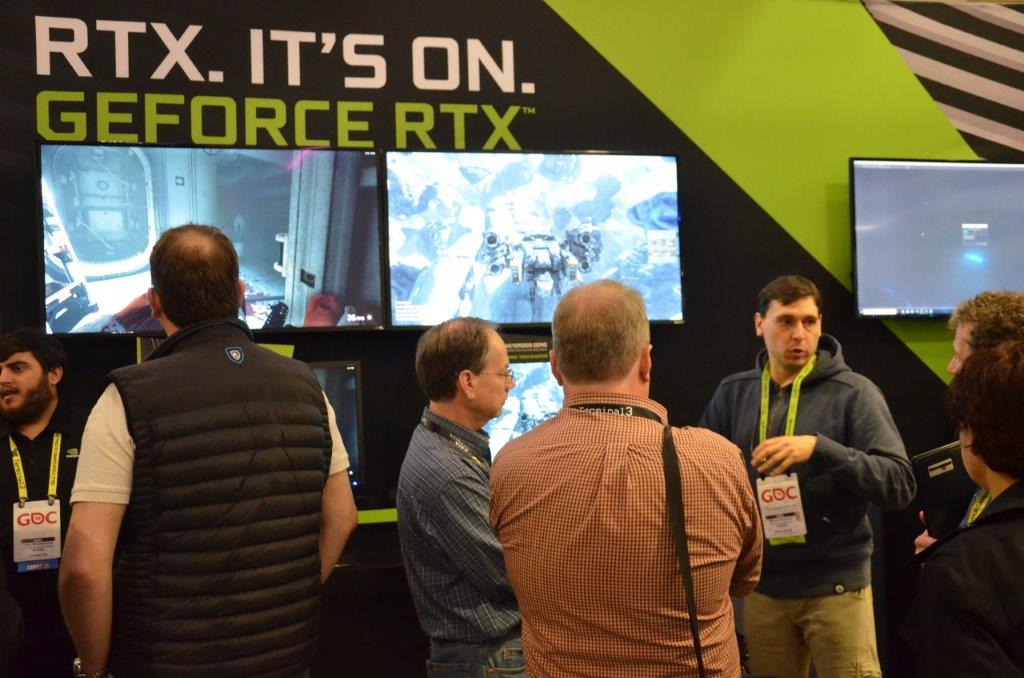
Nvidia booth at GDC 2019 introducing GeForce RTX. Photo by Marcus Siu
Article and photo by Marcus Siu
Since the advent of online gaming during the 80’s and 90’s, you were only considered a serious online gamer, if you had a top-of-the line gaming PC, such as an Alienware that contained the utmost highest performance components, along with the latest graphics card and a ultimate high performance CPU that had an outlandish ton of memory that most people couldn’t imagine. Expect to pay at least $3000 for a good entry level Alienware gaming computer. It’s just all part of the “game” to stay competitive online.
Today, some extreme gamers will shell out well over $40,000 for a PC, such as for the 8 Pack OrionX2 PC built by Overclockers UK, which is really two systems in one. Processing power comes from the 18-core i9-7980XE that’s overclocked to at least 4.6GHz, and it’s paired with 128GB of overclocked memory and three Nvidia Turing graphics cards. Call it a personal obsession or an expensive habit.
Most of us don’t have an extra $40,000 to spend on a gaming PC. For the average Joe, it’s just really all about upgrading their graphics card into their existing PC’s which will still hopefully be able to accommodate it with its minimum requirements for the CPU.
Just about every two years, Nvidia releases a line of new graphic cards, so to stay competitive in the online gaming world, it’s not unusual to buy a new graphic card every time a product announcement is made when launched. That’s the very least you should do to stay competitive.
When Nvidia’s flagship RTX 3080 GPU came out last year in September, only a fortunate few were able to get hold of one before they were out of stock due to to the huge demand. A few weeks later, the RTX 3090 which cost nearly twice as much as the RTX3080, sold out in minutes at retailers everywhere.
The main reason is because individuals or companies will gobble up all of the supply and sell them nearly double on Amazon or eBay, as third party sellers. You will see them listed on eBay for double the list price, as the $1499 list RTX 3080 GPU’s are selling at $2800, where as the $699 list price of the RTX 2080 is selling for around $1500 to $1700.
The third party sellers really made a huge profit knowing that Crypto miners have the money to buy them out. It is as though suddenly, GPU’s have become more used for speculative investment purposes rather than just a commodity. Gamers are on the losing end.
Nvidia CEO Jensen Huang addresses the crowd at the 2018 GTC conference. Photo by Marcus Siu.
There was not much manufacturers could do to prevent this. According to Nvidia’s CEO, Jensen Huang, he expects this problem to continue well into late 2022, extending his original projection from 2021.
In February, 2020, Nvidia did come up with an alternative solution to help alleviate the huge demand for their GPU’s for gamers; they launched their cloud based gaming platform, GeForce Now. Similar to what Microsoft had done in the cloud with their Office365 software that used to sell in brick and mortar stores, Nvidia has been doing something similar with their cloud based streaming subscription service.
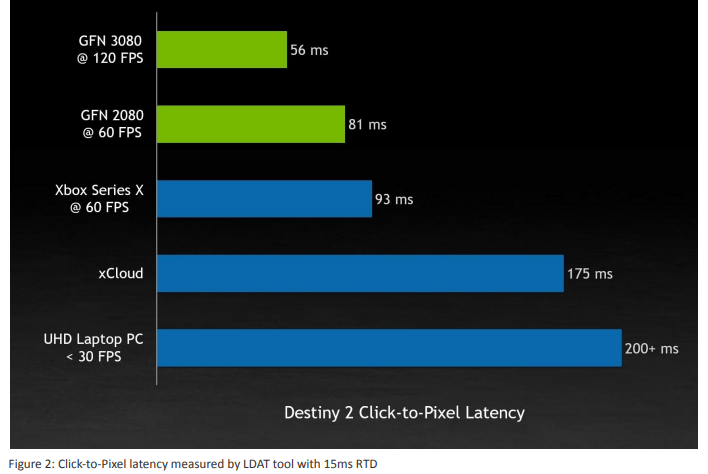
Subscribers are basically “utilizing and leasing” their Nvidia hardware and software to gamers into the cloud. It’s as though they have exclusive rights and access to the world’s greatest supercomputer, called the SuperPod, giving gamers their own high-performance cloud gaming rig that streams and renders through the cloud directly onto their personal device but with a much lower latency and much higher frame rates compared to what they could ever receive from any high-end laptops and PC’s.
For example, the recently announced GeForce Now RTX 3080 memberships can stream up to 1440p at 120 FPS gaming on PC and Mac, with ultra-low latency that rivals local gaming. It can also stream 4K HDR at 60 FPS on SHIELD TV, with ultra-low latency that rivals many local gaming experiences.
As Cloud gaming is ever increasing in popularity, Nvidia’s gamer population has been growing at a very rapid pace. Currently there is a Nvidia priority membership that is $49.99 for a six-month membership. The priority membership uses the RTX 2080 or GTX 1080-powered servers. Members will definitely be motivated to upgrade into the RTX 3080 membership plan for the extra $50.
With GeForce Now available, gamers will no longer need to spend a fortune to buy personal computers or continuously upgrade their GPU’s. Now it’s more of an even playing field for online gamers now that high end computers are no longer required and may be a thing of the past; at least for gaming. The Cloud gaming market has completely changed the way utilize our hardware (and software).
Today, demand for high performance graphic cards have never been greater due to the massive demand far outstripping the supply due to the crypto miners and the pandemic. Regardless of the reason, it’s nice to know that gamers don’t have to be buying a $40,000 to play competitively in the cloud.
Citizen Kane will be the first UHD 4K Blu-ray title issued by the Criterion Collection in November. Courtesy of Criterion.
Article by Marcus Siu
Rewind five years ago to Valentines Day 2016. That significant date was when the very first Ultra HD Blu-Ray Discs were released in the United States. Sony Pictures Home Entertainment released six titles: The Amazing Spider-Man 2, Salt, Hancock, Chappie, Pineapple Express, and The Smurfs 2. The other major movie studios including Lionsgate, Warner Bros, 20th Century Fox, Paramount, and Universal followed suit and released a handful of titles a few months later.
My assumption was that Criterion Collection, the cinephiles’ favorite home video distribution company that focuses on licensing, restoring, and distributing “important classic and contemporary films”, would soon immediately follow the major studios in releasing the latest format.
I was wrong.
In May of 2016, Peter Becker, President, and Jonathan Turrell, CEO, were receiving the “Mel Novikoff” Award at the San Francisco International Film Festival on behalf of their company, international art house cinema sister companies, Janus Films and the Criterion Collection. They were also screening a new print of the Coen Brother’s “Blood Simple”.
Completely frustrated about not finding any current news about Criterion, I got a chance to ask Peter Becker himself, who also happens to be the founder of the Criterion Collection, whether or not the company was planning to release any 4K UHD Blu-rays anytime soon.
Becker immediately responded, “You’re not going to like my answer”.
He was absolutely right, I didn’t like his answer. Becker believed that 4K UHD Blu-rays was probably going to be a niche market and even wondered if there was even much of a demand for the product, at all. He neither confirmed or denied Criterion’s commitment to the new format, but had more of a “let’s wait and see” attitude.
The following year, even Disney released their first slate of 4K UHD Blu-rays.
However, as it turned out, Becker was right. Before 4K UHD Blu-rays were introduced, DVD’s and Blu-ray discs had a 50-50 market share, but for Criterion, it was closer to 60% Blu-rays vs 40% DVD’s. When 4K UHD Blu-rays were introduced, they ate into Blu-ray market sales while DVD’s increased its market share to 60 to 70% in just the last two years.
4K UHD Blu-rays only account for 7 to 7.5% of the market share as of this year, but taking Blu-ray sales down at the same time. Unfortunately, this affects Criterion more than any other movie studio since they had a healthy sale of standard Blu-ray in the first place.
It seems that people who buy DVD’s are more price conscious and never had intended to jump on the Blu-ray bandwagon in the first place, whereas the early adopters of Blu-ray also jumped on the 4K UHD bandwagon. It’s extremely rare for a person who collected mainly DVD’s to transition straight into the 4K UHD world.
2016 San Francisco International Film Festival: Peter Becker, Jonathan Turrell of Janus Films and the Criterion Collection, alongside the Coen Brothers. Photo by Marcus Siu
As I was doing my biyearly Criterion Blu-ray shopping at the Barnes and Noble sale last July at my local Dublin, California store, I had a lengthy conversation with my “go to movie guy”, Shawn. He is extremely knowledgeable about movies and up-to-date on video releases, especially from boutique labels, like Arrow, Shout Factory! and Criterion. He said that there was a lot of buzz and speculation online that Criterion was possibly going to release UHD Blu-rays for the upcoming Christmas season. This opened up a terrific conversation on which title would be worthy of being their initial first release.
I suggested Seven Samurai, one of the first original titles from Criterion that came out on all of their major digital video format releases over the decades, such as Laserdisc, DVD and Blu-ray, which was also on my “wish list” from their nearly 1100 extensive film collection. It was spine number two on their DVD/Blu-ray.
However, Shaun thought the film would have to be “super extraordinary” and something not necessarily from Criterion’s existing DVD or Blu-ray catalogue, but a film that would have to be celebrating a big anniversary that also had some connection with them in the past, such as Citizen Kane, which would be celebrating its 70th Anniversary this year. Citizen Kane also happened to also be their first Laserdisc release in 1984.
Not only was “B&N Movie Geek Shaun” dead on predicting Criterion’s 4K debut title, but he also mentioned Mullholland Drive as another alternative title, which was also slated as one of the six initial releases. The other four titles Criterion announced include Menace II Society, The Piano, The Red Shoes, and A Hard Day’s Night. However, the real treat is that select films will be presented in Dolby Vision HDR and Dolby Atmos on the 4K UHD Blu-ray.
Jane Campion’s, The Piano, is the one 4K title that excites me the most, as it always seemed to had subpar treatment on DVD or Blu-ray over the years. It always had screamed for an updated remaster, visually and sonically. Hopefully Criterion will be able to bring Dolby Vision and Atmos to the remaster. I am quite surprised it actually took Criterion so long to acquire the rights to this astonishing film, especially when two of Campion’s earlier films are also in the Criterion Collection.
Back in 2013, as DVD’s were getting cheaper to produce, Criterion began releasing their latest Blu-ray titles in a Dual-Format edition that included the Blu-ray and DVD with the exact same content. After releasing standard Blu-ray releases after five years, the company felt it would give consumers an added value to their purchases on Blu-ray if the DVD was included in the package.
Unfortunately, this wasn’t the case as there was much backlash from some of the consumers as they complained that they didn’t have enough shelf space to store the DVD’s, let alone Blu-rays, since many of the packages were a little wider than if it just had the one standard Blu-ray in it. Also, if the DVD had the same content in them, they believed it was redundant. Therefore Criterion stopped its Dual-Format Blu-ray/DVD releases.
As for 4K UHD Blu-rays, just like most of the Hollywood studios, Criterion will release their 4K UHD Blu-rays in the Dual-Format edition package, similar to before, but by releasing the 4K UHD releases along with the standard Blu-ray that will also contain the feature film and extras, as well as its special features.
However, this time they will dedicate the feature film with Dolby Vision HDR and Dolby Atmos on the 4K UHD Blu-ray for the highest possible presentation and bitrate, and also putting the extras, as well as the feature film, onto standard Blu-rays. At least that’s what I understand by looking at the specs for the new Citizen Kane from their website that will have one 4K UHD Blu-ray and 3 standard Blu-ray DVD’s listing at $59.99.
My only wish is that Criterion would have a plan for their loyalty members who previously purchased and already own the Blu-ray DVD title. Instead of having to rebuy the $49.99 4K UHD Blu-ray title, it would be nice if they could just have the option to purchase the 4K UHD disk separately (and perhaps include a 4K UHD case or cover) without the packaging for perhaps $10-$15 so you can just add it to your existing standard Blu-ray title that is already sitting on your shelf. It seems like a shame to have to rebuy the title if you already own it on Blu-ray. Perhaps other loyalists feel the same I do.
Though it took the Criterion Collection over five years to release their first 4K UHD Blu-rays, with boutique labels such as The Shout Factory, Arrow and Kino Lorber beating them to the draw, it looks like from the initial slate of Criterion titles that they just announced and their extensive catalogue to draw from, the future looks bright and rosy for the company and for the latest home video’s format.
November will be a truly historic month for videophiles and fans of Criterion.
Whether you’re a recreational or an avid bicyclist, one of the most crucial items to bring along with you on a medium to long range trip is a good bike light. As the sun sets and it’s just about time to return home after spending a day with friends, you suddenly realize that you may have to ride home in the dark. Visibility and safety becomes the primary concern, especially alongside the fast-paced traffic.
As you start your journey back, you realize your bike lights aren’t as bright as they should be and you blame it on the possibility of weak batteries, so you park by the side of the road to change them. You reach into your back pack and fumble for your screwdriver and extra batteries in the pitch darkness, but since you weren’t sure you brought them in the first place, you start cursing at the starry night above.
This has been a typical scenario in my life before I started using solar powered products.
LUCI Solar Bike light
Sometimes, it’s actually not the batteries fault. Sometimes its because of the ever changing lighting conditions on the roads. Cyclists always want their lights as bright as possible, but with most bike lights, it is not possible unless you bring a battery tester with you to ensure the battery is holding up properly.
I would always find myself consuming countless conventional batteries because I would simply forget to turn off the bike light after each use and would later discover that the batteries were completely drained.
I also tried going the rechargeable route, but they were not up to par with the conventional batteries since they never held a constant charge. The lights would flicker inconsistently due to the rechargeable batteries lower voltage compared to those of the conventional ones.
To a cyclist, the inconvenience of changing batteries on a bike light is like the irritable experience equivalent to that of a person driving a car who has to pull off to the side of the road and change a flat tire.
Luckily, the latest MPOWERD Luci Bike Lights solves these problems, thanks to solar.
Photo courtesy of MPOWERD
INTRODUCING MPOWERD LUCI BIKE LIGHTS
There have been some gnarly looking solar bike lights on the market, so it’s refreshing to see the stylish MPOWERD’s Luci bike lights as another option. It has a minimalist design and weighs a mere two ounces for the front light and 1.2 ounces for the tail light. It almost looks like it was designed to look like an iPod accessory, even though it’s not.
It has a very sleek and stylish bezel, and is very easy to use. Besides being portable and adjustable, it is also waterproof. Even if you get drenched in the pouring rain, be assured that you won’t have to worry about the light ever malfunctioning while pedaling away frantically.
There is a power button on both headlight and tail light. As soon as you turn it on, it defaults to the low light mode. Each time you push the button, it advances to medium, high, and then to a rapid flashing mode that is guaranteed to get everyone’s attention.
The MPOWERD Luci bike light needs bright sunlight for about eight hours to fully charge its 750 mAh lithium-ion battery through its solar panels. If it’s not quite sunny enough or if time is a factor, you can plug and charge it through it’s port through using the micros USB cable that comes with the product. You can also use a power bank, if you have one laying around.
The front light features a battery indicator to indicate if it’s running low on its battery. Green means it has more than 56% to 100% battery power, yellow means it has 11 to 55% left, and red means you have 0 to 10% left. There is a peace of mind knowing that the brightness will be constant at all times, regardless of which of the three different settings are being used.
Luckily, it is quite versatile, so you can take it with you anywhere you go, inside or out. The headlight stands on its base at about an 80% angle, so it can reflect against a mirror or wall making it a perfect light source. It’s like having an extra wall lamp and perfect to use as emergency backup situations, as well.
Photo courtesy of MPOWERD
IT’S A SNAP – NO TOOLS NOT REQUIRED
The MPOWERD Luci bike light comes in a nicely designed package containing two small post-it sized boxes, each about an inch in height. One box contains the headlight, mount, and a grey silicon strap. The other contains the taillight, mount and two yellow straps.
The mounts have industrial strength magnets that are attach and detach to the bike. It’s tempting to carry them in the original package, but it is best to keep them in a zippered jacket, pant pocket, or even in a small compartment of a backpack instead for easy access.
The setup is a piece of cake, though some bikes may be better equipped to mount these lights depending on the location of where the lights can be mounted. Since, both headlight and tail lights snaps via magnets into the fixed mounts, it would be preferred if the location spots on the bike were made of steel or of any type of magnetic properties.
For example, if the handlebars have exposed steel on it, then the headlight will clamp magnetically onto the handlebar…and it will stay 100% secure without needing the straps.
However, if your handlebar is not made of steel or does not have magnetic properties, such as my old ten-speed touring bike which is made of aluminum alloy, which is also covered with grip tape, then the straps included in the box are certainly required in order to mount the headlight. The Lucid bike strap helps keep the headlight secure and stable and also keeps the light from shaking, though it is certainly not as secure compared with the magnetic snaps.
The taillight installation is quite simple. All that is required is that your seat is raised up at least three inches to free up the exposed steel on the seat post giving it a perfect mount that would be secured with its industrial magnet strength bond.
In my case, however, I decided I didn’t want to raise my bike seat another inch due to personal seating posture preferences. I switched and mounted the tail light to the rear steel post frame of the bike, along with the silicon straps, even though the smaller frames that support the rear wheels slightly obstructed the tail light, but is still very visible for everyone to see in the dark.
In the olden days, I used a screwdriver, pliers and a wrench to mount my bike light. Most of the time, I would completely ruin the bike’s design and scratch the bikes paint and logo just trying to attach the metal clamp around the frame of the bike.
Luckily, this is no longer the case, as the new silicon straps that the Luci bike light made of flexible silicon is harmless to the frame. Better yet, I no longer need to use or carry tools.
THE LOWDOWN
The headlight contains 10 cool white LED bulbs and rates 100 lumens. It lasts over 15 hours, after 8 hours of charging in the sun, which I happily confirmed. The tail light is rated at 40 lumens and lasts about three hours, so you may have to recharge it if you plan to ride longer.
One very useful feature of the Luci bike light is that you can also magnetically mount the tail light to the front headlight to charge it up.
Photo courtesy of MPOWERD
At 100 lumens, I was pleasantly surprised how much light it could generate. Initially, I really didn’t expect to be able to see every nook and cranny on the road. I did feel relatively safe, even on unlit paths, just as long as I wasn’t speeding too much. It provided ample brightness, though, it might be tough to see sudden potholes that you may not see fifty feet ahead if you are going too fast.
If you are mainly biking on unlit roads and trying to win Olympic medals, then you may wish to consider brighter bike lights that have at least 500 to around 1000 lumens.
CONCLUSION
The MPOWERD Luci bike light is perfect for the casual biker who needs to see and be seen at night, especially in the city. It’s perfect for riding during the day with a full charge and then at night for a good couple of hours with the option of using the USB charger.
These bike lights require very little maintenance. You can just leave them outdoors attached to the bike and let the sun do all the work charging the batteries without even having to think about it.
With the ease and convenience of installing it and removing it, you probably never have to worry about having your light stolen ever again unless, of course, if you forget to remove them yourself. It’s portability and versatility make it a great light for biking or just as another light source, even in emergency situations.
It would have been nice if MPOWERD would have included a few extra silicon straps along in the package. I can easily imagine myself carelessly losing one or two of them one day and it sure wouldn’t paint a pretty picture of me attempting to strap the lights using something else, such as velcro or duct tape out of pure desperation. Perhaps, in order to avoid this, I may just need to run to the nearest Office Depot or Staples to buy a small binder ring to keep them all together.
From the makers of the LUCI lanterns, The MPOWERD Luci bike light is yet another winning new addition to the company’s lineup. How can you not love a company whose mission is to improve lives with transformative, thoughtfully designed, clean technology whose innovative products give people the power of self-reliance and help create a positive environmental impact around the world?
With their products, including the Luci bike light, not only will you help by saving the planet by not having to buy batteries and disposing of them, but you will rarely have to worry about being in the dark ever again…